

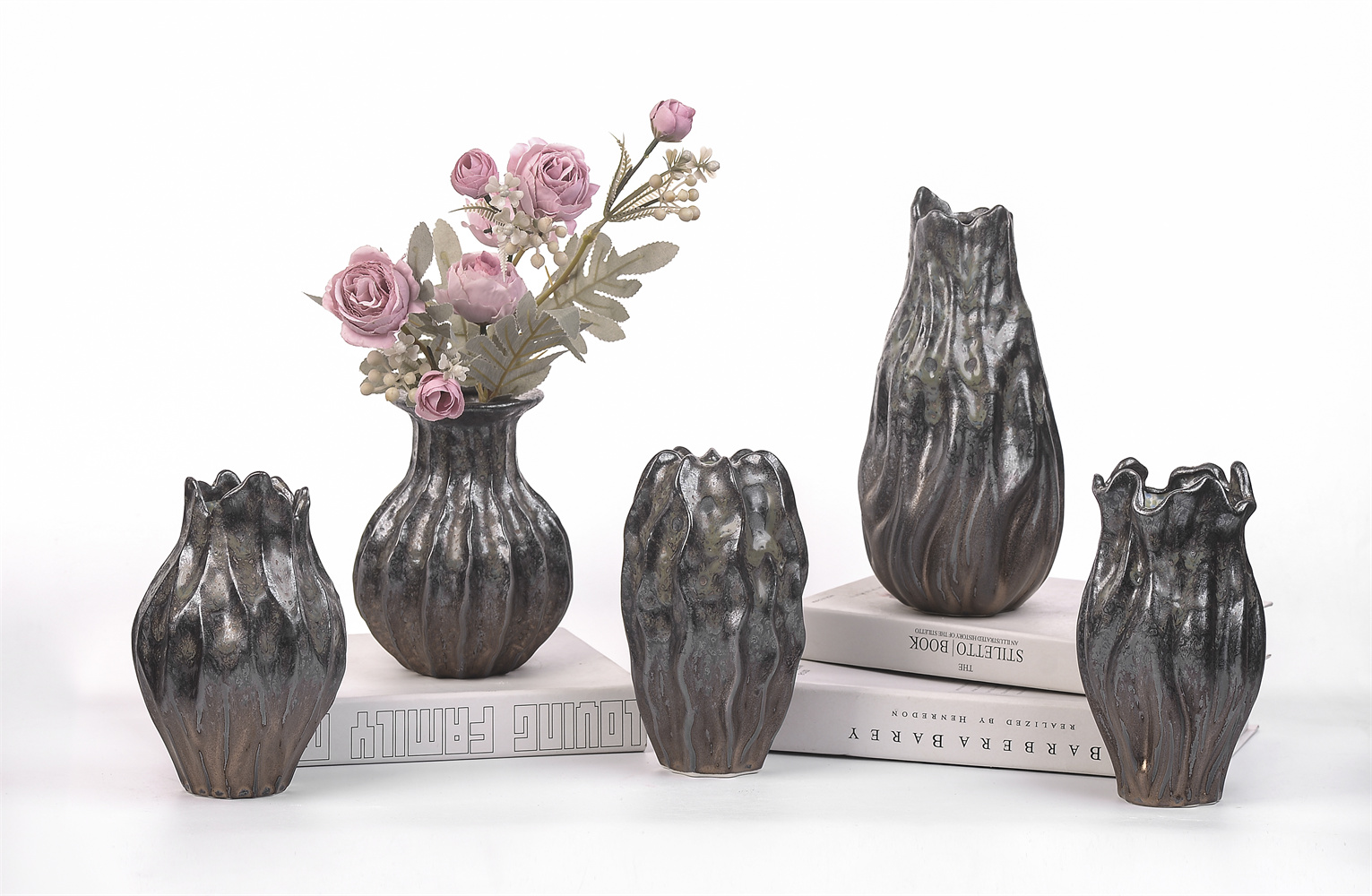
Not Every Factory Has a Story Worth Telling. This One Starts With Taste.
A Home Decor Manufacturer Story That Feels More Like a Design Source Than a Supply Source
A real home decor manufacturer story does not begin with square footage, container counts, or a proud paragraph about machinery.
It begins with taste.
From an American designer’s point of view, that is the part that matters most. You can feel it almost immediately: whether a supplier understands how a vase sits in a room, how a glaze reacts to warm light, how a tabletop piece can soften a hard-edged interior, and how a collection needs to do more than “look good in a catalog.” It has to live well in real projects, real retail floors, and real reorder cycles.
That is where Teruierdecor’s story becomes interesting. It comes from a craft-making hometown, a place where decorative production is not detached from the hand, the eye, or the rhythm of material making. In that sense, Teruierdecor is not just a ceramic home decor manufacturer. It is part of a longer making culture, one that still understands why the best home accents are rarely the loudest ones. They are the pieces that quietly make the room feel finished.
And that story feels especially timely now. Las Vegas Market’s Winter 2026 edition brought together more than 3,500 product lines across furniture, home décor, bedding, and gift, while High Point Market’s Spring 2026 programming put visible emphasis on beauty, neuroaesthetics, and biophilia, which is another way of saying the market is leaning toward products that create feeling, calm, texture, and atmosphere, not just visual novelty.
Why This Story Matters to American Designers Right Now
North American interiors are shifting away from flat sameness and toward spaces with more emotion, more personality, and more sensory depth. Trade coverage around Winter 2026 markets has highlighted decorative ceramics, faux florals, layered vignettes, and tactile surfaces as meaningful parts of current merchandising conversations. That matters because ceramics are no longer acting like filler objects. They are being treated as mood-setters, shelf-shapers, and room-defining details.
You can see the same mood in mainstream design culture too. High Point’s official programming is openly framing health-based design, neuroaesthetics, and biophilia as part of the value proposition of interiors, while recent design coverage tied to TikTok culture shows nostalgia, whimsy, and personality-led decorating gaining momentum again. One recent example is “cabbagecore,” a playful ceramics-adjacent trend that picked up energy on TikTok and Pinterest, showing that decorative objects with character and historical charm are still very much alive in the North American imagination.
For a brand like Teruierdecor, this is good news. Because when the market starts valuing atmosphere again, a manufacturer with craft DNA suddenly becomes more relevant than a manufacturer with only speed.
The Brand Story Behind Teruierdecor
From the outside, plenty of factories look interchangeable. Similar product categories. Similar export language. Similar promises.
But the better story is not “we can make it.”
The better story is “we know why this piece should exist.”
Teruierdecor’s advantage is that its brand story sits between design sensitivity and manufacturing discipline. It speaks to buyers who need more than beautiful photos. It speaks to people building assortments, specifying projects, protecting margins, and trying not to get burned on the second order.
That is why this story naturally connects with a trade program for interior designers. Designers do not just need access to products. They need access to products that are styled with enough intelligence to enter a room without fighting it. They need consistency across samples and production. They need proportions that work on consoles, shelves, dining tables, and hospitality surfaces. They need a partner who understands that decorative objects are part of the composition, not an afterthought.
It also explains why Teruierdecor makes sense as a hospitality procurement supplier. Hospitality buyers are not purchasing isolated objects; they are purchasing repeatability, project suitability, packaging reliability, and finish discipline. A good vase or ceramic accent in hospitality has to survive specification, transit, staging, installation, and often repeat rollout. It has to be beautiful, but beauty alone is never enough.
And for broader wholesale channels, this brand story also fits the needs of retailers and importers supplier relationships. Retailers and importers need a product story that can travel from showroom to shelf without falling apart. They care about line clarity, carton logic, quality rhythm, and whether a manufacturer can support a collection, not just a one-off item.
What Buyers Really Want From the Story
They want reassurance, but stylish reassurance.
They want a reorder stability manufacturer that understands glaze consistency, dimensional tolerance, and packaging reality. They want factory direct pricing home decor that still feels curated rather than generic. They want the economics of direct sourcing without the emotional flatness that too often comes with mass production.
In other words, they do not want a factory that merely ships.
They want a factory that edits.
That is the more elegant version of the Teruierdecor story. A craft-rich hometown. A style-aware making culture. A manufacturer that understands the commercial life of decorative objects in America.
FAQ: What Serious Buyers Should Know About a Ceramic Factory
What is the difference between earthenware, stoneware, and porcelain?
Educational materials consistently describe these as three major ceramic classes shaped by clay composition and firing temperature. Earthenware is generally fired lower and remains more porous. Stoneware is fired hotter and becomes denser and less absorbent. Porcelain is typically fired above 1200°C and is valued for its hardness, whiteness, and refined body.
Why does firing temperature matter in ceramic home decor production?
Because firing temperature affects density, porosity, strength, and surface behavior. Chemistry education sources note that earthenware is commonly fired around 1000–1150°C, while stoneware and porcelain are fired above 1200°C. For buyers, that influences how a product performs, how it feels in hand, and how stable it remains across use and climate conditions.
Why do quality-control conversations matter so much with ceramics?
Ceramic defects can come from forming, drying, glazing, or firing. Conservation guidance identifies issues such as cracking, warping, bloating, sagging, and glaze problems as meaningful indicators of process control. That is why experienced buyers ask not only how a piece looks, but how the factory controls deformation, finish consistency, and base stability before packing.
What should a B2B buyer ask a ceramic factory before ordering?
Ask about clay body, firing range, glaze consistency, sample lead time, MOQ by size, protective packaging, drop-test logic, and how color is controlled across repeat runs. For larger buyers, it is also worth asking how the factory handles replenishment planning, because the first shipment is only half the story. The real test is whether the second and third orders still match. This is exactly where a true reorder stability manufacturer proves its value.
Why does factory-direct pricing not always mean better value?
Because low price without process control usually becomes expensive later. Buyers often save more with a disciplined factory direct pricing home decor partner than with a cheaper but unstable supplier, especially when breakage, inconsistent glazing, and poor reorder alignment begin eating margin.
The Short Version, If You Like Your Brand Stories Well Edited
Teruierdecor’s home decor manufacturer story is simple in the best way.
It comes from a place that still knows how decorative objects are made.
It understands how American rooms are changing.
And it turns that understanding into products designers, retailers, importers, and hospitality buyers can actually use.
That is a better story than scale alone.
And, frankly, a prettier one too.
Leave a Reply