

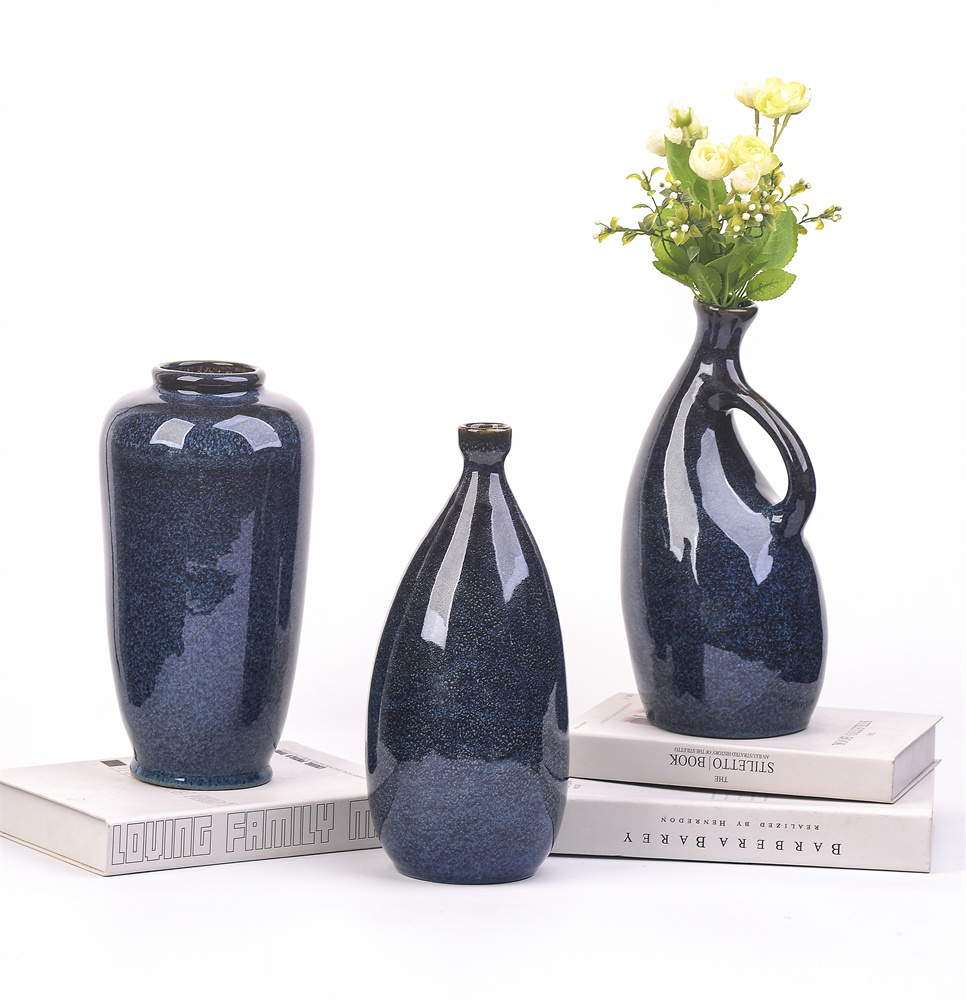
A Home Decor Manufacturer Story That Starts Where Good Rooms Usually Start: With the Vase
Some home decor products fill a shelf.
Some quietly set the tone for the whole room.
That is why a good home decor manufacturer story should never begin with machinery alone. It should begin with taste, with materials, with the people who know when a vase is merely “pretty” and when it actually changes the mood of a space. Teruierdecor comes from a craft-making hometown where the rhythm of product development is still close to the hand, the kiln, the surface, and the eye. And for American designers, that matters.
Because the room has changed.
North American design conversations are leaning warmer, softer, and more emotionally expressive. Winter 2026 Las Vegas Market positioned itself as a major sourcing hub with 3,500+ product lines, while recent market coverage pointed to warm finishes, updated traditional shapes, softer forms, textured surfaces, and a renewed appetite for decorative ceramics and floral styling. At the same time, High Point Market’s Spring 2026 programming is explicitly spotlighting neuroaesthetics and biophilia, which tells you something important: buyers are not only sourcing objects now, they are sourcing atmosphere.
That shift is exactly where Teruierdecor’s story becomes relevant.
It is not just a factory story. It is a translation story. A heritage-making environment becomes a retail-ready collection. A sculptural idea becomes a sellable silhouette. A decorative vessel becomes one of those rare pieces that works in a model home, a boutique hotel, a styled shelf, or a florist’s tabletop without looking overworked.
For designers watching current North American taste, this is not a fringe move. Market reporting in early 2026 has highlighted “dopamine décor,” expressive ceramics, updated faux florals, warm finishes, and softer traditional forms. Design media has also been clear that 2026 interiors are favoring personality over perfection and pieces that feel interactive, tactile, and a little more alive.
That is why the right vase supplier no longer competes on price alone.
A serious modern vase supplier China buyers return to is the one that understands proportion, glaze restraint, carton reality, reorder consistency, and the small styling cues that make a vessel feel current in an American room. Think less “anonymous container,” more “design tool with margin potential.”
And yes, that includes the styles now shaping American home decor vase styles: warmer neutrals, artisanal finishes, soft curves, sculptural outlines, and pieces that look equally good with branches, faux stems, or absolutely nothing inside them. Even TikTok’s 2026 interior conversation is moving toward more storied, nostalgic, and historically grounded rooms rather than pure novelty, which helps explain why vessels with softness, charm, and personality are holding attention.
For the American designer, especially one building layered, livable spaces, that matters more than trend-chasing.
A vase today has to do three jobs at once:
- read beautifully from across the room
- style easily on a console, dining table, or kitchen island
- survive the boring but brutal realities of wholesale
That is the difference between decorative inventory and usable design inventory.
Teruierdecor’s brand story sits in that difference. It is shaped by a craft-led manufacturing base, but it is aimed at the needs of modern buyers: interior design vases that photograph well, ship with discipline, feel thoughtful in hand, and still make sense in a wholesale program. For buyers searching wholesale floral vases, that means not only getting a vessel that holds stems, but getting one that supports the whole visual language of the arrangement. For buyers influenced by resort, coastal, or art-forward projects, even the taste language around Miami interior design vases points in a similar direction: sculptural, sunlit, expressive, and edited rather than overdecorated.
In other words, the real story is not “we make vases.”
It is “we make vases that already understand the room they are walking into.”
And that is what a good Tabletop Vase Factory should be able to say.
Not with slogans. With product.
Why This Story Feels Timely Now
At the market level, decorative ceramics are not fading into the background. Las Vegas Market coverage in January 2026 showed brands expanding ceramic introductions in a significant way, while trend coverage across related U.S. design events emphasized softer silhouettes, warmer finishes, and materials that feel textured and emotionally legible.
At the consumer level, the appetite is also there. Recent design coverage points to colorful, personality-led home accents, while trade-facing trend content continues to treat vases as dependable, year-round, never-out-of-stock accessories that can anchor both basics and seasonal storytelling.
So when Teruierdecor tells its brand story through vases, it is not telling a small story. It is telling a very current one.
FAQ: What Designers and Buyers Should Know About a Ceramic Vase Factory
What is the difference between earthenware, stoneware, and porcelain?
Clay-based ceramics generally fall into three major classes: earthenware, stoneware, and porcelain. Earthenware is fired at lower temperatures and remains more absorbent. Stoneware is fired hotter and becomes denser. Porcelain is typically fired at around 1200–1400°C, creating a hard, glassy body that is less porous and often more refined in appearance.
Why does firing temperature matter for decorative vases?
Firing temperature affects porosity, strength, finish stability, and long-term performance. Educational and museum sources note that lower-fired ceramics are generally more porous, while higher-fired ceramics are less porous but can also be more brittle on impact. That is why a decorative vase is not just a shape question; it is a materials-and-process question.
What factory flaws should buyers watch for in ceramic vessels?
Authoritative preservation guidance lists warping, delamination, sagging, cracking, bloating, and glaze-related defects as common warning signs tied to forming, firing, and cooling problems. For wholesale buyers, that translates into one practical truth: quality control should check both beauty and structural stability.
Why do designers care so much about vase proportion?
Because proportion decides whether a vase works as an accent, a centerpiece, or a floral support piece. A good vase must balance opening size, shoulder width, body volume, base stability, and visual weight. In styled interiors, the best pieces feel composed even when empty, which is why strong decorative ceramics often sell as objects first and containers second.
What should a buyer ask a vase manufacturer before placing an order?
Ask about ceramic body type, firing range, glaze consistency, rim smoothness, base finish, carton protection, drop-risk areas, MOQ by size, sampling lead time, and reorder color consistency. If the factory cannot explain how the piece survives both the shelf and the shipment, the design is only half finished.
Why are floral vases and styling vases not always the same thing?
Some wholesale floral vases are optimized for stem support and water use; some interior design vases are optimized for silhouette, finish, and shelf presence. The strongest collections bridge both worlds: beautiful enough for styling, practical enough for florals, and consistent enough for repeat buying.
The Short Version of the Story
Teruierdecor’s brand story is simple in the best way: it comes from a place that still respects craft, and it turns that craft into product language American buyers can actually use.
That is what makes a manufacturer memorable.
Not just that it can make the vase.
But that it understands why the vase matters.
Leave a Reply