

When First Order Success Still Does Not Create Continuity
As an American home decor designer, I have seen this happen more than once.
A buyer tests a product.
The sample looks good.
The first order sells through.
Everyone feels confident.
Then the second order never comes.
That is the hidden problem behind when first order success still does not create continuity. A first order can succeed because the product has visual appeal. But continuity only happens when the buyer trusts the supplier, the repeatability, the packaging, the documents, and the next production run.
In home decor, a product can win attention once and still fail to become a reorder item.
Where Visual Promise Starts Fighting Repeatability
This is where visual promise starts fighting repeatability.
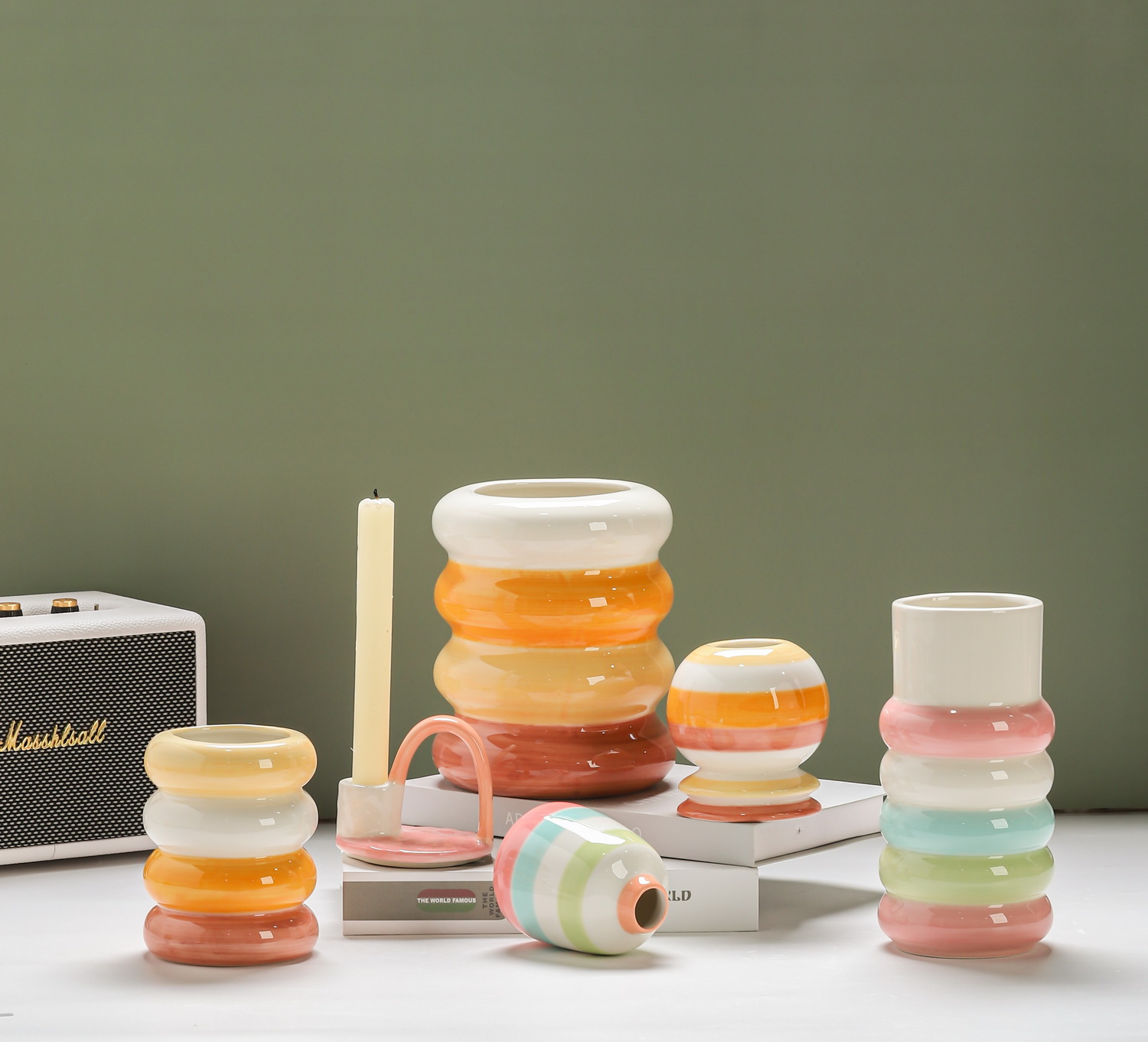
A vase may look beautiful because the glaze is expressive.
A decorative object may feel special because the finish is irregular.
A mixed-material piece may look premium because the detail feels complex.
An ottoman may photograph well because the fabric has texture.
But buyers still need to know:
Can this look be repeated?
Can the finish stay inside an acceptable range?
Can the carton protect the product again?
Can the second order match the approved standard?
Can the supplier explain risk before the buyer discovers it?
Visual promise wins the first conversation. Repeatability wins the second order.
Why the Home Decor Sample Development Process Matters
A serious home decor sample development process should not treat the sample as a showpiece.
It should treat the sample as a test.
The sample should answer practical questions:
Is the shape stable?
Is the finish repeatable?
Is the size right for the shelf?
Is the packaging risk visible?
Is the product easy to inspect?
Can the buyer reorder this without starting over?
Stanford d.school’s design thinking framework treats prototyping and testing as ways to learn before committing. That logic fits B2B home decor sourcing very well. A sample is not just proof of beauty. It is proof of learning.
If the sample process only creates a good photo, it may support the first order.
If the sample process reveals and corrects risk, it can support continuity.
A Home Décor RFQ Guide Should Ask More Than Price
A practical home décor RFQ guide should not begin and end with unit price.
Buyers should also ask:
What is the approved sample standard?
What variation is acceptable?
What packaging method is recommended?
What are the carton details?
What inspection points should be checked?
What lead time supports reorder?
What risks does the supplier see?
An RFQ that only asks for price creates a transaction.
An RFQ that asks about repeatability creates a sourcing relationship.
That is the difference between a one-time order and a product that can come back.
Reorder Confidence Home Decor Buyers Actually Need
Reorder confidence home decor buyers need is built from small details.
The second order feels safer when the buyer knows:
the finish range is defined,
the packaging method is tested,
the supplier understands inspection points,
the product has a clear shelf role,
the MOQ and lead time are realistic,
and the production team remembers what was corrected last time.
A buyer does not reorder only because the product sold.
A buyer reorders because the product sold and the supplier made the next order feel controllable.
Reorder-Friendly Home Decor Is Designed, Not Discovered
Reorder-friendly home decor does not happen by accident.
It is designed through product development.
A reorder-friendly product usually has:
a clear commercial role,
a repeatable finish,
a stable construction,
a packaging method that protects margin,
a realistic price point,
an inspection standard,
and a supplier who understands what could go wrong.
A first order may succeed because the market liked the look.
Continuity happens when the product can be repeated without turning every reorder into a new project.
What a Mature Production Base Sees Earlier
This is what a mature production base sees earlier.
A buyer may see a trend-right product.
A mature supplier sees the risk behind it:
This glaze may shift.
This rim may chip.
This fabric may mark under pressure.
This mixed-material detail may scratch.
This carton may be too tight.
This size may create freight pressure.
This shape may look good but fail the reorder test.
Eric von Hippel’s work on sticky information helps explain why practical problem-solving knowledge often stays close to where the work happens. In home decor, the workshop often sees material, finish, packaging, and repeat-production risks before the buyer can see them from a product photo.
That is why mature production knowledge matters. It helps turn the first order into a second-order opportunity.
Why Recent U.S. Trends Make Continuity Harder
Recent U.S. home trends continue to favor sculptural forms, richer textures, nostalgic details, expressive interiors, oversized silhouettes, and more tactile materials.
That is good for product excitement.
It is also harder on sourcing.
A sculptural vase may be harder to pack.
A handmade-looking finish may be harder to repeat.
A textured ottoman may be harder to control across batches.
A nostalgic decorative object may trend quickly but fade if the assortment is not edited well.
TikTok can make a look feel urgent almost overnight. But social media does not answer the buyer’s continuity question:
Can this product come back again?
That question still belongs to sampling, RFQ clarity, packaging, quality control, and supplier memory.
Why First Order Success May Still Fail to Continue
A first order may not create continuity when:
the sample standard was unclear,
the finish range was not defined,
packaging was solved too late,
the RFQ focused only on price,
the supplier could not explain risk,
the product was trend-right but not reorder-friendly,
or the second order felt too uncertain.
This is why buyers should not judge suppliers only by one successful shipment.
They should ask whether the supplier made the next order easier.
A Buyer’s Continuity Checklist
Before treating a first order as a long-term product, buyers should ask:
Did the product sell because of trend, price, or true shelf strength?
Can the approved sample be repeated?
What changed during production?
Were there packaging complaints?
Were inspection points clear?
Can the supplier explain what should improve next time?
Can the product support a small collection?
Does the second order feel easier than the first?
If the answer is no, the first order may have succeeded as a transaction but failed as a foundation.
FAQ: When First Order Success Still Does Not Create Continuity
What does “when first order success still does not create continuity” mean?
It means a product can sell in the first order but still fail to become a repeat item because the supplier, sample standard, packaging, RFQ details, or production repeatability were not strong enough.
Why does the home decor sample development process matter?
The sample process helps buyers test shape, finish, packaging, size, construction, inspection points, and repeatability before placing larger or repeated orders.
What should a home décor RFQ guide include?
A home décor RFQ guide should include price, MOQ, lead time, material details, finish range, packaging method, carton information, inspection points, and supplier risk comments.
What is reorder confidence in home decor?
Reorder confidence means the buyer trusts that the product can be produced, packed, inspected, shipped, and repeated with fewer surprises.
Why does a mature production base matter?
A mature production base often sees material, finish, packaging, and repeat-production risks earlier because it has solved similar problems many times before.
Final Thought: A First Order Is Not a Relationship
A first order can prove that a product has market interest.
It does not automatically prove continuity.
Continuity is created when the product can be sampled clearly, quoted intelligently, packed safely, inspected consistently, and reordered without starting from zero.
That is the real lesson behind when first order success still does not create continuity.
A good first order creates attention.
A reorder-friendly system creates business.
Leave a Reply