

Home Décor Packaging and Shipping Begin Before the Carton
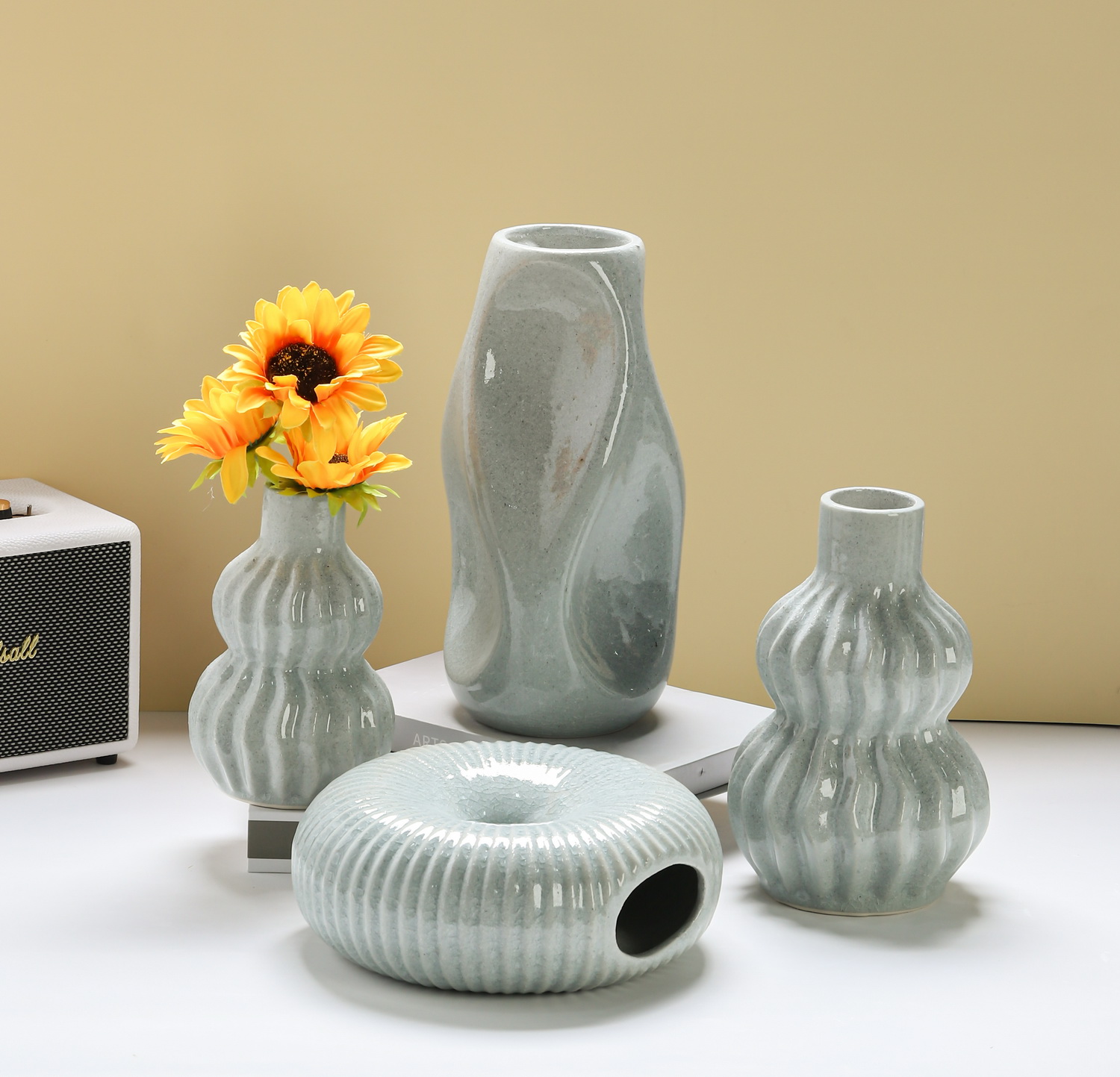
As an American home decor designer, I can fall in love with a product in seconds: a sculptural ceramic vase, a textured tabletop object, or a decorative accent with just enough irregularity to feel handcrafted.
But a retail buyer has to imagine what happens after the sample room.
Will the surface rub?
Will the rim chip?
Will the product move inside the carton?
Will the package protect the item without consuming the margin?
That is why home décor packaging and shipping should not be treated as the final step. Packaging decisions begin while the product is still being developed.
A product is not commercially ready simply because it looks beautiful.
It must also survive the journey.
Home Decor Sample Realism Includes Shipping Risk
Good home decor sample realism means reviewing the sample as a future production item, not as a presentation piece.
The buyer should look at:
the most fragile edge,
the most exposed surface,
the weight distribution,
the base stability,
the likely contact points,
and the space the product needs inside the carton.
A ceramic vase may look perfect on a table but still have a weak rim. A matte finish may photograph beautifully but show rubbing after transit. An oversized decorative object may create more dimensional shipping cost than retail value.
A realistic sample reveals those problems early.
The Home Decor Sample Development Process Should Test the Journey
A strong home decor sample development process should answer more than whether the color and shape are correct.
It should also test:
Can the product be handled safely?
Does the packaging control movement?
Are delicate surfaces separated?
Is the carton appropriate for the product weight?
Can the inner protection be repeated in bulk?
Does the packed product still support the buyer’s target cost?
Stanford d.school identifies Prototype and Test as essential parts of design thinking. That principle applies directly to home decor sourcing: the sample should help the buyer learn before committing to full production.
Packaging is one of the things the sample should teach.
A Ceramic Décor Buying Guide Must Include the Carton
A practical ceramic décor buying guide should never separate the product from its packaging.
Ceramic buyers should review:
rim thickness,
handle or decorative projections,
base balance,
glaze sensitivity,
surface-to-surface contact,
inner protection,
carton strength,
and packed-product movement.
The most attractive ceramic shape is not always the safest commercial choice.
A sculptural vase may need additional support. A reactive glaze may require surface separation. A set of small pieces may need individual compartments. A tall floor vase may need packaging designed around its center of gravity.
The carton is part of the product decision.
What Production Memory Really Changes
This is what production memory really changes.
An experienced production team remembers which shapes chip, which surfaces rub, which cartons collapse, and which inner structures look protective but fail during handling.
Instead of saying, “We will pack it well,” a grounded supplier can say:
“This rim needs an additional buffer.”
“This matte surface should not touch the inner carton.”
“This product needs less movement, not only more foam.”
“This larger size may require a different carton structure.”
“This packing method worked for the sample but is too complicated for bulk production.”
Production memory turns packaging from a promise into a practical decision.
When First Order Success Still Does Not Create Continuity
Packaging can also explain when first order success still does not create continuity.
The first shipment may arrive with an acceptable damage rate. The product may sell well. The buyer may even receive positive feedback.
But continuity still fails when:
the packing method was not documented,
the inner materials changed,
the second production run used a tighter carton,
the supplier forgot an earlier correction,
or the replacement cost made the reorder less attractive.
A successful first order does not automatically create a reliable second order.
Continuity requires the supplier to repeat both the product and the protection around it.
What a Home Decor Importer Supplier Should Make Visible
A capable home decor importer supplier should make packaging information visible before shipment.
Importers need to understand:
unit packing,
inner-carton quantity,
master-carton quantity,
carton dimensions,
gross and net weight,
labeling,
fragile-product protection,
and loading efficiency.
This information affects more than transportation.
It affects landed cost, warehouse receiving, inspection, replacement planning, online fulfillment, and the reorder decision.
A low product price can become expensive when the carton is oversized, inefficient, or unreliable.
Recent U.S. Trends Make Packaging More Demanding
Spring 2026 High Point Market coverage highlighted oversized forms, draped silhouettes, chunkier natural textures, layered details, and increasingly expressive decorative products.
These directions create strong retail opportunities.
They also make packaging harder.
An oversized object requires more space.
A textured surface needs better protection.
A mixed-material product may have several contact risks.
A sculptural silhouette may leave empty but expensive space inside the carton.
TikTok-driven interiors are also becoming more tactile, nostalgic, and personality-led. These products can attract attention quickly, but social media does not show the carton, breakage rate, or landed-cost impact.
The trend creates the desire.
Packaging decides whether the product can become a business.
Before You Request a Home Décor Catalog
Before you request home décor catalog options from a supplier, prepare a few practical questions:
Which products already have proven packaging?
Which items need custom inner protection?
Can carton dimensions be supplied with the quote?
Has the packaging been reviewed for the intended shipping channel?
Can the supplier explain the most likely damage point?
Can packaging be adjusted during sample development?
A catalog shows what is available.
The supplier’s answers show what is commercially ready.
A Buyer’s Packaging and Shipping Checklist
Before approving a home decor product, buyers should confirm:
Is the most fragile point identified?
Does the sample represent bulk-production reality?
Are sensitive finishes separated?
Can the product move inside the carton?
Are carton size and weight commercially reasonable?
Can the packing method be repeated?
Are packaging requirements included in the approved specification?
Can the supplier support inspection before shipment?
Does the second order use the same protection standard?
The best packaging does not simply add more material.
It controls the right risk.
FAQ: Home Décor Packaging and Shipping
What does home décor packaging and shipping include?
It includes product protection, inner packing, carton structure, labeling, carton dimensions, weight, loading efficiency, inspection preparation, and shipment coordination.
When should packaging development begin?
Packaging development should begin during product and sample development. Shape, material, finish, weight, and fragile points should influence the packaging before bulk production.
Why does home decor sample realism matter?
A realistic sample helps buyers evaluate how the product will behave in production, handling, packing, shipping, display, and reorder—not only how it looks in a photo.
Why can a successful first order still fail to create continuity?
The first order may succeed even when packaging standards are poorly documented or difficult to repeat. If later shipments use different protection, the buyer’s damage risk and replacement cost may increase.
What should a home decor importer supplier provide?
A strong supplier should provide clear packing details, carton information, product specifications, inspection support, shipping documentation, and a repeatable packaging standard.
Final Thought: The Carton Is Part of the Product
A product photo creates interest.
A sample proves the design direction.
But packaging determines whether the product arrives with its value intact.
That is why home décor packaging and shipping must begin before shipping week. It should be considered during product design, sample review, quotation, quality control, and reorder planning.
A beautiful product may win the buyer’s attention.
A product that arrives safely gives the buyer a reason to order it again.
Leave a Reply