

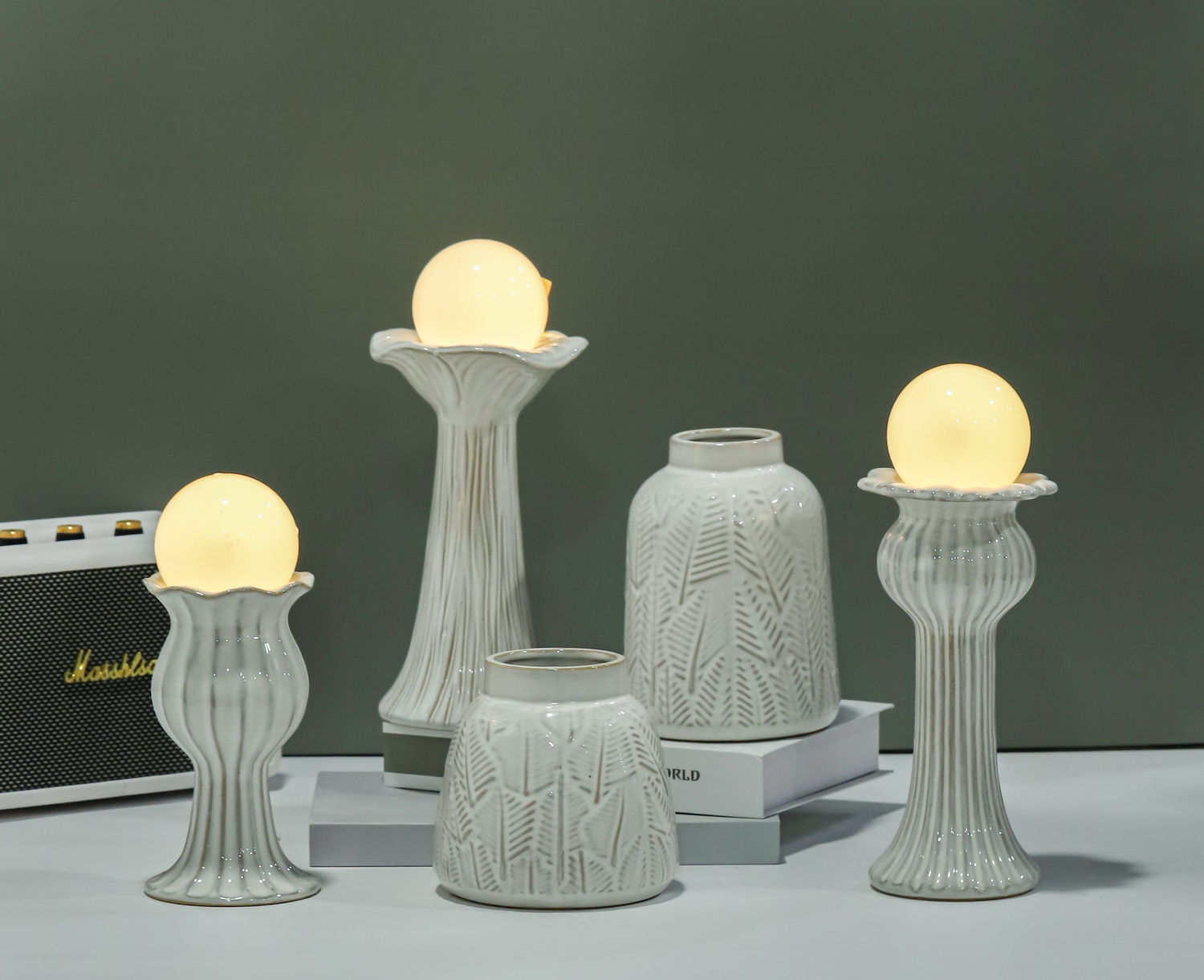
Reorder-Friendly Home Decor Starts Before the First Order
As an American home decor designer, I love a beautiful product launch. A sculptural ceramic vase, a quiet tabletop accent, a textured tray, a piece with just enough craft detail to make the shelf feel fresh.
But B2B buyers are not only thinking about the first order.
They are asking a harder question:
Can we reorder this without starting over?
That is why reorder-friendly home decor matters. A product is not truly successful because one sample looked good or one shipment sold through. It becomes valuable when the buyer can trust the material, finish, packaging, MOQ, lead time, and production repeatability again.
A reorder-friendly product gives buyers something rare: confidence after launch.
Why Reorder Confidence Depends on Materials
A practical ceramic décor buying guide should always start with material behavior.
For ceramic décor, wholesale home decor materials affect everything:
shape stability,
surface finish,
weight,
glaze result,
packaging method,
breakage risk,
and repeat production.
A vase may look beautiful in the first sample, but if the glaze is hard to repeat, the second order may disappoint the buyer. A tray may feel premium, but if the surface scratches easily during packing, the product creates damage risk. A candle holder may be attractive, but if the base is unstable, the reorder becomes harder to trust.
Reorder-friendly home decor begins with materials that can be made again, not just photographed once.
How a Craft Region Shortens the Correction Cycle
This is how a craft region shortens the correction cycle.
In a craft region, makers have usually seen the same problems many times: glaze variation, weak rims, unstable bases, surface rubbing, carton pressure, shape distortion, and finish inconsistency.
That experience helps buyers move faster from “This sample is close” to “This version is ready.”
A supplier with real production memory can say:
“This glaze should be softened for better repeatability.”
“This rim needs adjustment before bulk production.”
“This base will make the product easier to pack.”
“This size works better for a reorder-friendly collection.”
“This finish looks good, but this version will be safer for the second order.”
That kind of answer helps buyers reduce guessing.
Home Décor MOQ and Lead Time Are Part of Reorder Logic
Buyers often ask about home décor MOQ and lead time early.
That is not just a purchasing detail. It is part of reorder planning.
A low MOQ may help the buyer test a product. But if the supplier cannot repeat the finish later, the low MOQ does not solve the real problem. A fast lead time may sound attractive. But if production is rushed and quality shifts, the reorder becomes risky.
Reorder-friendly sourcing means asking:
Can the supplier repeat the approved sample?
Can the same material be prepared again?
Can the finish stay within an acceptable range?
Can the packaging be repeated?
Can the lead time support the next launch window?
A reorder is not a new experiment. It should feel like a controlled continuation.
Building a Small but Profitable Assortment
For many buyers, building a small but profitable assortment is smarter than launching too many untested SKUs.
A practical starter assortment may include:
one hero vase,
one smaller add-on item,
one tray or candle holder,
one decorative object,
and one finish direction that ties the shelf together.
The goal is not to make the assortment large. The goal is to make it repeatable.
A small assortment becomes profitable when the buyer can explain it, display it, ship it, and reorder it without too much correction.
A big assortment full of unstable finishes, weak packaging, and unclear MOQ can look exciting at first—and become expensive later.
Why an Audited Home Decor Factory Still Needs Product Judgment
An audited home decor factory gives buyers more confidence in process, capacity, and management.
But audit status alone does not make a product reorder-friendly.
Buyers still need product judgment.
They need to know:
Can this finish be repeated?
Can this shape be packed safely?
Can this product stay consistent across orders?
Can this supplier explain what may go wrong?
Can the factory support sample correction before production?
A good factory system matters. But the real value comes when factory process and product judgment work together.
Why Recent U.S. Trends Make Reorder-Friendly Products More Valuable
Recent U.S. home design coverage continues to point toward richer texture, sculptural forms, artisanal surfaces, oversized scale, and more expressive interiors.
That creates opportunity for ceramic décor, vases, tabletop objects, wall accents, and craft-led collections.
But stronger design also creates more repeatability risk.
A sculptural shape may be harder to pack.
A textured surface may be harder to protect.
A handmade look may be harder to control.
A bolder glaze may be harder to repeat.
TikTok and social media can make a style feel urgent very quickly. But viral attention does not answer the buyer’s reorder question.
Can this product be made again?
That is where supplier capability matters.
What Buyers Should Ask Before Choosing Reorder-Friendly Home Decor
Before approving a product, buyers should ask:
Does the product have a clear shelf role?
Can the material support repeat production?
Can the finish be controlled across orders?
Does the packaging protect the product consistently?
Does MOQ make sense for first order and reorder?
Can the supplier correct issues quickly?
Can the approved sample become a stable production reference?
This is how buyers move from trend excitement to reorder confidence.
FAQ: Reorder-Friendly Home Decor
What is reorder-friendly home decor?
Reorder-friendly home decor refers to products that can be produced, packed, shipped, and repeated consistently after the first order, giving buyers confidence in future replenishment.
Why does reorder-friendly sourcing matter for B2B buyers?
Because buyers do not only need products that sell once. They need products that can be restocked, repeated, and expanded without major quality, packaging, or finish problems.
How does a craft region shorten the correction cycle?
A craft region shortens the correction cycle because local makers often understand material behavior, finish risks, shaping issues, and packaging problems from repeated production experience.
Why do MOQ and lead time matter for reorder-friendly products?
MOQ affects how buyers test and replenish products. Lead time affects launch planning and restock timing. Both must be realistic if the product is expected to reorder.
Final Thought: The Real Product Test Is the Second Order
A product photo creates interest.
A sample starts the conversation.
The first order tests the market.
But the second order proves whether the product was developed correctly.
That is why reorder-friendly home decor should be the goal of B2B sourcing. It helps buyers control materials, MOQ, lead time, packaging, sample correction, and assortment planning before the order becomes expensive.
A beautiful product can sell once.
A reorder-friendly product can become part of the buyer’s business.
Leave a Reply