

Pretty Is Easy. Retail-Ready Is the Real Trick: What U.S. Buyers Need From a Retailers and Importers Supplier
As an American interior designer, I love the thrill of a beautiful object. A sculptural vase. A warm glaze. A color that somehow makes a whole room feel more expensive. But once you start working with retailers, importers, and real buying calendars, you learn something quickly: the magic is not just in finding a lovely product.
It is in finding a retailers and importers supplier who can make that loveliness survive sampling, production, freight, unpacking, shelf placement, and reorder season.
That is a very different skill set.
And right now, the market is nudging us in exactly that direction. ASID’s design research points to a home industry shaped by authenticity, individuality, and emotional grounding, while NKBA’s 2026 North American trends research highlights whole-home continuity, personalized style, organic aesthetics, and material sophistication. Translation: buyers do not just want “something nice.” They want pieces that fit a broader story and still behave like a real business.
The Best Supplier Is Not Just a Factory. It Is a Filter.
This is where the conversation gets more interesting.
A basic supplier can make an item. A strong trusted home decor supplier China helps decide whether the item should exist in the first place, what finish it should wear, what size works best for both styling and carton efficiency, and whether it belongs in a broader family of pieces that makes sense for retail.
That is why so many buyers are no longer looking for a one-off vendor. They are looking for a global sourcing partner China that understands American retail logic: products need to photograph well, merchandise easily, pack safely, and feel consistent enough to support replenishment.
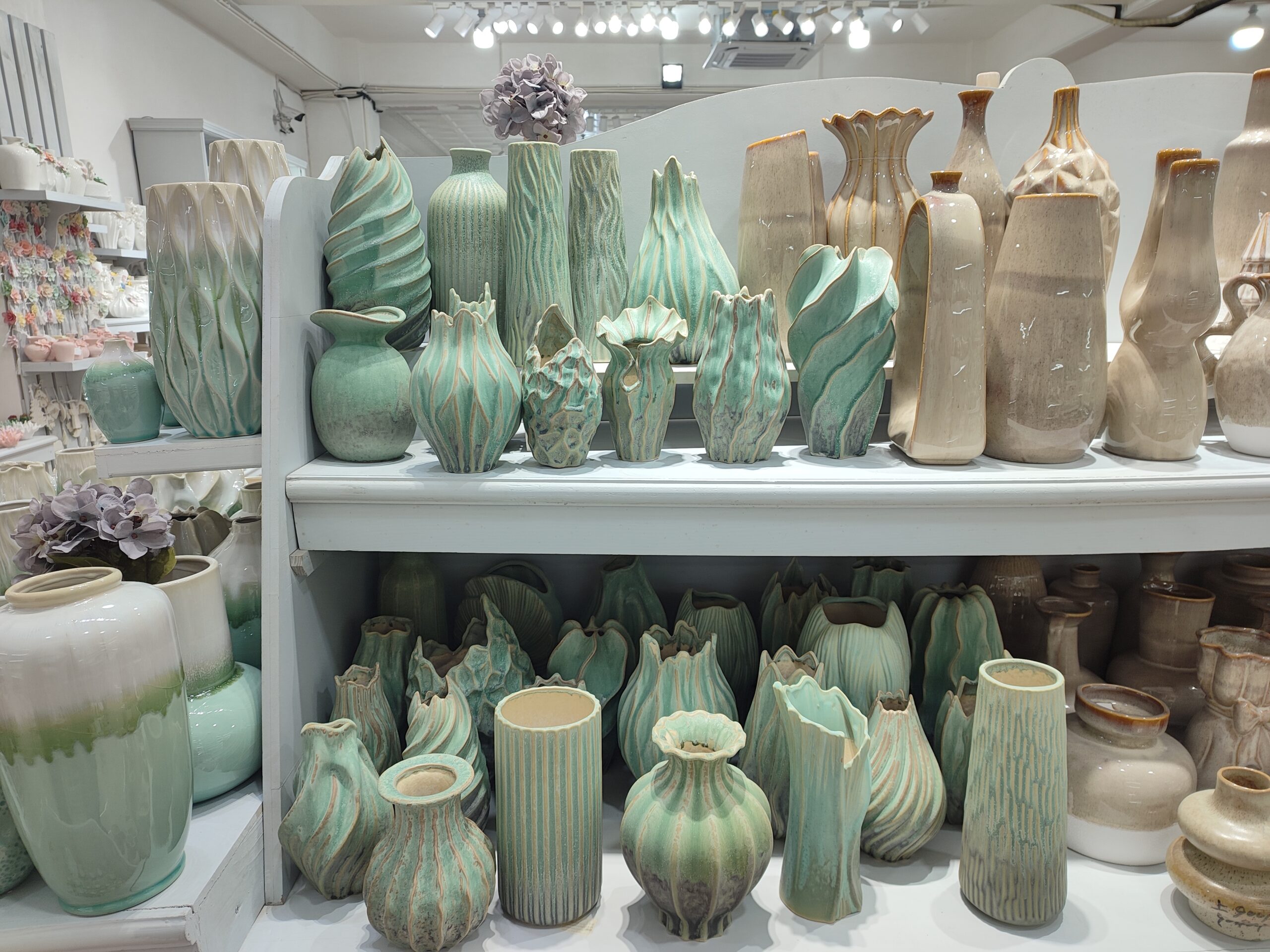
For example, a red ceramic vase supplier is not just selling color. They are selling finish consistency, visual warmth, seasonal versatility, and confidence that the “red” in the sample is still the “red” in the shipment. If you are doing vase bulk import, that distinction becomes very unglamorous, very quickly, and very expensive if ignored.
What U.S. Retailers Are Quietly Asking For
The mood in North America is not “more stuff.” It is “better-edited stuff with personality.”
High Point Market’s Spring 2026 programming includes Style Spotters, Hot Spot Tours, and a first-ever keynote focused specifically on residential kitchen design. That matters because it shows how the trade conversation is shifting: product selection is being treated as part of an integrated home language, not as random accessories sprinkled on top. High Point runs April 25–29, 2026, and remains one of the industry’s key trade-only spaces for trend direction and buying strategy.
The social side of the market is saying much the same thing, just with better lighting and more algorithmic drama. TikTok’s own 2025 trend report says the comment section is becoming “the new focus group,” while ELLE Decor’s March 2026 coverage of TikTok interiors points to nostalgia, skirted details, and personality-led styling as movements with real traction. The lesson for importers is quite practical: aesthetic signals move faster now, so your supplier has to be quick at interpretation, not just production.
That is why the phrase Chinese factory for American retailers should not sound transactional. It should sound specialized. The best factories serving U.S. buyers understand American scale, American styling habits, and American retail expectations. They know when a vase should read as a hero piece and when it should work as part of a grouped shelf story.
Why This Matters for Teruierdecor
Teruierdecor’s strongest service story is not simply that it can produce decor in China. Plenty of factories can say that.
The stronger story is that it operates more like a design-aware sourcing partner from a craft-driven manufacturing base. That means helping buyers move from concept to collection, from visual idea to workable assortment, and from a pretty sample to a stable program.
For a retailer, that might mean building a seasonal vase family. For an importer, it might mean simplifying vase bulk import across a few coordinated silhouettes instead of gambling on a dozen disconnected experiments. For a merchandiser, it might mean working with a Chinese vase supplier USA buyers can trust not because the factory is physically in the U.S., but because the service feels U.S.-ready: clear communication, consistent product logic, and fewer avoidable surprises.
That is a much more elegant kind of sourcing.
FAQ: What Serious Buyers Ask a Ceramic Factory Before They Order
What should I ask a retailers and importers supplier before placing a ceramic order?
Ask for exact dimensions, glaze notes, finish tolerance, carton specs, MOQ, lead time, intended use, and whether the item is purely decorative or meant for food contact. Also ask how the piece fits into a wider assortment. Retailers do not just buy objects; they buy stories with SKU discipline.
What makes a factory feel trustworthy to U.S. retailers and importers?
Consistency, clarity, and documentation. A trusted home decor supplier China should be able to explain product specs in plain language, support sample refinement, communicate production milestones, and show how it controls finish and packing quality.
Are ceramic vases treated the same as ceramic foodware?
No. Decorative vases and food-contact ceramics should not be treated as the same compliance conversation. The FDA states that imported and domestic ceramic ware has been found to contain extractable cadmium, and its lead guidance for ceramic foodwares references leaching limits and ASTM test methods for food-contact surfaces. If a product will touch food or beverages, the compliance discussion becomes much more specific.
Who is responsible for U.S. import compliance?
Not only the factory. CBP says compliance is a shared responsibility between Customs and the importing/exporting community. CPSC also states that manufacturers, importers, distributors, and retailers have legal obligations to report certain safety-related information, and that firms must act quickly when products may present substantial risk.
What should importers look for if they plan to reorder?
Look for finish repeatability, sensible carton planning, stable measurements, and a supplier who understands collection logic. Reorders fail less often when the supplier thinks like a merchant, not just a production floor.
Can one supplier support both design-led product and retail scale?
Yes, if they combine aesthetics with process. That is the sweet spot: a partner who understands why an item looks good and what it needs operationally to keep looking good at scale.
Style Travels Better When the Process Is Calm
The most stylish sourcing decision is not always the loudest one.
Sometimes it is simply choosing a retailers and importers supplier who understands that beauty is only useful when it is repeatable, retail-ready, and easy enough to reorder without everyone spiraling into a spreadsheet at midnight.
That is where Teruierdecor can stand out.
Not just as a factory.
As the kind of sourcing partner that helps good taste survive the real world.
Leave a Reply