

Wholesale Home Decor Materials Are Where Product Decisions Get Real
As an American home decor designer, I can love a ceramic vase for its shape, color, or quiet little curve.
But when I look at it like a buyer, I ask a different question:
What is this product made to survive?
That is why wholesale home decor materials matter. Material choice affects finish, weight, packaging, shelf presence, shipping risk, and reorder confidence. For buyers sourcing ceramic decor wholesale, the material is not a technical footnote. It is the beginning of the product decision.
A vase is not just a shape.
It is clay, glaze, firing, finish, packaging, and repeatability.
Why Ceramic Materials Matter in Home Decor Product Development
Good home decor product development starts before the product is pretty.
It starts with the material.
Will the ceramic body support the silhouette?
Will the glaze look controlled after firing?
Will the finish match the U.S. retail mood?
Will the product feel substantial without becoming too heavy to ship?
Will the surface arrive clean after packaging and transit?
Stanford d.school identifies Prototype and Test as core design-thinking modes, which fits sourcing well: physical samples help buyers learn before committing to production. In ceramic home decor, the sample is where material, finish, shape, and packaging start telling the truth.
Kiln Fired Porcelain Production Is More Than a Pretty Finish
For buyers, kiln fired porcelain production matters because firing changes everything: color, surface, strength, shrinkage, and consistency.
A glaze that looks soft in one sample may shift in production. A small rim may feel elegant but become fragile. A sculptural form may look beautiful but require better base balance. A matte finish may look premium but need better surface protection during shipment.
That is why buyers should not only ask, “Can you make this?”
They should ask:
Can you repeat this finish?
Can you control the firing result?
Can you explain the acceptable variation?
Can this material support a second order?
That is the difference between one good sample and a product buyers can trust.
Building a Small but Profitable Assortment
For many retailers and online sellers, building a small but profitable assortment is smarter than ordering too many untested SKUs.
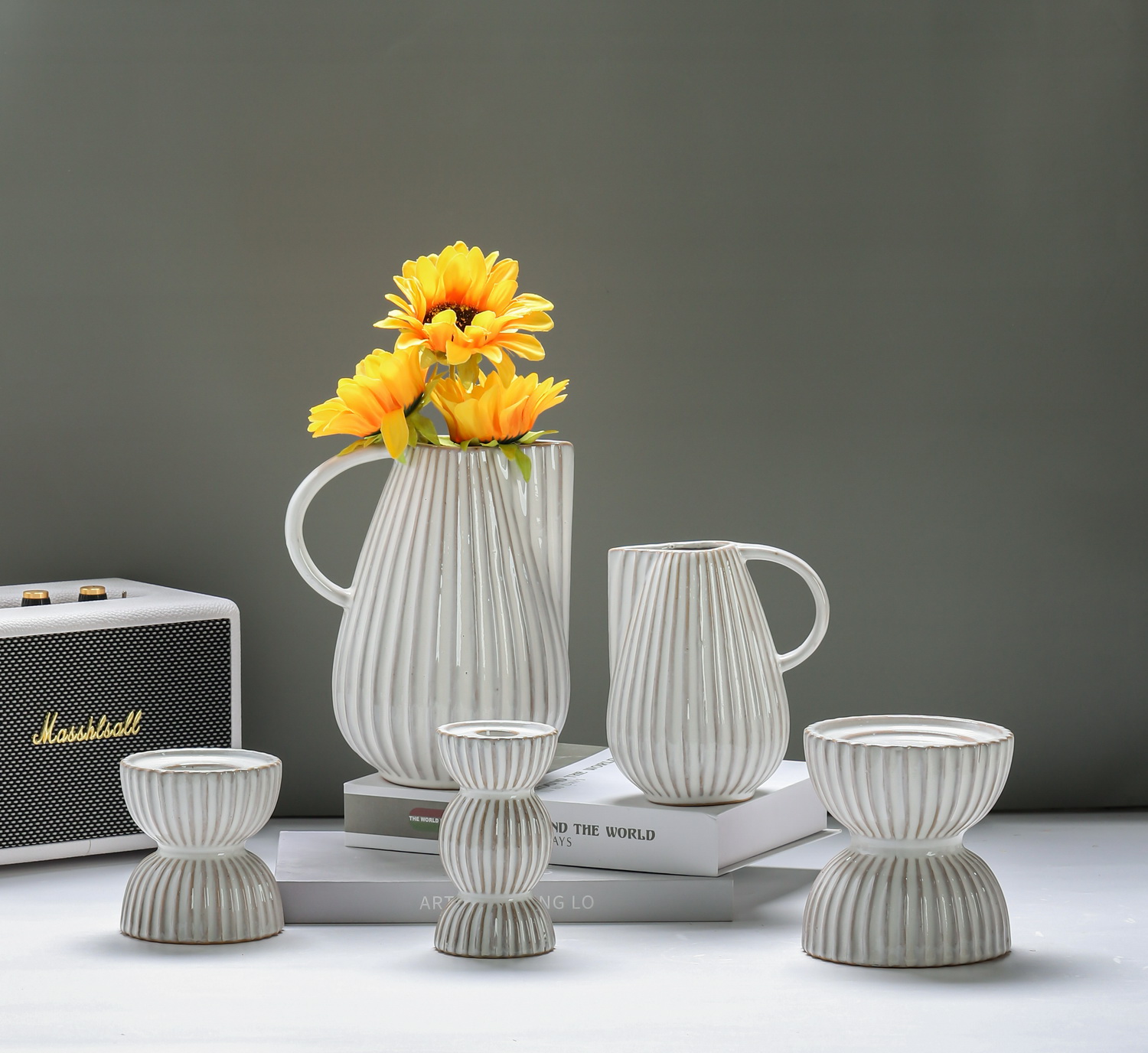
A practical ceramic assortment may include:
A hero vase.
A small ceramic vase wholesale add-on.
A candle holder.
A tray.
A small sculptural object.
One finish anchor that ties the group together.
The goal is not to make the collection large. The goal is to make it easy to display, easy to explain, easy to pack, and easy to reorder.
Recent U.S. design coverage from Spring 2026 High Point Market points toward draped forms, artisanal textures, oversized scale, menswear patterns, and more detailed interiors. These trends create opportunity for ceramic decor, but buyers still need to translate the trend into shelf-ready products with controlled material choices.
Why Small Ceramic Vases Often Carry Big Buyer Logic
Small vases look simple, but buyers read them carefully.
A small vase can be an easy add-on.
It can complete a tabletop story.
It can lower the customer’s entry price.
It can help a shelf feel full without making the assortment too expensive.
But a small vase still has to be developed correctly. The material should not feel too light. The glaze should not look cheap. The base should sit flat. The carton should protect the surface. The finish should work beside larger pieces.
That is why small ceramic vase wholesale decisions are not small decisions. They affect the whole collection.
Our Team View: Material Knowledge Reduces Buyer Guesswork
At Teruierdecor, Our Team does not treat material as an afterthought.
The value is not only supplying ceramic products. The value is helping buyers understand which material, finish, size, and packaging direction makes the most commercial sense.
A supplier with real making knowledge can say:
“This clay body works better for this shape.”
“This glaze is attractive, but this version will be easier to repeat.”
“This small vase should stay simple so the price ladder works.”
“This finish needs better surface protection in the carton.”
“This product can be the hero, but the assortment needs a quieter support item.”
MIT professor Eric von Hippel’s research on “sticky local information” explains why useful problem-solving knowledge often stays close to where work is actually done. In home decor, that means material behavior, finish control, forming limits, and packaging risk often live closest to the workshop.
TikTok Can Create Demand. Materials Decide If It Becomes a Product.
TikTok is moving home decor taste faster than traditional retail cycles. ELLE Decor reported that TikTok is accelerating interior design cycles and highlighted 2026 trends such as skirted furniture, broken floor plans, friction-maxxing, and cabbagecore.
But TikTok does not answer the buyer’s sourcing questions.
Can the material hold the shape?
Can the finish be repeated?
Can the product ship safely?
Can the assortment stay profitable?
Can the supplier support the next order?
That is where material judgment turns trend interest into buyer confidence.
FAQ: Wholesale Home Decor Materials
What are wholesale home decor materials?
Wholesale home decor materials are the core materials used in B2B decorative products, including ceramic, porcelain, resin, glass, metal, mirror, wood, woven materials, stone-look finishes, and mixed-media surfaces.
Why do materials matter for ceramic decor wholesale?
Materials affect shape stability, finish result, weight, packaging, breakage risk, cost, and whether the product can be repeated in bulk production.
Why is kiln fired porcelain production important?
Kiln firing affects glaze color, surface quality, shrinkage, strength, and production consistency. Buyers need to understand whether the approved sample can be repeated.
How can buyers build a small but profitable assortment?
Buyers can start with one hero item, one smaller add-on, one functional piece, one finish anchor, and one product that completes the shelf story while keeping packaging and MOQ manageable.
Final Thought: Material Is the First Business Decision
A product photo creates interest.
A sample starts the conversation.
But material decides whether the product can survive production, packaging, shipment, display, and reorder.
That is why wholesale home decor materials should be part of every serious B2B sourcing conversation. The right material choice helps buyers build ceramic assortments that look good once—and have a real chance to sell again.
Leave a Reply