

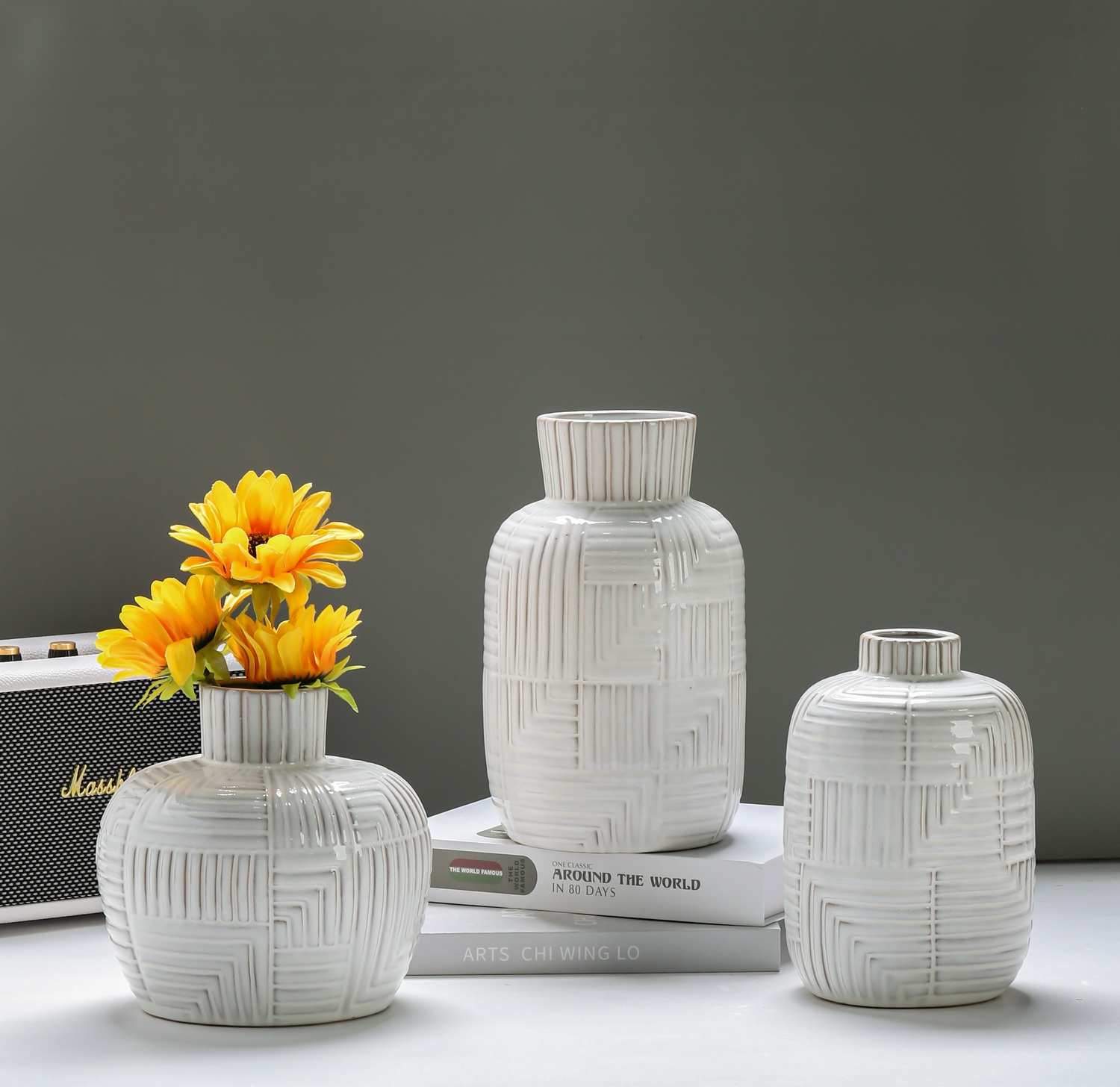
Ceramic Décor Buying Guide: Start With the Shelf, Not the Sample
As an American home decor designer, I can love a single ceramic vase very quickly.
A buyer has to slow down.
The real question is not only, “Is this vase beautiful?” The better question is: “Can this item become part of a shelf-ready collection that ships safely, photographs well, fits a price ladder, and has a reason to reorder?”
That is why this ceramic décor buying guide starts with assortment thinking, not just product taste.
For B2B buyers, ceramic décor should be reviewed as a small system: shape, finish, size, packaging, MOQ, lead time, and shelf role.
Why Ceramic Décor Buyers Need Assortment Thinking
A strong ceramic assortment usually needs:
A hero vase that catches attention.
A smaller add-on vase.
A tray, bowl, or candle holder to support the story.
One finish anchor that connects the group.
A price ladder that makes the collection easy to buy.
Oracle describes assortment planning as offering the right styles, sizes, and colors through the right channels, while responding to demand and local market conditions. For ceramic décor, that means buyers are not just choosing products. They are building a sellable shelf.
This is especially important for vase set wholesale. A set should not feel like one shape copied into three sizes. It should create height rhythm, price rhythm, and a clear styling story.
How to Reduce Sourcing Risk Home Decor Buyers Face
To reduce sourcing risk home decor buyers should not rely only on catalog photos.
A ceramic sample should answer practical questions:
Can the glaze be repeated?
Does the base sit flat?
Does the rim feel strong enough?
Does the finish look good in real light?
Can the item be packed safely?
Can the supplier repeat the approved sample in production?
Stanford d.school identifies Prototype and Test as core design-thinking modes. That logic applies directly to sourcing: samples help buyers learn before committing to production.
A sample is not just a preview. It is the first risk check.
What an Online Home Decor Seller Supplier Should Understand
An online home decor seller supplier has to think differently from a supplier serving only physical retail.
Online buyers cannot touch the product. They judge from photos, descriptions, reviews, and delivery experience.
That means ceramic décor for online channels must be:
Easy to photograph.
Clear in scale.
Stable in finish.
Simple to explain.
Strong enough for shipping.
Consistent enough for repeat orders.
A vase may look beautiful in person, but if the finish photographs poorly or the size is confusing online, the buyer may still hesitate.
Why Cross-Border Design Manufacturing Matters
In cross-border design manufacturing, the buyer and factory often see different parts of the same product.
The buyer thinks about U.S. shelf logic, online product photos, retail pricing, customer taste, and seasonal refresh.
The factory thinks about clay body, mold, glaze, firing, packaging, carton size, and production repeatability.
A strong supplier connects both sides.
That is where OEM ODM workshop capability matters. The supplier should not only say, “We can make this.” A better supplier says:
“This glaze is attractive, but this version will be more stable.”
“This vase works better as the hero item.”
“This smaller size helps the price ladder.”
“This shape needs stronger inner packaging.”
“This set needs one quieter piece to feel more commercial.”
That kind of answer helps buyers make better decisions before the order becomes expensive.
Why Recent U.S. Trends Make Ceramic Décor More Interesting
Recent U.S. home design coverage continues to point toward richer texture, sculptural forms, oversized scale, artisanal surfaces, and more personality in interiors. Spring 2026 High Point Market coverage highlighted draped forms, artisanal textures, oversized scale, menswear patterns, and more detailed interiors.
These trends are good for ceramic décor, but they require control.
A sculptural vase may be the right trend signal. But if the shape is too fragile, the packaging too expensive, or the finish too hard to repeat, it may not become a strong B2B product.
TikTok also keeps speeding up home decor taste cycles. ELLE Decor reported 2026 TikTok-driven interior trends such as skirted furniture, broken floor plans, friction-maxxing, and cabbagecore, all pointing toward nostalgic, tactile, personality-driven interiors.
But TikTok does not answer sourcing questions.
Can the finish repeat?
Can the product ship safely?
Can the vase set become a real assortment?
Can the trend survive beyond one viral moment?
That is where supplier judgment matters.
Building a Small but Profitable Assortment
For many buyers, building a small but profitable assortment is smarter than launching too many untested SKUs.
A practical starter ceramic assortment may include:
One hero vase.
One smaller vase.
One ceramic candle holder.
One tray or bowl.
One decorative object.
The goal is not to make the collection large. The goal is to make it easy to display, easy to explain, easy to pack, and easy to reorder.
A small assortment with clear shelf logic can be more profitable than a large assortment full of fragile, confusing, or hard-to-repeat products.
FAQ: Ceramic Décor Buying Guide
What should buyers check before sourcing ceramic décor?
Buyers should check shape, finish stability, sample quality, packaging risk, size range, MOQ, lead time, and whether the product fits a larger assortment.
Why does vase set wholesale need careful review?
A vase set needs height rhythm, finish consistency, safe packaging, and a clear price ladder. The sizes should feel intentional, not simply enlarged or reduced.
How can buyers reduce sourcing risk in ceramic décor?
Buyers can reduce risk by testing samples, reviewing packaging early, checking finish repeatability, and working with suppliers who understand both design and production.
Why does OEM ODM workshop capability matter?
OEM ODM workshop capability helps buyers move from idea to sample, from sample to revision, and from revision to production-ready assortment.
Final Thought: Ceramic Décor Is a Product System
A pretty vase gets attention.
A well-developed ceramic assortment gets the order.
That is why a serious ceramic décor buying guide should look beyond style. Buyers need material judgment, sample testing, packaging logic, size planning, and supplier support.
The best ceramic décor supplier does not only make products.
It helps buyers build a shelf that can sell.
Leave a Reply