

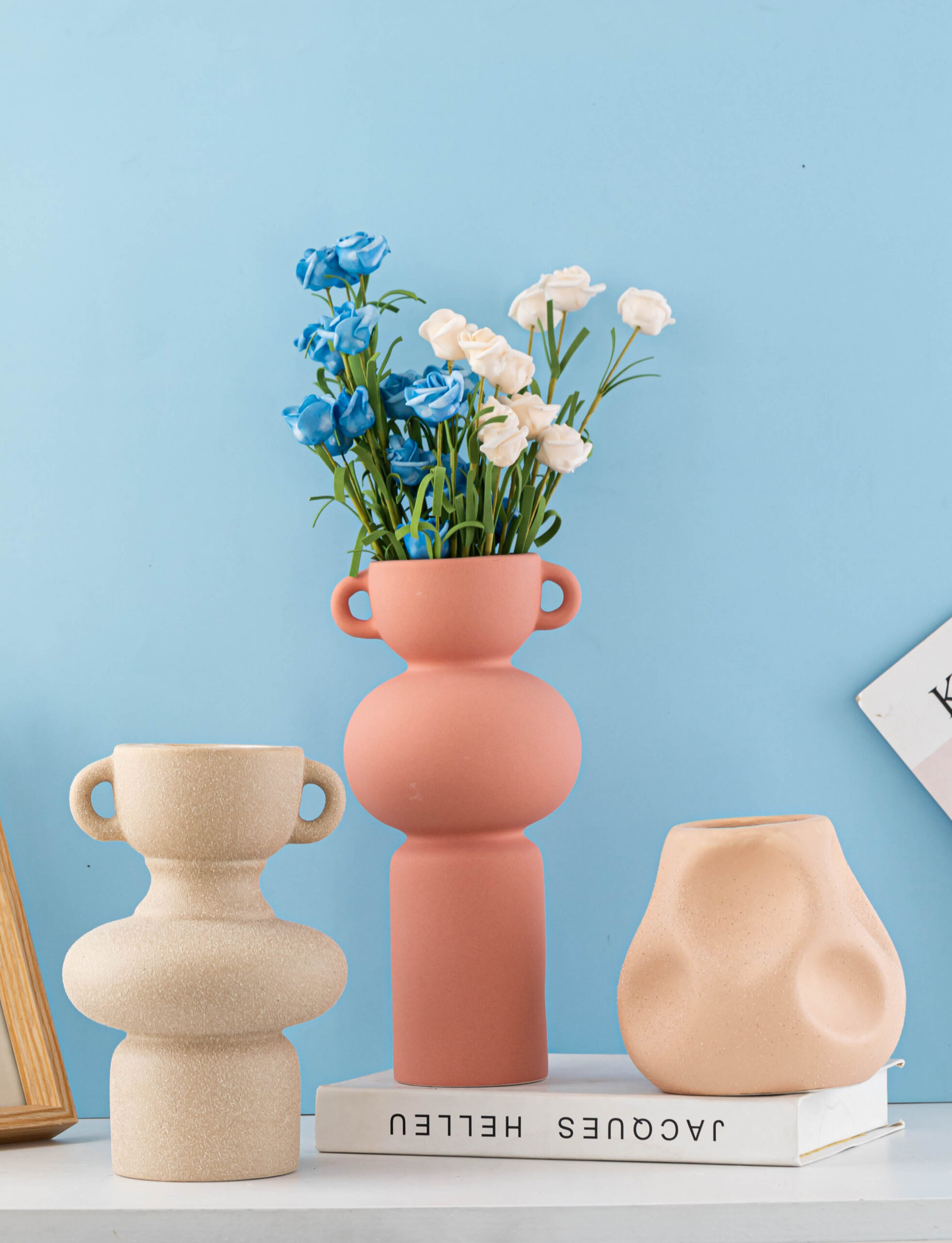
Home Decor Buyer Insights Start Before the First Quote
As an American home decor designer, I can love a beautiful ceramic object immediately.
A buyer cannot stop there.
A buyer looks at Contemporary Ceramic Art and quietly asks: Can this product be sold, shipped, explained, cared for, reordered, and placed inside a larger collection?
That is why home decor buyer insights matter. B2B buyers are not only looking for a pretty vase, tray, candle holder, sculpture, or decorative bowl. They are reading the product for commercial signals.
They see the shelf.
They see the carton.
They see the replacement risk.
They see whether the supplier understands retail reality.
What Buyers Notice Before They Inquire
Before buyers send an inquiry, they are already filtering the product.
They notice:
Does the silhouette feel current?
Does the finish look stable?
Does the ceramic surface feel intentional, not accidental?
Can the item sit inside a collection?
Can the product be explained in one clear line?
Will customers understand the value?
Will the supplier provide useful care tips for display, cleaning, handling, and long-term use?
That last point matters more than many suppliers realize. For decorative ceramics, care information helps buyers reduce uncertainty. A buyer wants to know if the surface scratches easily, whether the finish should avoid harsh cleaners, whether the piece is decorative only, and how it should be packed or displayed in-store.
A product that looks beautiful but creates questions is harder to buy in bulk.
Contemporary Ceramic Art Has to Be Commercial, Not Just Beautiful
The market is clearly moving toward more expressive interiors.
Recent U.S. design coverage from Spring 2026 High Point Market pointed to sculptural curves, artisanal textures, Southwest influence, menswear patterns, oversized scale, and more detailed interiors. These signals support stronger interest in ceramic surfaces, crafted details, and object-like decor, but they also make product judgment more important.
For Contemporary Ceramic Art, the buyer’s question is not only whether the piece looks artistic.
The buyer asks:
Can the shape be repeated?
Can the finish stay controlled?
Can the item work in a retail-ready collection?
Can it be packed safely?
Can it be reordered without the second batch looking completely different?
That is where design taste meets sourcing discipline.
How Buyers Compare Home Decor Suppliers
When buyers compare home decor suppliers, they usually compare much more than price.
They compare:
Sample quality.
Finish control.
Collection thinking.
Packaging awareness.
Communication.
Production repeatability.
Willingness to explain risk early.
A factory direct home decor supplier has an advantage only if the factory can translate workshop reality into buyer confidence. “Factory direct” alone is not enough.
A better supplier says:
“This finish is attractive, but this version will be easier to repeat.”
“This sculptural form needs stronger internal packing.”
“This product works better as the hero item in the collection.”
“This surface needs simple care tips before it enters a retail assortment.”
“This collection needs one smaller supporting SKU to feel complete.”
That is the kind of answer buyers remember.
Why Packaging Standards Enter the Conversation Early
For B2B home decor, packaging is not a back-office detail.
It is part of the product decision.
This is where home decor packaging standards matter. ISTA describes package tests that range from early design screening to simulations of shipment hazards, which is exactly why serious buyers think about packaging before bulk production, not after.
A ceramic art object may look beautiful, but if it has a fragile edge, narrow base, or textured surface, the packaging must protect more than the shape. It must protect the finish, the retail presentation, and the buyer’s margin.
A product that looks good but ships badly is not truly retail-ready.
Why a Home Decor Collections Supplier Has to Think Beyond One SKU
A strong home decor collections supplier does not only offer individual products.
It helps buyers build a shelf story.
A useful collection often needs:
One hero product.
One smaller add-on.
One functional piece.
One texture or color anchor.
One product that makes the whole display easier to understand.
If every item is bold, the shelf feels noisy. If every item is too safe, the shelf feels flat. If the care requirements are unclear, the buyer sees future service problems.
That is why the best suppliers think in collections, not just catalog pages.
TikTok Can Create Interest. Buyers Still Need Proof.
TikTok continues to influence home decor taste. ELLE Decor’s 2026 TikTok trend coverage highlights ideas such as skirted furniture, broken floor plans, friction-maxxing, and cabbagecore, all pointing toward nostalgic, tactile, personality-driven interiors.
But TikTok does not answer buyer questions.
Can the product ship safely?
Can the finish be repeated?
Can the customer understand how to care for it?
Can the item work inside a collection?
Can the style survive beyond one viral moment?
That is where buyer insight, samples, packaging, and supplier judgment matter.
Why Samples Still Matter
Stanford d.school identifies Prototype and Test as core modes in design thinking, which fits home decor sourcing well: a sample lets buyers learn before committing to production.
A sample shows what a product page cannot.
It shows weight.
It shows surface.
It shows balance.
It shows packing risk.
It shows whether the supplier understands revision.
For buyers, the sample is not only a product preview. It is a supplier test.
FAQ: Home Decor Buyer Insights
What are home decor buyer insights?
Home decor buyer insights are the practical signals buyers use before sourcing: product style, finish control, supplier reliability, packaging risk, care requirements, collection fit, and reorder potential.
How do buyers evaluate Contemporary Ceramic Art?
Buyers look at artistic value, but also repeatability, finish stability, packaging risk, care instructions, and whether the piece can fit inside a retail-ready collection.
How do buyers compare home decor suppliers?
Buyers compare suppliers by sample quality, product judgment, packaging awareness, communication, factory knowledge, care information, and reorder confidence.
Why do home decor packaging standards matter?
Packaging standards matter because fragile ceramics, textured finishes, glass, mirrors, and sculptural objects can lose value quickly if they chip, scratch, crack, or arrive with weak retail presentation.
Final Thought: Buyers Are Reading the Whole System
A buyer does not only see one ceramic object.
They see the collection behind it.
They see the packaging risk.
They see the care questions.
They see whether the supplier can support repeat orders.
That is why home decor buyer insights matter in B2B sourcing.
The best suppliers do not only offer products. They help buyers understand which products are ready, which need revision, and which can become part of a stronger home decor collection.
Leave a Reply