

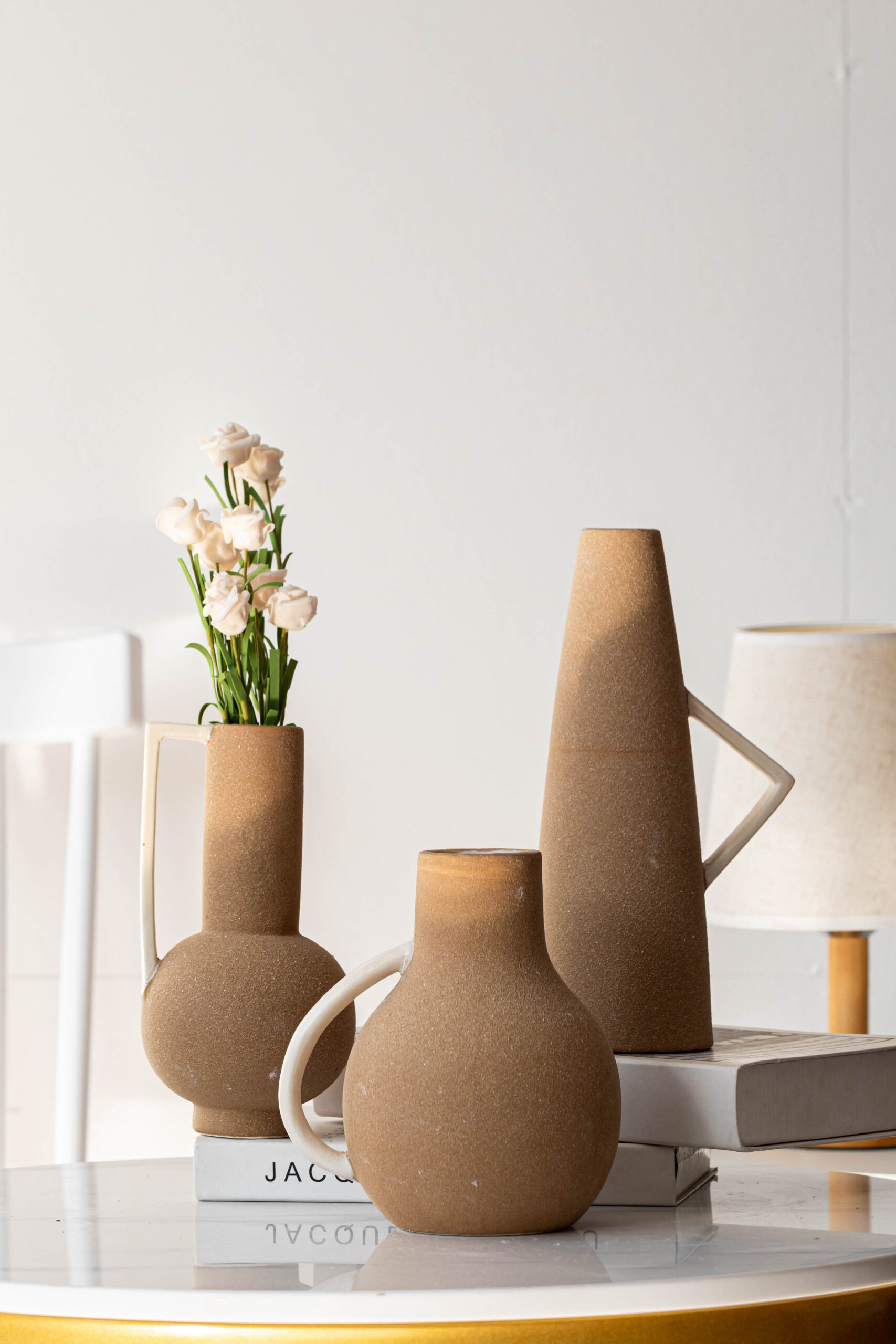
Home Decor Buyer Insights Start Before the First Inquiry
As an American home decor designer, I can tell you this: buyers start judging long before they ask for a quote.
They notice the finish.
They notice the scale.
They notice whether the item looks like one random sample or part of a retail ready home decor assortment.
That is why home decor buyer insights matter. A B2B buyer is not only asking, “Is this vase, tray, candle holder, mirror, or decorative object attractive?” The real question is: “Can this supplier help me build a collection that sells, ships, and reorders?”
For Bulk Home Decor, that difference is huge.
One pretty item may start the conversation. A complete assortment gets the order.
What Buyers Notice Before They Inquire
Before buyers send an email, they are already reading the product line.
They ask:
Does the product have a clear style direction?
Does the finish look stable?
Can this item sit with other SKUs?
Is the shape current but not too risky?
Does the product look easy to explain to a retail customer?
Can the supplier support packaging, repeat orders, and product development?
These are practical home decor buyer insights. Buyers do not only see the product in front of them. They imagine the shelf behind it.
A vase may look good alone. But if it cannot sit beside a tray, candle holder, bowl, or small decorative accent, the buyer may not see a real assortment opportunity.
What Makes a Retail-Ready Home Decor Assortment
A retail ready home decor assortment usually needs balance.
It needs a hero item that attracts attention.
It needs supporting products that make the shelf feel complete.
It needs different heights, functions, and price points.
It needs packaging logic.
It needs products that can be reordered without drama.
A good home decor collections supplier understands this. The supplier is not only selling individual products. The supplier is helping the buyer build a shelf story.
If every item is bold, the assortment feels noisy. If every item is safe, it feels boring. If the price ladder is unclear, the buyer has to do too much work.
The best collections feel easy to buy because the supplier already did the thinking.
Why Recent U.S. Home Trends Raise Buyer Expectations
Recent U.S. market coverage shows home decor moving toward more expressive interiors, richer texture, sculptural forms, warmer materials, and stronger personality. Architectural Digest’s Spring 2026 High Point Market recap highlighted draped forms, artisanal textures, Southwest influence, menswear patterns, oversized scale, and more detailed interiors.
That creates opportunity for decorative categories such as ceramic vases, trays, candle holders, mirrors, and sculptural accents.
But it also makes buyers more careful.
When texture, shape, and finish become the selling points, buyers cannot rely on catalog photos alone. They need to know whether the supplier can control finish, revise samples, build collections, and meet real home decor packaging standards.
TikTok also keeps speeding up home decor taste cycles. ELLE Decor reported TikTok-driven 2026 interior trends such as skirted furniture, broken floor plans, friction-maxxing, and cabbagecore, all pointing toward more nostalgic, tactile, personality-driven interiors.
But TikTok does not answer the buyer’s real questions.
Can this trend ship safely?
Can the finish be repeated?
Can it become a product family?
Can it survive beyond one viral moment?
That is where supplier judgment matters.
How Buyers Compare Home Decor Suppliers
When buyers compare home decor suppliers, they do not only compare unit price.
They compare:
Product taste.
Collection logic.
Sample quality.
Finish stability.
Packaging awareness.
Communication speed.
Reorder confidence.
A factory direct home decor supplier has an advantage only when the factory can explain product decisions clearly. “Factory direct” sounds good, but buyers still need proof.
A better supplier says:
“This finish is attractive, but this version will be easier to repeat.”
“This item works better as the hero SKU.”
“This smaller piece completes the price ladder.”
“This shape needs stronger packaging before bulk shipment.”
“This assortment needs one quieter item to feel more balanced.”
That is the kind of supplier buyers trust.
Why Packaging Standards Enter the Buyer’s Mind Early
For home decor buyers, packaging is not the last step.
It is part of the product decision.
The International Safe Transit Association provides transit testing, lab certification, and transit-tested programs for package performance, which shows why serious buyers think about packaging long before shipment.
A sculptural ceramic vase may look beautiful, but if the rim is fragile, the carton cost may rise. A tray may look simple, but if the surface scratches easily, the supplier needs better protection. A mirror may look retail-ready, but if the packaging is weak, the buyer sees risk.
A product that looks good but ships badly is not truly ready for B2B sourcing.
Why Samples Still Matter
Stanford d.school identifies prototype and test as core design-thinking modes, which fits home decor sourcing very well: buyers use samples to learn before committing to full production.
A sample shows what a catalog cannot.
It shows the weight.
It shows the finish.
It shows the balance.
It shows the packaging risk.
It shows whether the supplier understands revision.
For buyers, the sample is not just a product preview. It is a supplier test.
FAQ: Home Decor Buyer Insights
What are home decor buyer insights?
Home decor buyer insights are the practical signals buyers use before sourcing: style direction, finish control, collection fit, packaging risk, supplier reliability, and reorder potential.
What do buyers notice before they inquire?
Buyers notice whether the product looks retail-ready, whether it fits a collection, whether the finish looks stable, and whether the supplier seems capable of supporting bulk orders.
How do buyers compare home decor suppliers?
Buyers compare suppliers by sample quality, communication, product judgment, factory capability, packaging awareness, and whether the supplier can help build a complete assortment.
Why are home decor packaging standards important?
Packaging standards matter because home decor products often include fragile surfaces, ceramic bodies, glass, mirrors, sculptural shapes, and decorative finishes. Poor packaging can damage margin as much as poor design.
Final Thought: Buyers Are Reading More Than the Product
A buyer does not only see one item.
They see the shelf.
They see the carton.
They see the reorder risk.
They see whether the supplier understands retail reality.
That is why home decor buyer insights matter in B2B sourcing.
The best suppliers do not only sell products. They help buyers build collections that are attractive, packable, repeatable, and ready for the shelf.
Leave a Reply