

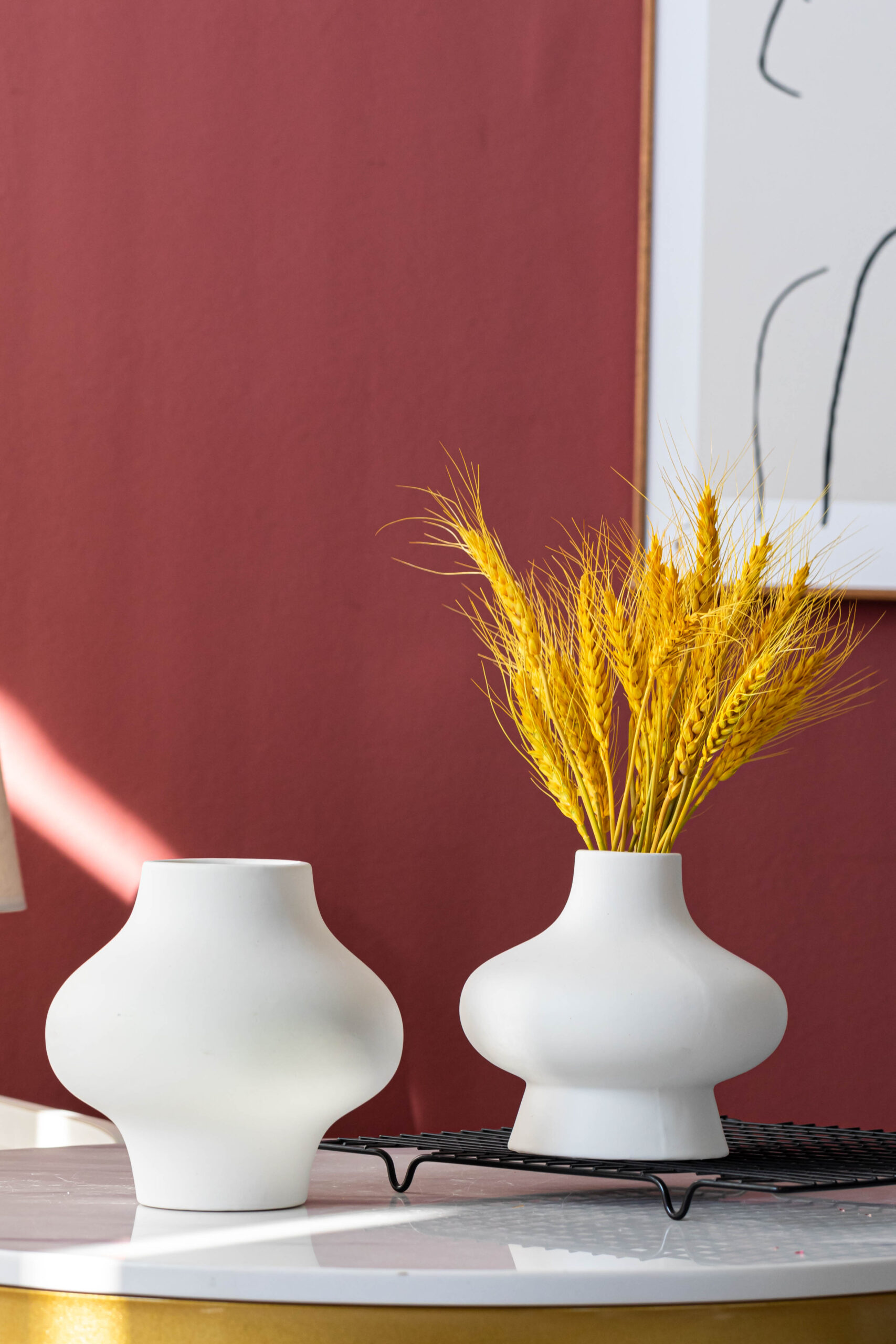
Home Decor Buyer Insights Start Before the Inquiry
As an American home decor designer, I can tell you something buyers rarely say out loud: they start judging long before they send the first email.
They notice the silhouette.
They notice the finish.
They notice whether the product feels retail-ready or still stuck in “sample room” mode.
They notice whether carved lines look intentional, or just decorative noise.
That is why home decor buyer insights matter. A B2B buyer is not only asking, “Is this vase, tray, candle holder, or art object pretty?” The better question is: “Can this product become part of a collection that sells, ships, and reorders?”
What Buyers Notice Before They Inquire
Here is what buyers notice before they inquire:
Does the product have a clear style direction?
Does the finish look stable?
Do carved lines add texture without making the product too busy?
Can the item sit inside a larger story?
Does the product look easy to explain to a retail customer?
Can this become part of a retail ready home decor assortment?
Buyers are not only looking at one product. They are already imagining the shelf behind it.
A sculptural vase may get attention. But if it cannot sit beside a tray, candle holder, small bowl, or decorative accent, it may not become a serious buying opportunity.
What Makes a Collection Commercially Complete
A commercially complete collection needs more than one strong item.
That is what makes a collection commercially complete: a hero piece, supporting items, different heights, different functions, a controlled finish story, and a price structure that gives the customer more than one way to buy.
A good collection often has:
One item that catches the eye.
One item that carries the style.
One smaller item that feels easy to buy.
One texture or carved detail that makes the shelf feel designed.
One functional piece that helps the collection feel useful, not just decorative.
If every item is bold, the shelf feels loud. If every item is safe, the shelf feels forgettable. Buyers look for balance.
Why Recent U.S. Trends Raise the Bar
Recent U.S. market coverage shows that home decor is moving toward more texture, sculptural forms, artisanal surfaces, earthy palettes, larger scale, and stronger material stories. Architectural Digest’s Spring 2026 High Point Market recap highlighted draped forms, artisanal textures, Southwest influence, menswear patterns, oversized scale, and more detailed interiors.
That is good news for products with carved lines, sculptural profiles, ceramic surfaces, and handmade-feeling finishes.
But it also makes buyer judgment stricter.
When texture becomes the selling point, the buyer needs to know whether the detail looks controlled. A carved line should make the product feel crafted, not messy. A textured surface should add value, not create production risk.
How Buyers Compare Home Decor Suppliers
When buyers compare home decor suppliers, they do not only compare price.
They compare taste, sample quality, finish control, packaging awareness, communication speed, and whether the supplier understands collection logic.
A factory direct home decor supplier has an advantage only when the factory can explain product decisions clearly. “Factory direct” by itself is not enough.
A better supplier says:
“This carved detail is strong, but this part may collect dust.”
“This finish is attractive, but this version will be easier to repeat.”
“This piece works better as the hero item.”
“This smaller SKU helps complete the assortment.”
“This product needs packaging adjustment before bulk shipment.”
That is the kind of supplier buyers remember.
Why Workshop Knowledge Matters
Workshop knowledge is where product judgment becomes practical.
MIT professor Eric von Hippel’s research on “sticky local information” explains that some useful problem-solving knowledge is difficult to transfer away from the place where the work is actually being solved. In home decor, that includes material behavior, finish control, shaping limits, packing risk, and repeatability.
This matters because buyers do not want surprises after placing the order.
They want to know early if a carved line is too deep, if a rim is too fragile, if a finish is hard to repeat, or if a product will need expensive packaging.
That is where Teruierdecor’s factory-side product thinking becomes valuable. The goal is not only to supply items. The goal is to help buyers understand which items are ready, which need revision, and which can become part of a stronger assortment.
TikTok Can Create Interest, But Buyers Still Need Proof
TikTok is now part of the home decor trend cycle. ELLE Decor’s 2026 TikTok interior trend coverage pointed to skirted furniture, broken floor plans, friction-maxxing, and cabbagecore as signs of nostalgic, tactile, personality-driven interiors moving into wider design conversation.
But TikTok does not answer buyer questions.
Can the finish be repeated?
Can the product ship safely?
Can the carved detail survive production?
Can the item fit a retail-ready assortment?
Can the style last beyond one viral moment?
That is why buyers still rely on samples, factory judgment, and collection logic before placing serious orders.
FAQ: Home Decor Buyer Insights
What are home decor buyer insights?
Home decor buyer insights are the practical signals buyers use before sourcing: style direction, finish control, sample quality, price structure, packaging risk, supplier reliability, and collection fit.
What do buyers notice before they inquire?
Buyers notice silhouette, finish, material, carved details, collection potential, price position, and whether the product looks ready for a retail assortment.
What makes a collection commercially complete?
A complete collection has a hero item, supporting products, different heights, useful functions, controlled finishes, packaging logic, and a believable price structure.
How do buyers compare home decor suppliers?
Buyers compare suppliers by sample quality, product judgment, factory knowledge, communication, packaging awareness, and reorder confidence.
Final Thought: Buyers Are Reading the Shelf Behind the Product
A buyer does not only see one vase.
They see the shelf behind it.
They see whether the carved lines feel commercial. They see whether the finish can be repeated. They see whether the product belongs in a retail-ready assortment. They see whether the supplier understands the real work behind the sample.
That is why home decor buyer insights matter in B2B sourcing.
The best suppliers do not only offer products. They help buyers make better product decisions before the order becomes expensive.
Leave a Reply