

Home Decor Sample Development Starts Before the First Order
As an American home decor designer, I have learned not to fall too quickly for a beautiful product photo.
A vase can look perfect online. A tray can look expensive under studio lighting. A sculptural object can feel like the right trend. But buyers do not build assortments from photos. They need to know if the product can be made, revised, packed, displayed, and reordered.
That is why home decor sample development matters.
A sample is not just one product before production. It is the buyer’s first serious test of the supplier.
What Buyers Notice Before They Inquire
Before buyers send a quote request, they are already reading the product.
This is what buyers notice before they inquire:
Does the silhouette feel current?
Does the finish look stable?
Does the piece look easy to explain?
Can it fit a larger collection?
Will it work in a retail ready home decor assortment?
Does the product look like it can be repeated, or does it feel like a one-off showroom piece?
These are real home decor buyer insights. Buyers are not only looking at style. They are looking for signs of commercial discipline.
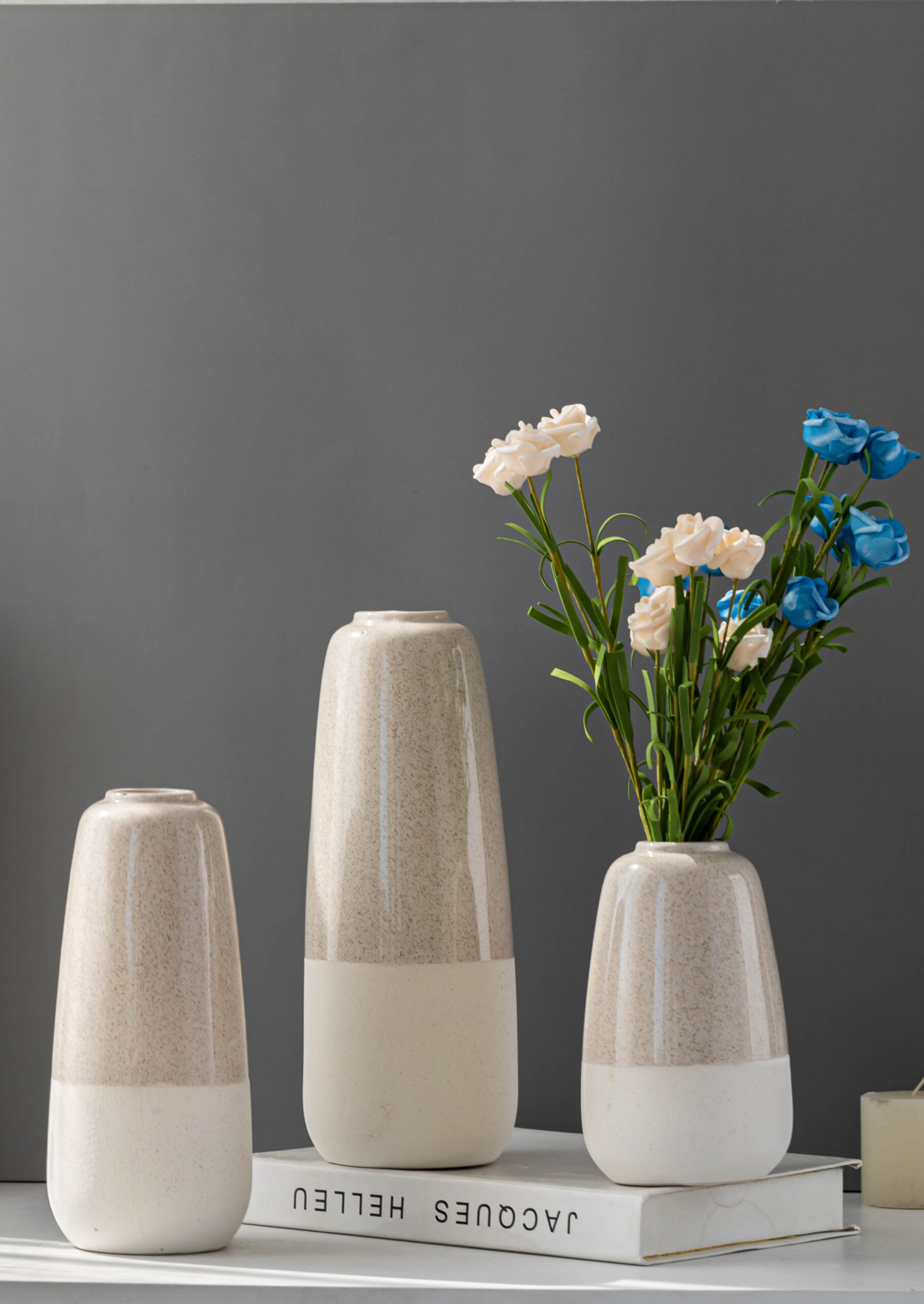
A ceramic vase with a clean profile, a stable glaze, and a believable size range feels safer than a dramatic piece that looks great once but raises questions about cost, packing, and repeatability.
Why Workshop Reality Makes Samples Feel More Believable
This is why workshop reality makes samples feel more believable: the workshop shows what the catalog cannot.
A catalog can show the final image.
A workshop can explain why one shape is harder to fire, why one rim may chip, why one texture may slow production, why one glaze may vary too much, and why the Clay Body matters for strength, color, weight, and finish result.
MIT professor Eric von Hippel’s research on “sticky local information” explains why some useful product knowledge is difficult to transfer away from the place where the work is actually being solved. In home decor, that knowledge often stays close to the people handling materials, molds, firing, finishing, packing, and repeat production.
That is why a factory direct home decor supplier should not only say, “We can make it.”
A better supplier says, “Here is what may go wrong, and here is how we would adjust the sample before production.”
What a Strong Sample Should Prove
A good sample should prove more than appearance.
It should prove that the product has commercial direction.
For buyers trying to compare home decor suppliers, a strong sample should answer:
Is the finish repeatable?
Does the Clay Body support the shape?
Does the surface look right in real light?
Does the piece feel balanced in hand?
Can the product sit with other SKUs?
Can the supplier revise the sample with judgment?
Can the product become part of a retail-ready assortment?
Stanford’s design thinking process treats prototyping and testing as ways to transform ideas into physical form, learn from them, and refine the direction before moving forward. For home decor sourcing, the sample works the same way: it lets buyers test reality before production becomes expensive.
Recent U.S. Home Trends Make Sampling More Important
Recent U.S. home design coverage continues to point toward richer texture, natural materials, sculptural forms, and more personality in interiors. Houzz reported that Spring 2026 High Point Market showed a move toward more substantial, tactile expressions of natural materials.
Better Homes & Gardens also described “midimalism” as a 2026 direction that balances minimalism and maximalism through bold color, rich texture, organic materials, and sculptural elements.
That creates opportunity for ceramics, vases, trays, decorative objects, candle holders, and sculptural home accents.
But it also makes sample development more important.
When the selling point is texture, curve, color, or material feel, buyers cannot approve the product from a flat image. They need to see whether the sample still feels controlled, repeatable, and commercial in person.
TikTok Can Create Interest. Samples Decide the Order.
TikTok is now part of the home decor trend cycle. ELLE Decor’s 2026 TikTok interior trend coverage points to skirted furniture, broken floor plans, friction-maxxing, and cabbagecore as signs of more nostalgic, tactile, personality-driven interiors.
But TikTok does not answer buyer questions.
Can the finish be repeated?
Can the item ship safely?
Can the style become a product family?
Can the product fit a retail assortment?
Can it still feel relevant after the viral moment fades?
That is where home decor sample development does the serious work.
A Better Home Decor Sample Development Process
A practical sample process should help buyers move from interest to confidence.
First sample: check shape, size, finish, Clay Body, weight, stability, and first impression.
Buyer feedback: decide what must change and what must stay.
Workshop feedback: explain what is stable, risky, costly, or difficult to repeat.
Revision sample: improve proportion, finish, packing direction, and collection role.
Assortment check: confirm whether the item fits a retail ready home decor assortment.
Pre-production confirmation: make sure the approved sample can be repeated in bulk.
This process protects buyers from approving a beautiful idea that later becomes a production problem.
FAQ: Home Decor Sample Development
What is home decor sample development?
Home decor sample development is the process of turning a design idea into a physical sample, then testing and revising it for finish, shape, material, packaging, assortment fit, and production readiness.
Why does the Clay Body matter in ceramic home decor?
The Clay Body affects strength, weight, firing behavior, surface color, glaze result, and whether the product can be repeated safely in bulk production.
How do buyers compare home decor suppliers through samples?
Buyers compare suppliers by looking at finish control, revision quality, workshop knowledge, packaging awareness, communication, and whether the sample can become a reorderable product.
What makes a sample feel believable?
A sample feels believable when the supplier can explain workshop reality: what can be repeated, what may fail, what needs revision, and how the product can become safer for bulk orders.
Final Thought: The Sample Is Where Trust Begins
A buyer does not trust a supplier because the catalog looks good.
A buyer starts to trust a supplier when the sample proves something.
It proves the material makes sense.
It proves the finish can work.
It proves the supplier understands revision.
It proves the product can move from one good-looking piece to a retail-ready assortment.
That is why home decor sample development is one of the most important steps in B2B home decor sourcing.
The sample is not the end of the process.
It is where the real buying decision begins.
Leave a Reply