

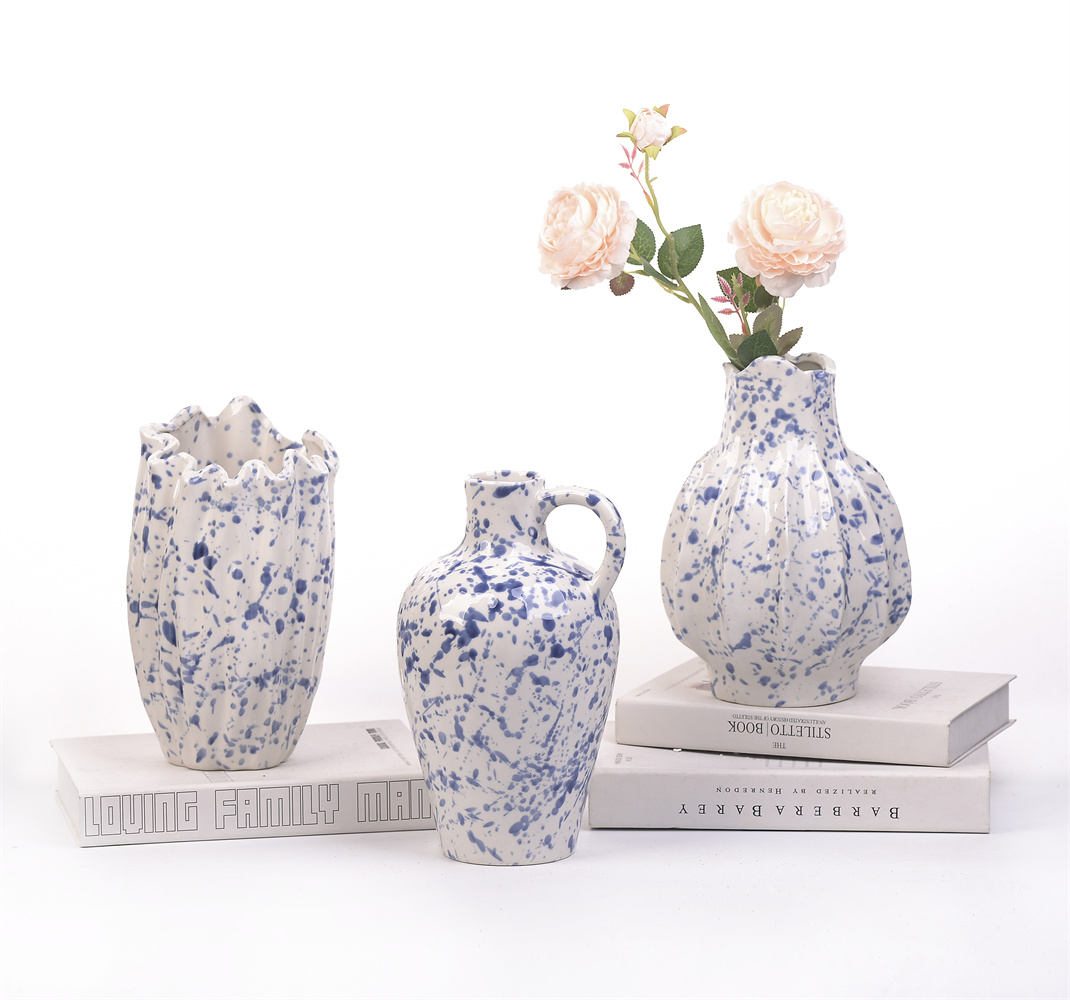
A Home Decor Manufacturer Story That Starts With Taste, Not Just Production
Not Every Factory Story Feels Like a Design Story. This One Does.
A good home decor manufacturer story should not read like a machinery list in a gray brochure.
It should feel like a room you want to walk into.
From an American interior designer’s point of view, that is the real difference. Some suppliers can make a product. Far fewer understand why that product belongs in the room in the first place. Teruier comes from a craft-making hometown where ceramics are not treated as anonymous inventory. They are shaped as mood, proportion, texture, and presence. That is what gives the Teruier story its charm: it feels less like mass production, and more like design translated into something wholesale-ready.
The Market Is Moving Toward Warmth, Texture, and Personality
That timing matters. High Point Market’s Spring 2026 programming is explicitly spotlighting neuroaesthetics, biophilia, and the emotional value of design, while the market’s Style Spotters are framing Spring 2026 around the styles, materials, and colors shaping home furnishings right now. In other words, the industry conversation is not only about what looks new. It is about what feels good to live with.
Las Vegas coverage is pointing in a similar direction. January 2026 reporting around the market highlighted major new ceramic launches as well as softer, more natural faux florals with delicate blossoms, neutral tones, and organic movement. That matters for decorative accessories because it suggests ceramics and tabletop accents are doing more than filling space now; they are helping define atmosphere.
And then there is TikTok, which continues to push playful, storied objects back into the North American décor conversation. ELLE Decor recently noted the rise of “cabbagecore,” a whimsical ceramics-adjacent trend gaining traction on TikTok and Pinterest, while other 2026 trend coverage points to layered, expressive interiors over flat minimal sameness. For brands with a point of view, that is a very useful shift.
Why Teruier’s Brand Story Lands With B2B Buyers
This is where the Teruier manufacturer story becomes commercially interesting.
Because buyers do not really need another factory that says, “We can make anything.” They need a partner who understands what has to happen between sketch and sell-through. They need a pottery manufacturer that can think like a stylist and operate like a supplier. They need a collection that photographs well, packs correctly, lands cleanly, and can be reordered without turning the second PO into a drama.
That is why details matter.
A designer may first notice the silhouette of a vase, maybe even a hero piece like a decorative lemon vase that feels cheerful without being loud. A buyer, meanwhile, notices different things: the carton, the finish consistency, the base stability, the glaze discipline, the lead time, the margin story. The best manufacturers know these are not separate conversations. They are the same conversation, just viewed from different angles.
Where the Story Gets Practical
Plenty of factories talk about style. Fewer talk about survivability.
For B2B buyers, the romance of ceramics only works when it is backed by disciplined packaging for fragile home decor, sensible sampling, and a real quality control team manufacturer mindset. That is also where factory direct pricing home decor becomes meaningful. Lower price is not the point by itself. Better value comes from direct pricing plus fewer surprises: fewer breakage headaches, fewer glaze inconsistencies, fewer awkward conversations after arrival.
And this is also where Our Team matters more than most factory websites admit. On many supplier sites, “Our Team” is just a polite navigation label. At Teruier, it should read as the living part of the brand story: the people translating craft, trend awareness, and production discipline into collections that actually work for American buyers.
A Brand Story Should Make a Buyer Feel Safer, Not Just More Impressed
That may be the quiet power of a real home decor manufacturer story.
It is not only there to sound beautiful. It is there to reduce risk.
A thoughtful supplier makes the buyer feel that the aesthetic side and the operational side are speaking to each other. That the glaze and the carton belong to the same system. That the pretty thing and the practical thing have finally met.
For retailers, importers, and designers, that is often what trust looks like.
FAQ: Ceramic Factory Questions Serious Buyers Actually Ask
What is the difference between earthenware, stoneware, and porcelain?
University and educational sources generally group clay-based ceramics into three main classes: earthenware, stoneware, and porcelain. Earthenware is fired at lower temperatures and remains more absorbent; stoneware is fired hotter and becomes denser and less porous; porcelain is typically fired around 1200–1400°C and is prized for hardness, refinement, and a more vitrified body.
Why does firing temperature matter so much in ceramic production?
Because firing temperature affects porosity, strength, shrinkage behavior, and finish stability. The Royal Society of Chemistry explains that biscuit ware is first fired to around 1000°C, while higher-temperature firing changes the ceramic body more substantially. Rice University’s ceramics overview likewise notes that different ceramic classes are tied to different firing ranges and performance outcomes.
What defects should buyers watch for when evaluating a ceramic factory?
Conservation and preservation guidance flags issues such as blistering, crawling, crazing, shivering, and warping as meaningful ceramic problems. In plain English, buyers should look for glaze cracks, uneven surfaces, exposed patches, peeling, shape distortion, and instability at the base. These are not tiny cosmetic footnotes; they often point back to process control.
Why is packaging so important for ceramic home decor?
Because a beautiful product that arrives chipped is not a beautiful product anymore. For fragile ceramics, packaging has to protect rims, handles, corners, and bases while still making pallet and carton logic workable for wholesale movement. In practice, good packaging for fragile home decor is part of quality control, not an afterthought.
What should a buyer ask a pottery manufacturer before placing an order?
Ask about clay body, firing range, glaze consistency, MOQ by size, sample lead time, inspection points, carton protection, and how repeat orders are controlled for color and size stability. A strong supplier should be able to explain the journey from wet clay to packed carton with the same confidence it uses to talk about styling.
The Short, Stylish Version
Teruier’s home decor manufacturer story works because it is not trying to be louder than the product.
It is telling a better story instead:
a craft-rich hometown,
a design-sensitive eye,
a factory system that respects beauty,
and a team that understands that good décor has to survive both the room and the route.
That is the kind of story American designers remember.
And usually, it is the kind they reorder too.
Leave a Reply