

The Prettiest Room in the World Still Needs a Reliable Supply Chain: Why Designers Need a Global Sourcing Partner in China
If you work in interiors long enough, you learn a very chic lesson: beautiful taste is only half the job.
The other half is getting that taste to arrive on time, in the right finish, packed properly, consistent from sample to reorder, and still lovely when it lands under retail lighting instead of studio lighting. That is why, for many of us, the phrase global sourcing partner China means something much more useful than “cheap factory.” It means a partner who can help translate inspiration into product, product into a collection, and a collection into something stable enough to sell.
And right now, that kind of partner matters more than ever. ASID’s current design outlook says the interior world is being shaped by authenticity, joy, individuality, and a search for grounding, while NKBA’s 2026 North American research points to whole-home continuity, personalized expression, organic aesthetics, material sophistication, and more connected, social spaces. In plain English: buyers still want charm, but they also want coherence.
A Supplier Makes Products. A Sourcing Partner Makes the Collection Work.
That distinction is the whole story.
A supplier can quote a vase. A real global sourcing partner China can help decide whether that vase should be 11 inches or 13, matte or satin, warm red or oxblood, packed alone or merchandised as a pair, and whether it belongs in a wider family of accents for a shelf, console, or mantel.
That is especially relevant for brands and retailers buying American style home decor wholesale. The ask is rarely “make this exact object and disappear.” It is usually more layered than that: help me build an assortment that feels current, calm, giftable, display-friendly, and easy to reorder when one shape suddenly becomes everyone’s favorite.
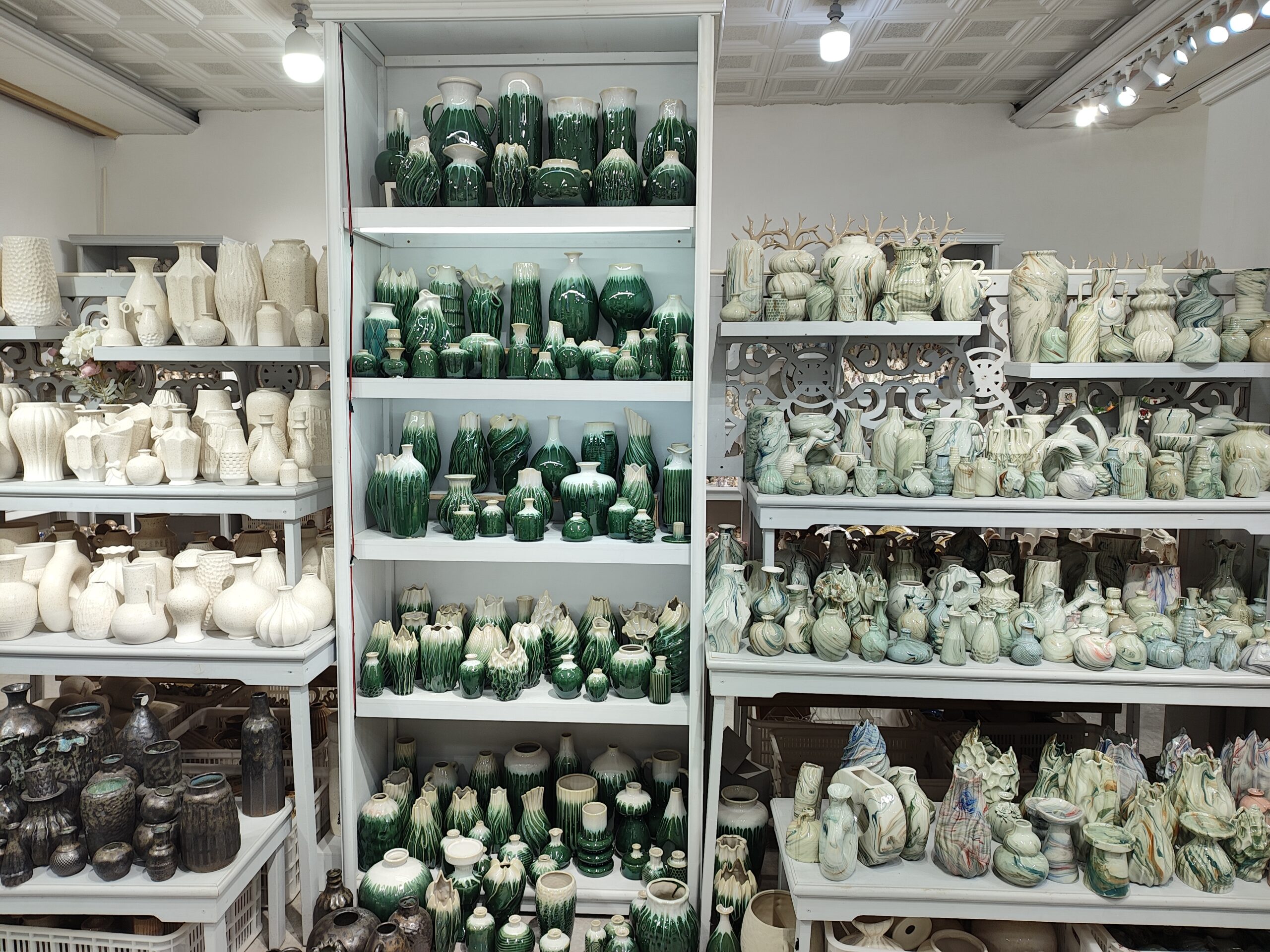
That is where Teruierdecor’s positioning becomes attractive. Teruierdecor is not trying to be a faceless production line. The stronger story is that it acts more like a design-aware sourcing bridge: part factory, part product translator, part calm grown-up in the room when sampling gets emotional.
North America Is Telling Us What It Wants
The signals are there if you know where to look.
High Point Market’s Spring 2026 programming includes Style Spotters, Hot Spot Tours, and a first-ever keynote focused specifically on residential kitchen design. That says a lot. The market is not treating decor as isolated ornament anymore. It is treating product as part of a broader lifestyle ecosystem, where materials, accents, lighting, and styling pieces all need to speak the same language. High Point runs April 25–29, 2026, and remains a trade-only venue for new product direction and industry decision-making.
The social layer says the same thing, just with more ruffles. TikTok’s own trend research says the comment section is becoming “the new focus group,” and its 2025 report emphasizes community-led product feedback, a mix of creator voices, and less over-edited visual storytelling. ELLE Decor’s March 2026 take on TikTok interiors points to the rise of skirted furniture, nostalgia, and personality-rich styling with staying power. In other words, buyers are still craving warmth and whimsy, but now they want those looks turned into practical, purchasable formats.
So when I look at a piece like a Teruier red vase centerpiece, I do not just see color. I see a sourcing question: Can the finish stay consistent? Can it sit inside a wider seasonal story? Can it work as a hero item in a styled dining table moment, but also fold into broader mantel decor for retailers without looking oddly specific? That is the real work.
What a Good Global Sourcing Partner in China Should Actually Help You With
Trend translation
Not every trend deserves a purchase order. A good partner helps separate market signal from moodboard confetti.
Product development
A strong OEM home accents manufacturer should help refine scale, silhouette, finish, and grouping logic, not just ask for a CAD and a deposit.
Inspection and execution
This part is gloriously unsexy and absolutely essential. Third-party inspection support matters because trust is lovely, but paperwork is lovelier.
Retail thinking
Home decor is not just about what looks good in one styled shot. It is about what sells, replenishes, and behaves well in stores, catalogs, and e-commerce.
Program building
If you are growing into a wider channel strategy, your sourcing partner should also understand how a distributor program home decor works: assortment logic, labeling consistency, reorder cadence, and presentation that feels retail-ready.
Why Designers and Buyers Keep Coming Back to This Model
Because it lowers decision fatigue.
When the factory understands aesthetics, when the sourcing team understands packaging, when the communication is clear, and when there is built-in third-party inspection support, the designer gets to do more designing and less detective work.
And frankly, that is the dream.
The best sourcing relationships do not feel transactional. They feel like having someone on the other side of the world quietly protecting the idea.
FAQ: What Serious Buyers Ask a Ceramic Factory Before They Commit
What makes a “global sourcing partner” different from a standard factory?
A standard factory may only quote and produce. A sourcing partner helps with development, finish adjustment, collection planning, packing logic, inspection coordination, and often communication across multiple steps of the buying cycle.
Why is third-party inspection support such a big deal in ceramics?
Because ceramics are full of charming little risks: glaze variation, dimension drift, surface pinholes, color inconsistency, and packing damage. Third-party inspection support gives buyers an extra layer of verification before goods move, which is especially useful for retailers, distributors, and brands managing repeat programs.
If I am buying ceramic pieces that touch food, what should I ask?
Ask early whether the item is decorative-only or intended for food contact. The FDA states that imported and domestic ceramic ware has been found to contain extractable cadmium, and its lead guidance for ceramic foodwares references leaching limits and ASTM test methods for food-contact surfaces. Decorative ceramic is one conversation; food-use ceramic is a very different compliance conversation.
Who is responsible for U.S. import compliance?
Not only the factory. U.S. Customs and Border Protection says compliance is a shared responsibility between CBP and the importing/exporting community. CPSC also states that manufacturers, importers, distributors, and retailers have legal obligations to report certain product safety issues, and that firms generally must report quickly when a product could create a substantial risk.
Can one ceramic factory support both boutique styling and larger retail rollout?
Yes, if the factory has both design sensitivity and operational discipline. That means it can develop statement pieces, support volume programs, hold finish standards, and help extend a hero SKU into a collection rather than leaving it as a lonely one-hit wonder.
What should I ask for before approving samples?
Ask for exact dimensions, finish notes, carton details, usage classification, production tolerances, photos in natural and controlled light, and any available inspection or test documentation. For retail programs, also ask how the piece fits within a broader assortment.
Good Taste Travels Better With Structure
For designers, buyers, and retailers, sourcing is not supposed to kill the fun. It is supposed to protect it.
A great global sourcing partner China does exactly that. It helps turn your taste into something scalable, your ideas into something manufacturable, and your seasonal story into something that can survive real-world retail.
That is not less creative. It is what allows creativity to last.
Leave a Reply