

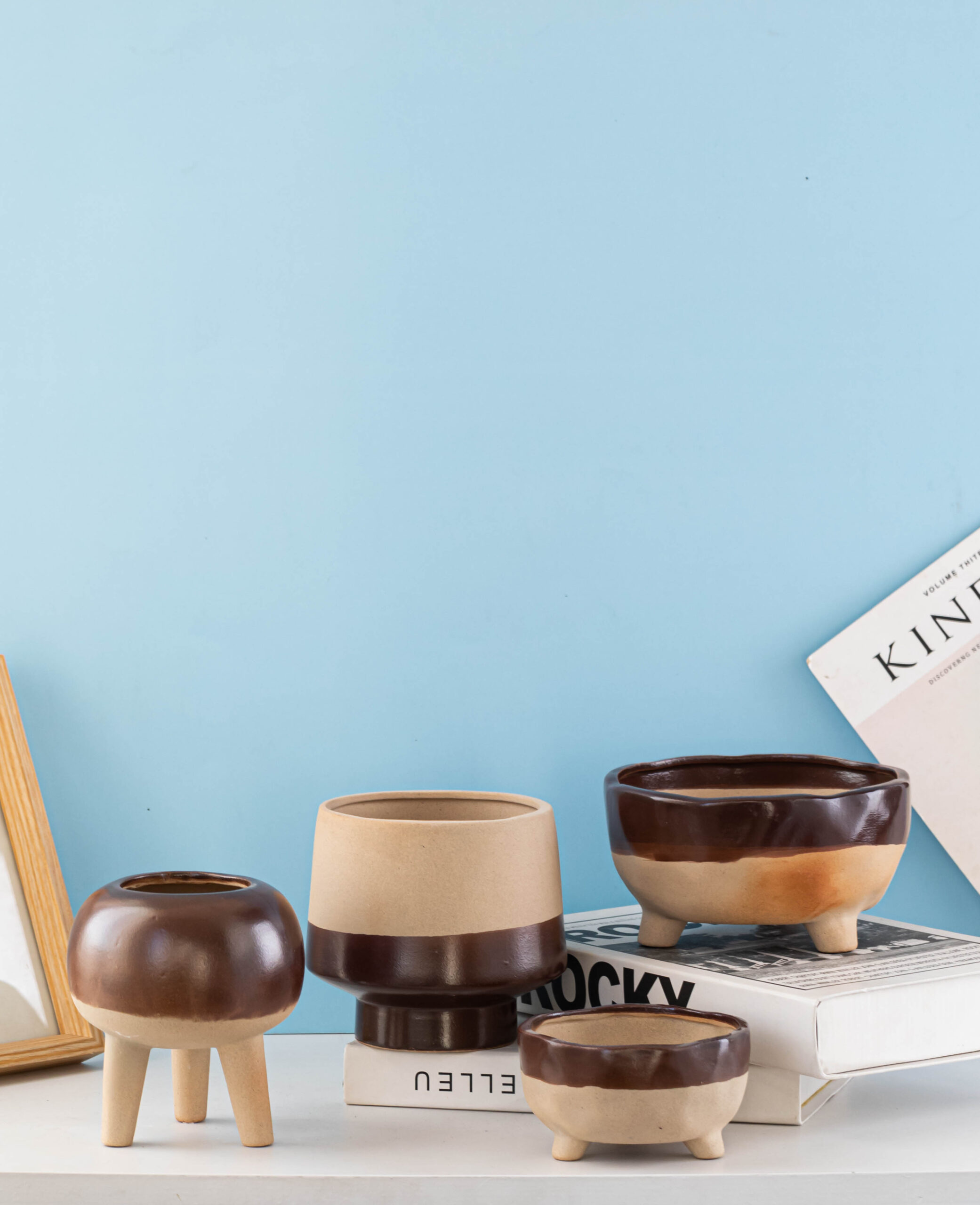
Reduce Sourcing Risk Home Decor Buyers Face Before the Order
As an American home decor designer, I love a beautiful ceramic vase, a quiet matte finish, a hand-shaped bowl, or a tabletop accent with a little personality.
But buyers have to think one step further.
Will the finish repeat?
Will the vase ship safely?
Will the product fit the shelf?
Will the trend still make sense after launch?
Will the supplier support the second order?
That is why reduce sourcing risk home decor should not be treated as a back-office issue. It is a product development issue.
For B2B buyers sourcing ceramic decor wholesale, the safest product is not always the plainest one. It is the product where the material, finish, packaging, price, and shelf role have already been tested.
Why Buyers Want the Trend Signal, Not the Full Trend Weight
This is why buyers want the trend signal not the full trend weight.
Spring 2026 High Point Market coverage pointed to draped forms, artisanal textures, Southwest influence, menswear patterns, oversized scale, and more detailed interiors. These are useful home decor signals, but a buyer does not need every SKU to carry the full trend at maximum volume.
For private label ceramic decor, the smarter move may be smaller:
A warmer glaze.
A softer curve.
A slightly irregular rim.
A tactile surface.
A matte ceramic decor finish that feels current but still repeatable.
A trend gets attention. A controlled trend gets ordered.
A Short Tabletop Décor Buying Guide for Risk Control
A practical tabletop décor buying guide should not start with “Is it pretty?”
It should start with risk.
For tabletop décor, buyers should check:
Does the item have a clear shelf role?
Does the finish look stable in real light?
Can it sit with vases, trays, candle holders, bowls, and wall décor?
Does the packaging protect the surface?
Does the supplier know what may go wrong before bulk production?
This matters for wholesale ceramic vases because ceramics often carry risk in the rim, base, glaze, surface, weight, and carton structure.
A vase is not just a vase. It is a product system.
Packaging Stability Home Decor Buyers Should Check Early
Packaging stability home decor is one of the fastest ways to reduce sourcing risk.
A product that looks beautiful but arrives chipped, rubbed, cracked, or scratched is not retail-ready. ISTA notes that many package testing protocols begin by defining product damage tolerance and package degradation allowance before testing begins, which is exactly the kind of thinking fragile home decor needs.
Buyers should ask early:
Will the matte finish rub inside the carton?
Will the rim need extra protection?
Can the vase stay stable during transit?
Does the carton protect the product without killing margin?
Can the same packaging work for repeat orders?
Packaging is not the last step. It is part of the sourcing decision.
Why Heritage Craft Home Decor Sourcing Can Reduce Risk
Heritage craft home decor sourcing is valuable when it gives buyers more than a handmade story.
The real value is making knowledge.
A craft-region supplier may know which glaze is hard to repeat, which shape may lean, which rim may chip, which texture may collect rubbing marks, and which product should be simplified before production.
MIT professor Eric von Hippel’s work on “sticky local information” explains why some useful product knowledge is difficult to move away from the place where the problem is actually being solved. In home decor, that knowledge often lives close to the workshop floor: material behavior, finish control, forming limits, packing risk, and repeat production.
That is how local making knowledge reduces buyer risk.
TikTok Can Create Demand. Buyers Still Need Proof.
TikTok now moves home decor trends quickly. ELLE Decor reported that 2026 TikTok interior trends include skirted furniture, broken floor plans, friction-maxxing, and cabbagecore, showing how fast nostalgic, tactile, personality-driven interiors enter the wider design conversation.
But TikTok does not answer buyer questions.
Can the finish be repeated?
Can the product ship safely?
Can the trend become a product family?
Can the style survive beyond one viral moment?
Can the supplier support private label ceramic decor after the first order?
That is why buyers still need samples, packaging review, and supplier judgment.
How Teruierdecor Helps Buyers Reduce Sourcing Risk
For Teruierdecor, reducing sourcing risk is not only about offering products.
It is about helping buyers make better product decisions before the order becomes expensive.
That means:
Testing finish stability.
Reviewing sample proportions.
Checking packaging logic.
Building tabletop collections with shelf rhythm.
Using heritage craft knowledge without losing commercial control.
Helping buyers turn trend signals into repeatable ceramic products.
For buyers sourcing matte ceramic decor, wholesale ceramic vases, or broader ceramic decor wholesale collections, this kind of support helps protect both the first order and the reorder.
FAQ: Reduce Sourcing Risk Home Decor
How can buyers reduce sourcing risk in home decor?
Buyers can reduce sourcing risk by reviewing samples carefully, checking finish stability, confirming packaging protection, testing shelf logic, and working with suppliers who understand production risks early.
Why is packaging stability important in home decor sourcing?
Packaging stability protects fragile products, finishes, rims, edges, carton structure, margin, and buyer confidence. Poor packaging can damage a good product before it reaches the shelf.
Why do buyers want trend signals instead of the full trend?
The full trend may be too bold, fragile, seasonal, expensive, or hard to repeat. Buyers usually need a controlled version that can fit a real assortment.
Why does heritage craft sourcing help B2B buyers?
Heritage craft sourcing helps when the supplier brings real making knowledge: material behavior, finish control, sample judgment, packaging risk, and repeat-production experience.
Final Thought: Risk Is Reduced Before the Purchase Order
A product photo creates interest.
A sample starts the conversation.
But risk is reduced through better judgment: material, finish, packaging, shelf logic, trend control, and supplier reality.
That is why reduce sourcing risk home decor should begin early in product development.
A beautiful product gets attention.
A well-developed product gets a better chance to reorder.
Leave a Reply