

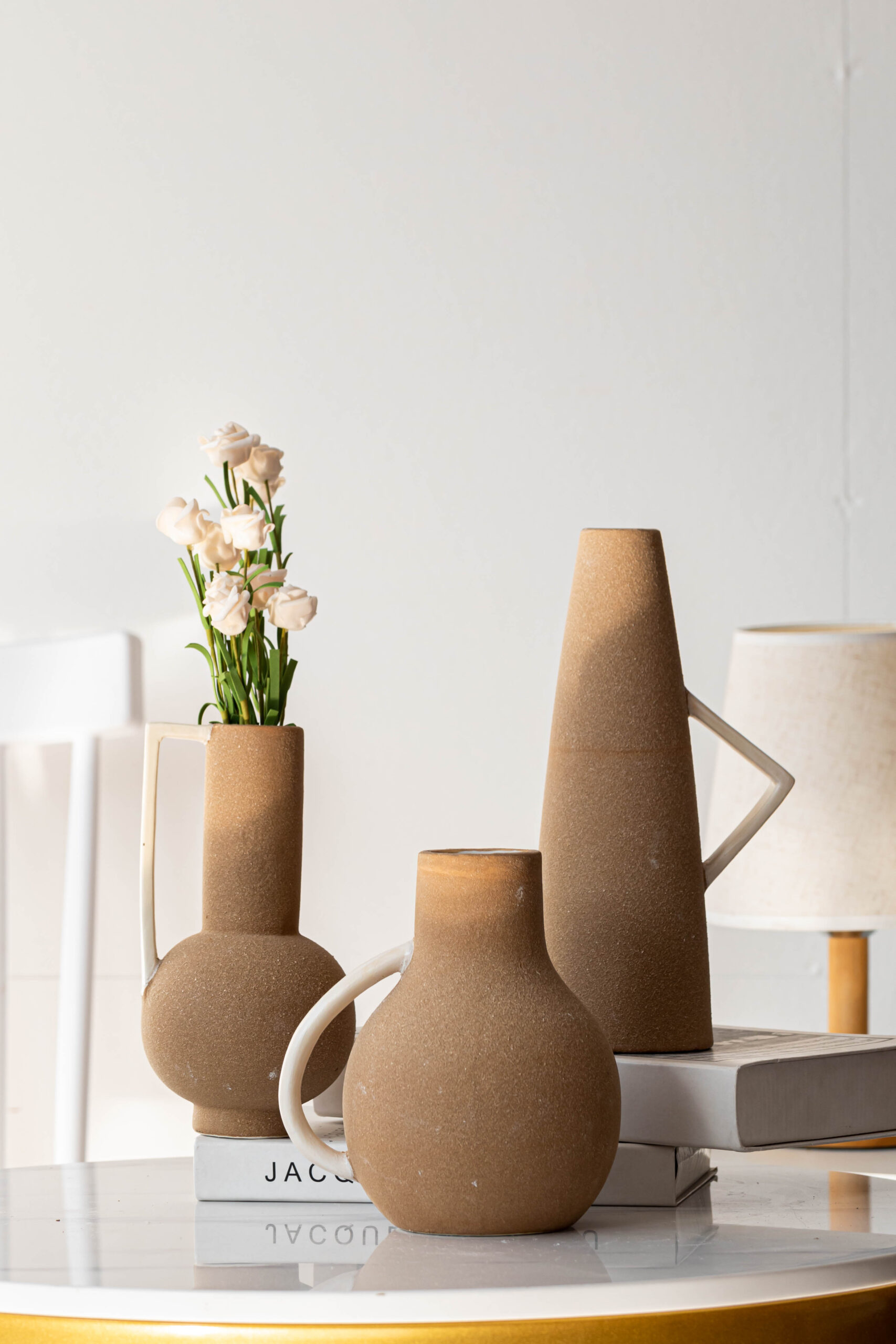
Heritage Craft Home Decor Sourcing Gives Buyers More Than a Pretty Origin Story
As an American home decor designer, I love products with human character: a ceramic vase with a hand-shaped profile, a tabletop object with subtle surface variation, a glaze that feels warm instead of factory-flat.
But for B2B buyers, heritage craft cannot only be romantic.
It has to be useful.
That is why heritage craft home decor sourcing matters. A good craft-region supplier does not just offer handmade-looking products. It helps buyers understand material behavior, sample risk, finish stability, packaging needs, and whether a product can survive the second order.
For buyers working in ceramic decor wholesale, the best craft knowledge reduces guessing.
Why Craft Knowledge Helps Reduce Sourcing Risk
To reduce sourcing risk home decor buyers need more than catalog photos.
They need answers before production:
Can the finish be repeated?
Will the rim chip?
Will the surface rub in packaging?
Will the base sit flat?
Will the item still look controlled in bulk?
Will this product work as part of a real tabletop assortment?
MIT professor Eric von Hippel’s research on “sticky local information” explains why useful product knowledge is often hard to move away from the place where the work happens. In sourcing, that means material behavior, finish control, forming limits, and packing risk often live closest to the workshop floor.
That is the practical value of heritage craft sourcing: not just tradition, but earlier risk detection.
What a Home Decor Product Sample Review Should Ask
A serious home decor product sample review should not stop at “Does it look good?”
Buyers should ask:
Does the glaze look intentional?
Does the weight feel right for the product role?
Does the finish match the rest of the collection?
Does the surface need protection in packaging?
Can the supplier repeat the approved sample?
Can this item work in retail, hospitality, or design-led tabletop styling?
Stanford d.school treats prototyping and testing as tools for learning before bigger commitments. In home decor sourcing, the sample plays the same role: it helps buyers learn before the purchase order becomes expensive.
A good sample does not only show the product. It reveals the supplier’s judgment.
A Short Tabletop Décor Buying Guide for Craft-Led Products
A practical tabletop décor buying guide should look at the product’s role, not only its beauty.
For tabletop décor, buyers should check:
Hero item: Can this be the centerpiece?
Supporting item: Does it carry the same style story?
Add-on item: Is there a smaller, easier-to-buy SKU?
Finish anchor: Does the surface make the group feel designed?
Packaging: Can the products ship without rubbing, chipping, or scratching?
A centerpiece vase wholesale program, for example, should not rely on one dramatic vase alone. The buyer may need smaller vases, trays, candle holders, bowls, or ceramic accents that help the collection feel complete.
A great centerpiece starts the shelf story.
A good assortment makes it sellable.
How Recent U.S. Trends Make Craft Sourcing More Valuable
Recent U.S. home coverage from Spring 2026 High Point Market points toward draped forms, artisanal textures, Southwest influence, menswear patterns, oversized scale, and more detailed interiors. These are useful signals for ceramic décor, sculptural objects, and crafted surfaces—but buyers still need those signals translated into shelf-ready products.
This is where craft sourcing becomes valuable.
A trend may call for texture, but the workshop knows which texture can be repeated.
A trend may call for bold scale, but the workshop knows whether the base is stable.
A trend may call for a handmade look, but the supplier must keep variation inside a commercial range.
TikTok is also accelerating home decor taste cycles. ELLE Decor reported 2026 TikTok-driven interiors such as skirted furniture, broken floor plans, friction-maxxing, and cabbagecore, all pointing toward nostalgic, tactile, personality-driven design.
But TikTok does not answer the sourcing question.
A craft supplier can.
Why Packaging Still Matters in Heritage Craft Sourcing
Craft value needs protection.
A hand-finished vase loses value if the glaze rubs in transit. A textured ceramic object loses trust if the surface arrives scratched. A sculptural piece becomes a problem if its packaging cost destroys the margin.
ISTA notes that many package testing protocols begin by defining product damage tolerance and package degradation allowance before testing. For fragile ceramic decor, that means buyers and suppliers should decide early what level of damage is unacceptable.
In heritage craft sourcing, packaging is not separate from the product.
It protects the story buyers are paying for.
How Buyers Read Commercial Calm After Launch
This is how buyers read commercial calm after launch.
The finish does not trigger complaints.
The carton does not create damage claims.
The reorder does not look different from the approved sample.
The supplier does not need to explain every shipment.
The collection still makes sense after it reaches the shelf.
That is commercial calm.
For B2B buyers, it is often more valuable than one dramatic sample. A good supplier helps the buyer launch something that still feels manageable after the excitement is over.
FAQ: Heritage Craft Home Decor Sourcing
What is heritage craft home decor sourcing?
Heritage craft home decor sourcing means working with suppliers and craft regions that understand material, shaping, finishing, and production knowledge built through long making experience.
Why does heritage craft sourcing reduce risk?
It helps buyers identify finish problems, material limits, packaging needs, and production risks earlier, before bulk orders become expensive.
What should buyers check during a ceramic sample review?
Buyers should check finish stability, surface quality, weight, base balance, rim strength, packaging risk, collection fit, and whether the sample can be repeated in production.
Why does tabletop décor need a sourcing strategy?
Tabletop décor usually sells better as a collection. Buyers need hero items, supporting pieces, smaller add-ons, finish consistency, and packaging that protects the product during shipment.
Final Thought: Craft Is Valuable When It Helps Buyers Decide
Heritage craft is not only about where a product comes from.
It is about what the making knowledge helps buyers see.
That is why heritage craft home decor sourcing is valuable for B2B buyers. It helps reduce sourcing risk, improve sample review, protect ceramic finishes, build tabletop collections, and create the commercial calm buyers need after launch.
Leave a Reply