

From Mood Board to Market Shelf: Why a Fast Sampling Home Decor Supplier Wins the Room
Some suppliers send a sample. The better ones send momentum.
If you work in interiors long enough, you learn a slightly annoying truth: the real delay is rarely the idea. It is the distance between that looks right and that can actually ship. That is exactly why a fast sampling home decor supplier matters.
For designers, that speed means fewer weeks lost between concept and client approval. For sourcing teams, it means fewer blind bets. For brands, it means the difference between catching a style wave and waving politely at it as it passes by.
At Teruierdecor, the advantage is not just speed for speed’s sake. It is speed rooted in a genuine craft hometown—where materials, techniques, and making culture already live close together. That shortens the path from sketch to shelf, from glaze idea to boxed sample, from “interesting” to “approved.”
North America is rewarding products that feel crafted, current, and easy to specify
The buying calendar itself tells the story. Las Vegas Market positions itself as a place where buyers can see, touch, and feel products in person across 3,500+ brands; High Point Market’s Spring 2026 programming is built around “moment-defining trends,” and its Future Snoops theme for the season is “Preserve”; HD Expo + Conference 2026 is explicitly aimed at hospitality product discovery, design education, and the technology shaping what comes next for hotels and commercial interiors.
The mood in design media lines up with that. House Beautiful’s 2026 trend coverage points to comfort, nostalgia, and personality, while its High Point reporting highlighted traditional brands using 3D printing with ceramic to create new forms. Architectural Digest’s 2026 forecast also points to artisanal details and more expressive interiors. In plain English: buyers are still looking for beauty, but not bland beauty. They want pieces with shape, touch, and a point of view.
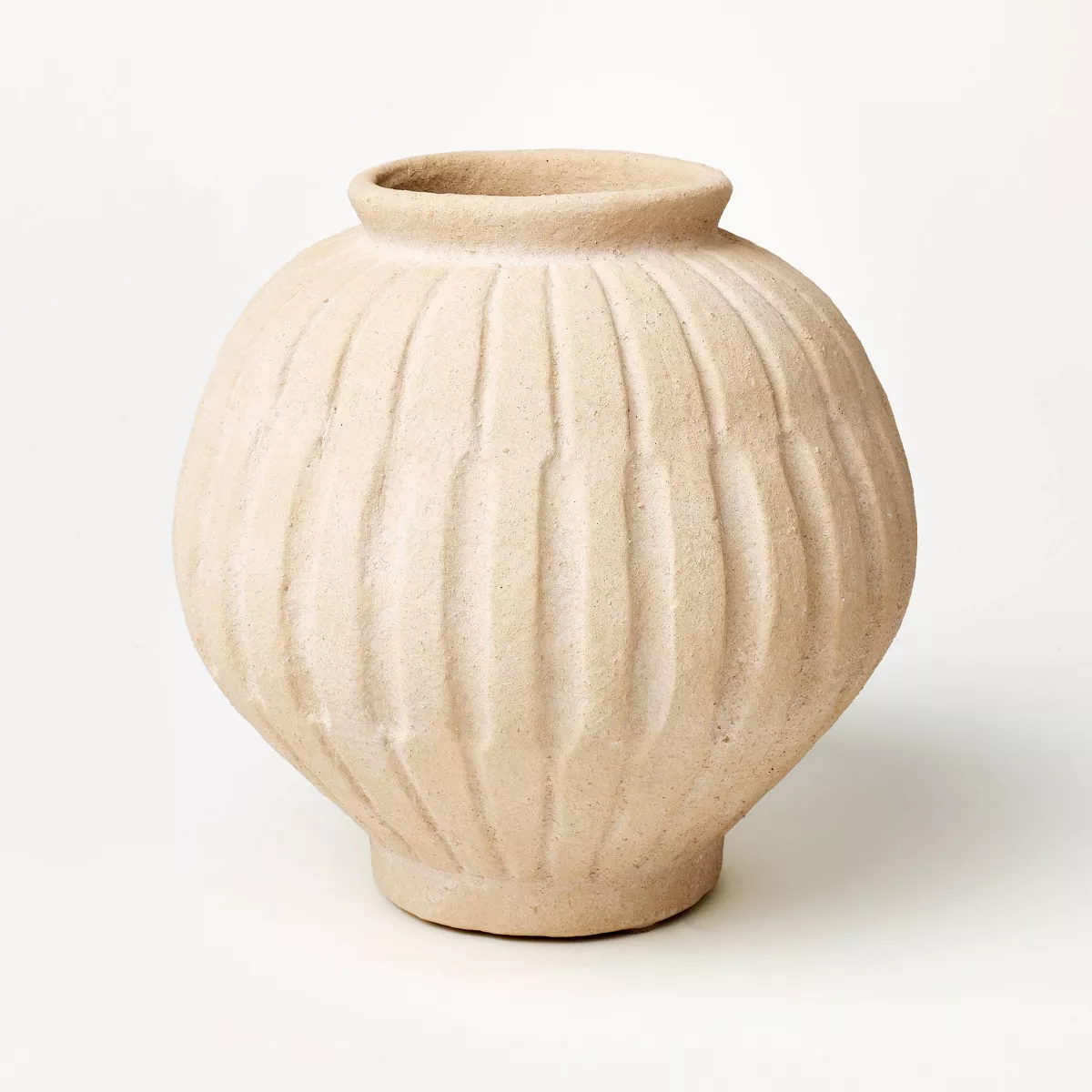
That is why decorative ceramic vases wholesale remains such a strong category. A vase is small enough to test, visual enough to sell, and flexible enough to fit retail, design projects, and hospitality styling all at once. When sampling is fast, the category becomes even more commercially useful.
Fast sampling is not about rushing. It is about learning earlier.
Stanford d.school’s prototyping tools make the principle very clear: prototypes are there to reveal what you are missing, and rapid experimentation helps teams learn faster. That logic applies beautifully to home decor sourcing. A sample is not just a product preview. It is a decision tool.
A good sample answers practical questions early:
- Is the scale right for the shelf, console, or guest room?
- Does the glaze read premium in daylight and under store lighting?
- Does the silhouette still look elegant once packed for freight?
- Can the finish be repeated cleanly on the reorder?
That last question matters more than people admit. Anyone can make one attractive sample. Not every factory behaves like a reorder stability manufacturer.
Designers do not just need products. They need a working rhythm.
For an American designer, the right supplier is not merely a workshop. It is part sample lab, part sounding board, part risk filter. That is why a strong trade program for interior designers should feel practical rather than ceremonial.
It should make the first three decisions easier:
- Which concept is worth sampling
- Which finish is worth approving
- Which version is worth scaling into reorder
And if a supplier understands retail pressure too, even better. The same factory can support a studio sourcing one signature vase shape, a boutique hotel testing room accents, and a chain buyer comparing several SKUs for rollout. In that sense, the best partner becomes both a retailers and importers supplier and a hospitality procurement supplier—not because of a slogan, but because the workflow actually supports both. HD Expo’s own positioning reflects how closely designers, purchasers, operators, and developers now work together in hospitality buying.
TikTok may start the aesthetic conversation, but sampling decides whether it survives buying season
Social media is still moving the taste cycle faster than many factories would like. Recent 2026 trend coverage tied to TikTok points to more character-led interiors, including cabbagecore, skirted pieces, and even swan decor showing up across ceramics and tabletop. Whether or not every microtrend lasts, the signal is useful: shoppers are rewarding pieces with a recognizable silhouette and a little personality.
That is exactly where fast sampling helps. You do not have to overcommit. You can test one shape, one color story, one finish direction, and one carton strategy before you build a whole story around it. A nimble factory lets you flirt with a trend without marrying a mistake.
The hidden luxury is not speed alone. It is import-ready speed.
For U.S. buyers, the sample itself is only half the romance. The other half is paperwork that does not become a headache later.
Official U.S. trade guidance says imports commonly require documents such as an invoice, bill of lading or air waybill, packing list, and—when applicable—certificate of origin, inspection paperwork, insurance, or other certificates. CBP also stresses compliance and accurate cargo description. For ceramic food-contact items, FDA guidance specifically flags lead and cadmium risks in ceramicware and notes that products exceeding action levels may face enforcement.
So yes, ask for beauty. But also ask for compliance documents for importers.
A stylish sample is lovely. A stylish sample with correct specs, packing logic, and import-ready support is a business decision.
FAQ: What serious buyers usually ask a ceramic supplier
1) What does “fast sampling” actually mean in a ceramic factory?
It should mean a short, clear loop from reference image to physical sample, with decisions tracked around size, finish, glaze, packing, and expected production repeatability. It is not just “send something quickly.” It is “learn something quickly.”
2) What should be included with a ceramic sample?
Ideally: dimensions, material notes, finish or glaze description, carton concept, estimated production lead time, and notes on whether the look is hand-finished, mold-based, or likely to vary batch by batch.
3) Which documents matter most for U.S. importers?
At minimum, buyers usually think in terms of commercial invoice, bill of lading or air waybill, packing list, and any origin or inspection paperwork required for the product or route. U.S. trade guidance lists these among standard import documents.
4) Do ceramic vases need special compliance attention?
Decor-only ceramic vases are different from food-contact ceramicware, but buyers should still ask clearly how the item will be used. If a ceramic product is intended for food use, FDA guidance on lead and cadmium becomes much more relevant.
5) Why is reorder stability more important than the first sample?
Because the first sample wins the meeting. The reorder wins the account. Color consistency, wall thickness, glaze control, and packing repeatability are what protect margin later.
6) Is fast sampling useful for hospitality projects too?
Very much so. Hospitality teams often need to test style, spec, and installation fit before broader rollout. HD Expo explicitly serves designers, purchasers, developers, and operators, which tells you how specification-heavy that buying environment really is.
A final thought, from one design-minded buyer to another
The right supplier does not just help you buy decor. It helps you make decisions with better timing.
That is the quiet power of a fast sampling home decor supplier. Not frantic speed. Not factory theater. Just a better rhythm between idea, sample, approval, reorder, and arrival.
And in a market that now rewards craft, character, and quick commercial judgment, that rhythm is not a convenience.
It is an edge.
Leave a Reply