

Why the Best Home Decor Ideas Start With a Faster Sample—Not a Longer Pitch
Some decor decisions should feel quick, clear, and a little bit exciting
As an interior designer, I do not fall in love with factories. I fall in love with flow.
A good supplier does not just say yes to a mood board. A good supplier helps turn a lovely idea into something tactile, photographable, shippable, and reorderable—before the season moves on without you. That is why a fast sampling home decor supplier has become such a practical advantage.
Especially now.
High Point Market’s Spring 2026 programming is framed around “moment-defining trends,” while Las Vegas Market continues to position itself as a major trade destination where buyers discover new home décor across more than 3,500 brands. That tells you something important: North American buyers are still sourcing with urgency, but they are also sourcing with sharper taste. They want newness, yes—but newness that can actually survive packaging, freight, client approval, and reorder.
The real luxury is not speed alone. It is speed with taste.
There is a particular charm to working with a factory rooted in a true craft-making region. You feel it in the finish. You feel it in the confidence of the forms. You feel it in how quickly a sketch becomes a sample that already knows what it wants to be.
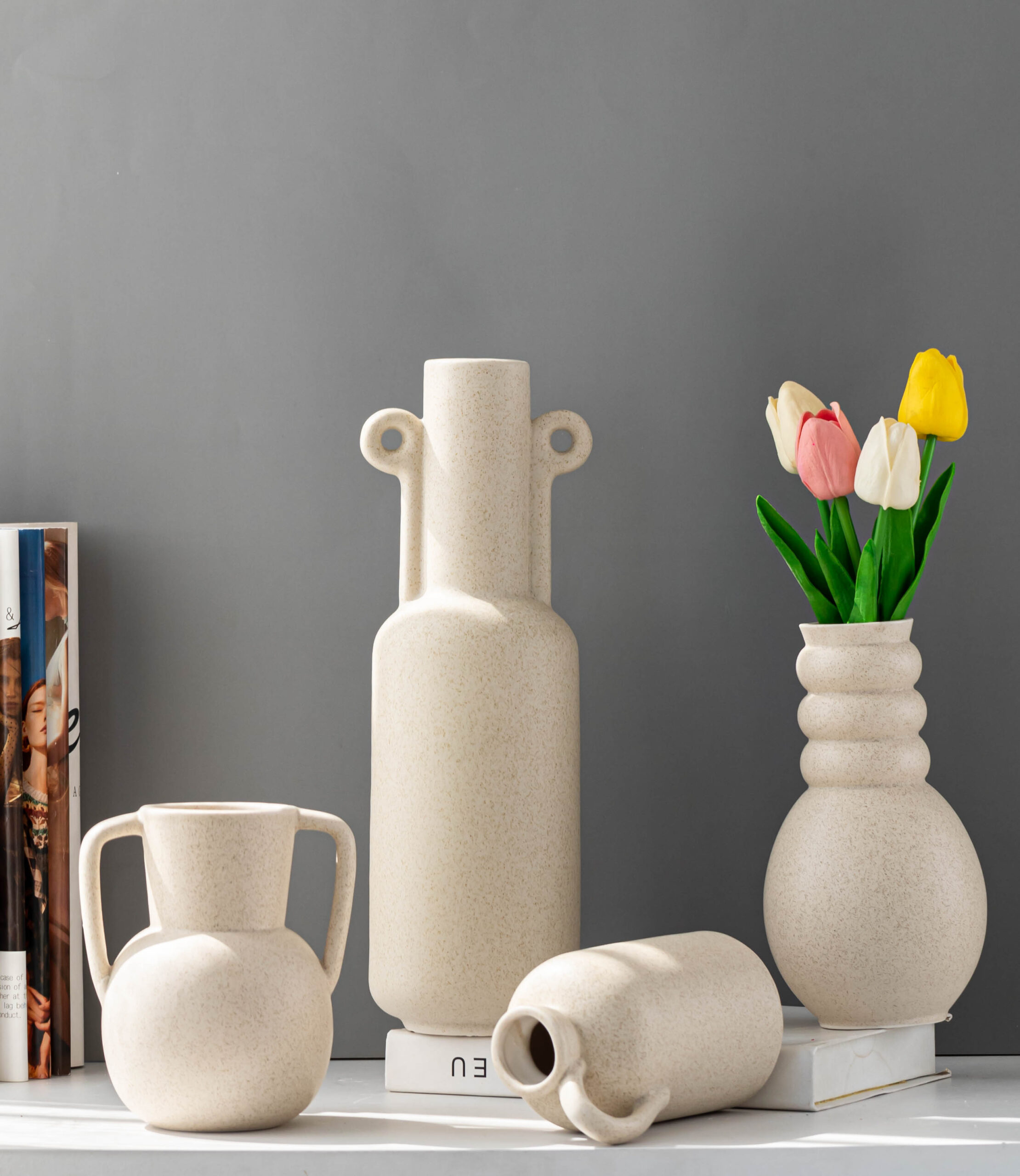
That is where Teruierdecor’s advantage becomes very legible: the speed is supported by craft memory, not factory panic. A strong home decor product development team does not simply rush an object out the door. It helps refine proportion, glaze, silhouette, and packing logic before you waste time approving the wrong version.
Stanford d.school’s design tools are built around experimentation, prototyping, and learning through making. That principle travels beautifully into home décor sourcing: faster samples create faster learning. And faster learning creates better commercial decisions.
Why fast sampling matters more in 2026 than it did a few years ago
Because trends are moving with more personality now.
Recent design coverage has leaned into expressive, approachable forms: House Beautiful’s 2026 trend reporting highlighted fruit vases as a notable direction, and broader 2025–2026 coverage has tied food-inspired aesthetics—tomato, lemon, strawberry, the whole delicious parade—to TikTok-driven taste culture. In other words, whimsical shapes are no longer just niche conversation pieces. They are increasingly viable commercial accents when executed with restraint.
That is exactly why an American home lemon vase is not as frivolous as it sounds. In the right glaze and the right scale, it becomes an easy, optimistic tabletop accent—friendly enough for retail, specific enough for styling, and photogenic enough for digital merchandising. The trick is not the idea. The trick is testing the idea quickly enough.
A beautiful first sample is nice. A reliable second order is better.
Anyone can make one attractive vase when all eyes are on the first box.
The better question is this: can the supplier make it again?
That is where a real reorder stability manufacturer separates itself from the merely enthusiastic one. Reorder stability means the silhouette stays clean, the glaze stays controlled, the weight stays sensible, and the carton stays rational. It is what protects retailers from awkward substitutions and protects designers from explaining why round two looks suspiciously unlike round one.
For that reason, the best retailers and importers supplier is never just a sample maker. It is a system partner.
The new buying mood is stylish, but it is also operational
North American trade events are reflecting that same dual mood. High Point is spotlighting the styles, materials, colors, and trends shaping the market now, while Las Vegas Market emphasizes discovery across a wide assortment of décor categories and year-round sourcing opportunities. Buyers are not only hunting for pretty things. They are hunting for pretty things that slot neatly into a business.
So when I look at a supplier, I am not only asking:
- Is the vase attractive?
- Is the finish current?
- Does the sample arrive quickly?
I am also asking:
- Can this become an OEM ceramic vase with a finish I can repeat?
- Does this Chinese ceramic factory understand export logic, not just workshop logic?
- Will the product still look elegant after it has been boxed, labeled, and moved through the real world?
That is the adult version of design romance.
Fast samples help you flirt with trends without marrying the wrong one
TikTok has been unusually effective at speeding up taste signals in home décor. Food-coded aesthetics and cheerful, character-led motifs have been part of that momentum, while media coverage around 2026 trends keeps pointing toward playful shapes and emotionally warm styling cues. This does not mean every buyer should suddenly order a fruit parade. It means the market is rewarding pieces with identity.
A fast sample lets you test that identity sensibly.
One vase. One glaze. One carton spec. One photo set. One decision.
That is much smarter than placing a hopeful bulk order and calling it strategy.
FAQ: What buyers should ask a ceramic supplier before saying yes
1) What should a fast sample actually include?
A proper sample should come with more than a pretty object. Buyers should expect size details, material notes, finish description, estimated production lead time, and early packing logic. The sample should help decision-making, not just admiration.
2) Why does a home decor product development team matter?
Because product development is where aesthetic taste meets manufacturing reality. A capable team catches proportion issues, glaze risks, unstable bases, and overcomplicated shapes before they become expensive habits.
3) What documents should U.S. importers usually expect?
U.S. Customs and Border Protection guidance notes that common import paperwork includes documents such as a commercial invoice, bill of lading or air waybill, and packing list; depending on the shipment, special documents such as certificates, inspection paperwork, or origin documents may also be required.
4) What should I ask if the product is ceramic?
Ask whether it is decorative only or intended for food contact. That distinction matters. FDA guidance specifically notes lead and cadmium concerns in certain ceramic foodware contexts and explains that ceramic ware with extractable heavy metals can face enforcement attention.
5) What makes a good OEM ceramic vase program?
A good OEM ceramic vase program is not just about slapping a logo onto a shape. It should include mold clarity, finish consistency, tolerance awareness, protective packaging, and a realistic discussion of what can be repeated at scale.
6) Why choose a Chinese ceramic factory for sampling?
A strong Chinese ceramic factory can compress development time when design, material know-how, glazing, shaping, and export coordination already sit inside a mature supply ecosystem. The advantage is not geography alone. It is manufacturing density plus experience.
The last thing I want from a supplier is drama
I want a sample that arrives while the idea is still alive.
I want a factory that understands why timing affects approval, why approval affects launch, and why launch means very little if reorder falls apart.
That is why the phrase fast sampling home decor supplier matters more than it used to. It is not just about speed. It is about turning taste into a working commercial rhythm.
And in 2026, that rhythm may be the prettiest advantage of all.
Leave a Reply