

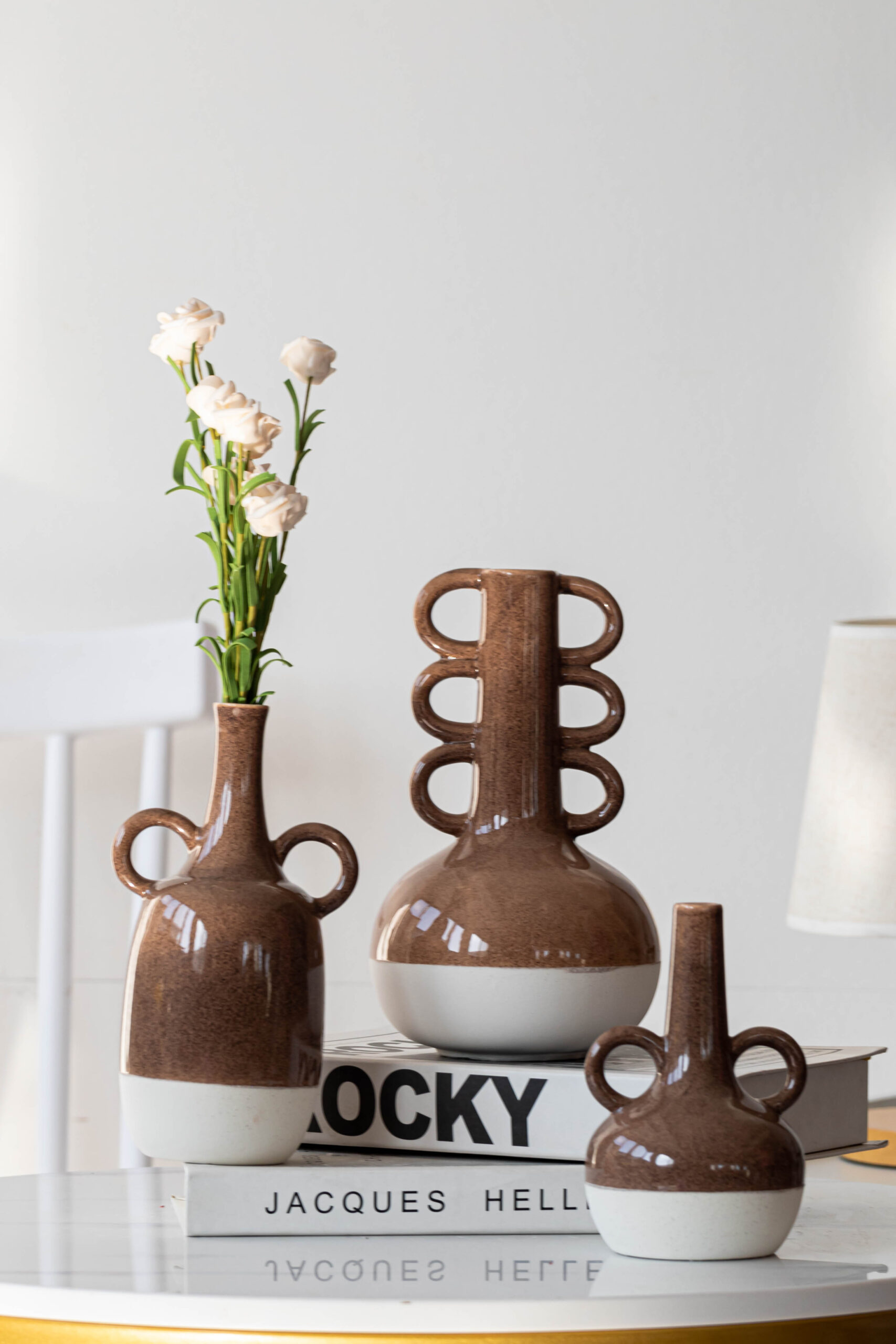
Decorative Vases Buying Guide: How Buyers Choose Vases That Look Good on Shelf, Ship Safely, and Reorder Cleanly
Decorative Vases Buying Guide: Why a Vase Is Never Just a Vase
A decorative vase looks simple from the outside.
A shape.
A finish.
A color.
A size.
A nice product photo.
But retail buyers know the real question is not whether a vase looks pretty.
The real question is:
Can this vase earn its space on the shelf?
A vase has to attract attention, fit a room story, support a price point, survive shipping, and stay consistent enough for reorders. A beautiful sample can still become a problem if the glaze changes in bulk production, the mouth is too fragile, the base is unstable, or the carton cannot protect it during long-distance shipping.
That is why Teruierdecor treats decorative vases as a retail category, not as isolated objects.
What Are Decorative Vases in Home Décor Buying?
Decorative vases are home décor products used to style shelves, consoles, dining tables, mantels, entryways, bedrooms, living rooms, and retail displays.
They may be used with flowers, branches, dried botanicals, or simply as sculptural objects.
In wholesale home décor buying, decorative vases may include:
- ceramic vases
- porcelain vases
- stoneware vases
- centerpiece vases
- floor vases
- mini vases
- sculptural vases
- handled vases
- matte ceramic vases
- reactive glaze vases
- seasonal color vases
For buyers, the key question is:
Is this vase decorative only, floral-ready, or part of a larger home décor assortment?
That difference affects product notes, customer expectations, packaging, QC, and reorder planning.
The First Buyer Question: What Role Does This Vase Play?
A vase should enter the assortment with a clear role.
Some vases are shelf fillers.
Some are visual anchors.
Some are giftable items.
Some are seasonal refresh pieces.
Some are centerpiece items.
Some are designed to support a whole room story.
Common vase roles include:
| Vase Role | Retail Function | Example Direction |
|---|---|---|
| Shelf filler | Adds shape and texture | Small ceramic vase |
| Centerpiece | Creates table focus | Medium or wide-mouth vase |
| Statement item | Pulls attention in display | Large sculptural vase |
| Giftable item | Easy purchase | Small vase set or decorative mini vase |
| Seasonal refresh | Adds color or theme | Spring, holiday, or trend color vase |
| Material bridge | Connects other categories | Vase matching mirrors, benches, trays, or wall décor |
A vase without a clear role becomes a random product.
A vase with a clear role helps the buyer build a better shelf story.
Shape: The First Thing the Customer Notices
Shape decides whether a decorative vase has stopping power.
A strong vase shape should be easy to recognize, easy to style, and safe enough to produce and ship.
Buyers should look at:
- silhouette
- base stability
- opening size
- neck proportion
- handle design
- surface detail
- shelf visibility
- packing risk
- whether the shape works alone or in a group
A vase with a dramatic handle may look strong in a photo, but the handle may become a breakage point. A narrow-base vase may look elegant, but it may wobble on a retail shelf. A very wide vase may feel premium, but carton size and freight cost may rise quickly.
Good vase design is not only about beauty.
It has to work on the shelf, in the carton, and in the second order.
Size: Build a Vase Ladder, Not a Random Group
Decorative vases work best when buyers build a size ladder.
One size is rarely enough.
A retail-ready vase program usually needs:
- small vases for shelves and gifts
- medium vases for consoles and tables
- large vases for statement displays
- wide vases for centerpiece use
- narrow vases for branches or dried botanicals
- grouped vases for layered styling
A practical vase size ladder may look like this:
| Size Level | Retail Purpose | Buyer Notes |
|---|---|---|
| Mini vase | Giftable, easy add-on | Good for sets or seasonal colors |
| Small vase | Shelf and bedside styling | Low risk, easy to display |
| Medium vase | Main retail seller | Good balance of presence and price |
| Large vase | Statement item | Needs stronger packaging review |
| Floor vase | Room anchor | Higher freight and breakage control needed |
| Centerpiece vase | Table styling | Shape and stability are important |
A good vase ladder gives the customer choices.
It also gives the buyer more control over price points, display rhythm, and reorder planning.
Finish: Where Vases Gain or Lose Value
For decorative vases, finish is one of the most important buying points.
A simple shape can become valuable with the right finish.
A strong shape can feel cheap if the finish is weak.
Common vase finishes include:
- matte ceramic finish
- glossy glaze
- reactive glaze
- crackle glaze
- ribbed texture
- carved texture
- hand-painted detail
- metallic accent
- stone-look finish
- warm neutral glaze
Finish comparison for buyers:
| Finish Type | Retail Advantage | Buyer Risk |
|---|---|---|
| Matte ceramic | Soft, modern, easy to coordinate | Surface marks may show |
| Gloss glaze | Bright, giftable, decorative | Uneven reflection can expose flaws |
| Reactive glaze | Rich, handmade look | Batch variation must be controlled |
| Ribbed texture | Higher perceived value | Dust and glaze pooling need checking |
| Metallic accent | Premium shelf effect | Scratching and rubbing risk |
| Hand-painted detail | More character | Labor consistency needs review |
Buyers should never approve a vase finish only from one photo.
The finish should be checked under natural light, store-style lighting, and across multiple samples. The buyer should also ask whether the factory can repeat the finish in bulk production and future reorders.
A vase that cannot repeat its finish is not a safe reorder item.
Color: Safe Neutrals Still Need Character
Neutral vases remain useful because they work across many home styles.
But neutral does not mean plain.
A strong neutral vase can still have:
- carved texture
- organic shape
- soft matte glaze
- ribbed surface
- subtle color variation
- warm off-white tone
- taupe or clay undertone
- small metallic detail
- handmade surface feeling
For broad retail channels, colors that often work well include:
- warm white
- ivory
- taupe
- sand
- terracotta
- soft sage
- muted blue
- amber
- charcoal
- deep walnut-inspired brown
The safest vase programs usually combine a neutral base with a few controlled accent colors.
Too much color can narrow the audience.
Too little character can make the product invisible.
The buyer’s job is to find the balance.
Water Use: Decorative Only or Floral-Ready?
This is one detail buyers should clarify early.
Not every vase is meant to hold water.
Some ceramic vases are decorative only.
Some are suitable for dried botanicals.
Some can hold fresh flowers.
Some may need an inner liner.
Some may require water testing before approval.
Product notes should clearly state:
- decorative use only
- suitable for dried flowers
- water-holding capability
- inner coating or liner details
- care instructions
- whether water testing has been done
This matters because customers often assume a vase can hold water.
If the product cannot, the buyer needs clear product notes to avoid after-sale problems.
A beautiful vase with unclear usage can create unnecessary customer complaints.
Shelf Story: Vases Must Work With Other Products
Decorative vases rarely sell alone.
They usually work inside a larger shelf story.
A good vase assortment may coordinate with:
- ceramic tabletop décor
- trays
- candle holders
- mirrors
- ottomans and benches
- wall décor
- floral stems
- seasonal accents
- mixed-material home décor
For example:
A matte off-white vase can soften a shelf with bronze mirror frames.
A terracotta vase can warm a neutral entryway display.
A ribbed ceramic vase can add texture next to a smooth tray.
A sculptural vase can make a simple tabletop story feel more designed.
This is where Teruierdecor’s craft town supply chain becomes valuable.
Vase development depends on material behavior, glaze control, firing knowledge, finishing details, and packing experience. When the team understands these steps from the production floor, it can help buyers catch problems before a good-looking sample becomes a costly order issue.
Price Ladder: Vases Need Clear Retail Levels
Decorative vases are ideal for price ladder planning.
A buyer can use them to create entry purchases, mid-level sellers, and statement items.
Example vase price ladder:
| Product Level | Retail Function | Example Product |
|---|---|---|
| Entry item | Easy add-on purchase | Mini vase or small bud vase |
| Mid-level item | Main volume seller | Medium ceramic vase |
| Statement item | Display anchor | Large sculptural vase |
| Giftable item | Seasonal or impulse purchase | Vase set or small decorative vase |
| Centerpiece item | Table styling | Wide-mouth or low-profile vase |
| Collection item | Builds shelf story | Coordinated vase group |
A strong price ladder helps avoid two problems.
First, the assortment should not feel like a pile of similar vases.
Second, the buyer should not depend on one expensive hero item.
The best vase programs create a rhythm of size, shape, finish, and price.
Packaging: Vases Are Beautiful Until They Break
Vases are one of the categories where packaging matters most.
The product may have a fragile rim, handle, neck, base, or glaze surface. If packaging is weak, the buyer may face breakage, claims, delayed shelf fill, and margin loss.
Buyers should review:
- inner box structure
- rim protection
- handle protection
- base protection
- surface wrapping
- foam or paper material
- carton thickness
- master carton layout
- drop test expectations
- barcode placement
- fragile mark requirements
- mixed-SKU carton feasibility
A vase should not only look good when it leaves the factory.
It should still look good when it reaches the buyer’s warehouse, store, or customer.
Packaging is part of the product promise.
QC: What Buyers Should Check Before Production
Decorative vase QC should focus on shape, finish, stability, and packing.
Key checkpoints include:
- size accuracy
- shape consistency
- opening smoothness
- rim quality
- base stability
- glaze coverage
- color consistency
- surface marks
- cracks or chips
- pinholes or glaze defects
- handle strength if applicable
- water-use testing if needed
- weight consistency
- packaging fit
- carton labeling
- batch comparison
For handmade or hand-finished vases, buyers should also define acceptable variation.
Variation can add character.
Uncontrolled variation creates retail problems.
The standard should be clear before bulk production begins.
Sample Development: A Nice Vase Sample Is Only the Start
A vase sample should be reviewed through real buying conditions.
A practical sample review includes:
- Check the silhouette from a distance
- Review the product from all sides
- Test base stability
- Inspect rim and opening
- Check glaze under different lighting
- Compare with other products in the assortment
- Review whether the item is decorative-only or water-ready
- Check packaging structure
- Confirm MOQ and lead time
- Confirm finish repeatability for future orders
The buyer should not ask only:
“Do I like this sample?”
The better question is:
Can this sample become a stable wholesale SKU?
That is a stricter and more useful standard.
Comparison: Random Vase Buying vs Category Buying
| Buying Method | What It Focuses On | Main Risk |
|---|---|---|
| Random vase buying | One attractive shape | Weak shelf and reorder logic |
| Price-only buying | Lowest unit cost | Poor finish, weak packaging, claims |
| Trend-only buying | Popular color or style | Short selling window |
| Photo-based buying | Good product image | Hidden scale, glaze, and stability issues |
| Category buying | Role, size ladder, finish, packaging, reorder | Requires stronger supplier coordination |
Category buying helps buyers see the full chain.
A vase is not only a shape. It is a product decision involving design, material, finish, packaging, price, and repeatability.
FAQ: Decorative Vases Buying Questions
What should buyers check first when sourcing decorative vases?
Buyers should first check product role, size, shape stability, finish quality, usage notes, packaging method, and reorder feasibility.
Are all decorative vases suitable for fresh flowers?
No. Some vases are decorative only, some are suitable for dried flowers, and some can hold water. Buyers should confirm water-use notes before placing an order.
What makes a ceramic vase easier to reorder?
A ceramic vase is easier to reorder when the shape is stable, the glaze standard is documented, the packaging method is proven, and the supplier can control finish consistency across batches.
Is matte ceramic still a good direction for vases?
Yes. Matte ceramic vases are still useful because they coordinate well with neutral interiors and modern retail displays. Buyers should check surface marks, glaze consistency, and packaging abrasion.
What packaging details matter most for wholesale vases?
Buyers should check rim protection, handle protection, surface wrapping, inner box structure, carton strength, drop test expectations, and master carton layout.
Should buyers buy single vases or vase collections?
Single hero vases can attract attention, but vase collections usually create stronger shelf stories. A balanced collection can include mini, small, medium, statement, and centerpiece vases.
Final Buying Judgment
A decorative vase should pass five tests before becoming a wholesale item:
Can it stop the customer visually?
Can the customer understand where to place it?
Does the finish feel worth the price?
Can it ship without breakage?
Can it be reordered with consistent quality?
If a vase only looks good in one photo, it is not enough.
For retail buyers, a vase must work as a product, a shelf tool, a price point, and a reorderable SKU.
That is how decorative vases become more than pretty objects.
They become retail-ready home décor.
Leave a Reply