

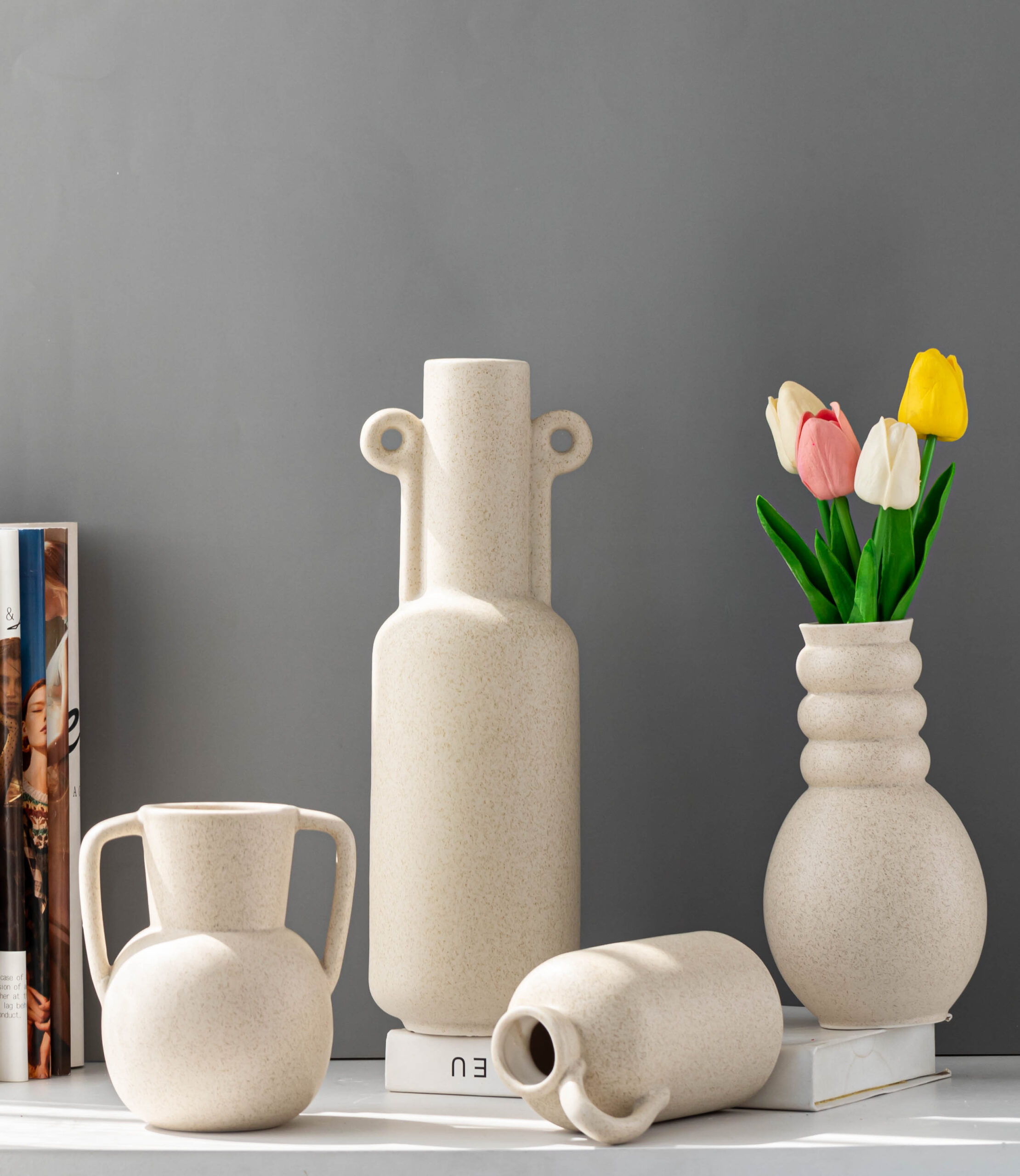
Tabletop Décor Buying Guide: How Buyers Choose Small Pieces That Make a Shelf Look Finished and Sellable
Tabletop Décor Buying Guide: Why Small Products Carry Big Retail Pressure
Tabletop décor looks like the easy part of home décor buying.
A small vase.
A decorative bowl.
A candle holder.
A tray.
A sculptural object.
A seasonal accent.
A small piece that fills a shelf, console, coffee table, or entryway.
But small does not mean simple.
For retail buyers, tabletop décor has to do several jobs at the same time. It must look good in a room setting, feel valuable in the hand, fit a clear price point, ship safely, and work with other categories like ceramic décor, mirrors, ottomans, benches, wall décor, trays, and seasonal collections.
A weak tabletop item may not look like a big mistake at first. But when a shelf feels messy, a display lacks rhythm, or a product breaks too easily during shipping, the problem becomes visible very quickly.
That is why Teruierdecor treats tabletop décor as a category system, not as a group of random small objects.
What Is Tabletop Décor in Retail Buying?
Tabletop décor refers to small and medium decorative products designed for surfaces inside the home.
These products may be placed on:
- coffee tables
- consoles
- mantels
- dining tables
- entryway tables
- bookshelves
- bedside tables
- kitchen counters
- retail display shelves
In a wholesale home décor assortment, tabletop décor may include:
- small ceramic vases
- decorative bowls
- trays
- candle holders
- sculptural objects
- planters
- tabletop jars
- figurative accents
- seasonal tabletop pieces
- mixed-material decorative accessories
For buyers, the real question is not:
“Is this piece cute?”
The better question is:
Can this piece help a room story feel complete, while still being easy to price, pack, display, and reorder?
That is the standard of a retail-ready tabletop décor item.
The First Buyer Question: What Surface Does This Product Belong On?
A tabletop product needs a clear placement logic.
A small object that works on a bookshelf may not work on a dining table.
A decorative bowl for a coffee table may not work as a mantel item.
A tall vase may look good on a console but feel awkward on a bedside table.
Before selecting tabletop décor, buyers should ask:
Where will the customer place this item after buying it?
That question decides the product’s size, weight, finish, shape, and price point.
Common tabletop décor roles include:
| Product Role | Retail Function | Example Direction |
|---|---|---|
| Shelf filler | Completes a display | Small vase, object, or ceramic accent |
| Centerpiece item | Creates a table focus | Decorative bowl, vase, or tray |
| Giftable item | Easy impulse purchase | Candle holder, small ceramic item |
| Seasonal refresh | Adds color or theme | Holiday or spring tabletop accent |
| Texture builder | Adds surface interest | Carved, ribbed, woven, or matte finish item |
| Material bridge | Connects categories | Ceramic, metal, wood, glass, or mixed-material piece |
If the product has no clear surface role, it becomes harder for the buyer to merchandise and harder for the customer to understand.
Good tabletop décor should make the room feel more finished, not more cluttered.
Size: Small Enough to Buy, Strong Enough to Matter
Size is one of the biggest hidden issues in tabletop décor.
If the product is too small, it may look cheap or disappear on shelf.
If it is too large, it may become difficult to place, pack, and sell as an impulse item.
Buyers should think in terms of display rhythm.
A strong tabletop assortment usually needs different heights and volumes:
- low bowls
- medium vases
- tall narrow accents
- small sculptural objects
- grouped decorative pieces
- trays that can hold smaller items
A shelf with everything at the same height looks flat.
A table with too many large items feels heavy.
A display with only tiny objects feels weak.
The best tabletop décor products are not just attractive alone. They help the whole display look intentional.
Material: What Makes a Small Item Feel Worth Buying
For tabletop décor, material decides perceived value.
Customers may pick up the product, touch it, turn it over, and judge it quickly.
That means the material cannot feel too cheap.
Common tabletop décor materials include:
- ceramic
- porcelain
- stoneware
- glass
- wood
- metal
- resin
- rattan or woven material
- cement-look material
- mixed materials
Each material has a different retail effect.
Ceramic feels familiar, stable, and easy to coordinate.
Glass can feel light, bright, or giftable.
Wood adds warmth.
Metal adds contrast.
Woven material softens the display.
Mixed materials can make a small item feel more designed.
But material also affects risk.
Ceramic can chip.
Glass can break.
Metal can scratch.
Wood can vary in tone.
Resin can feel cheap if the finish is poor.
Mixed materials require more QC control.
For Teruierdecor, tabletop décor buying starts with one practical question:
Does the material support the retail price and the shipping reality?
If not, the product may look good in development but fail in the real order.
Finish: The Detail That Separates Basic From Retail-Ready
Finish is especially important in tabletop décor because the customer sees the product up close.
A large wall item may be judged from a distance.
A tabletop object is often touched, held, and inspected.
Buyers should check:
- glaze coverage
- surface smoothness
- edge finishing
- color consistency
- texture quality
- bottom protection
- coating durability
- hand-feel
- visible marks
- finish repeatability across batches
Common tabletop finish directions include:
| Finish Direction | Retail Advantage | Buyer Risk |
|---|---|---|
| Matte ceramic finish | Soft, modern, easy to style | Surface marks may show |
| Reactive glaze | Handmade depth and variation | Batch consistency must be controlled |
| Gloss finish | Bright and giftable | Uneven reflection may expose flaws |
| Ribbed or carved texture | Higher perceived value | Dust, glaze pooling, and abrasion risk |
| Metallic detail | Premium accent | Scratching and rubbing need checking |
| Natural wood tone | Warm and familiar | Color variation between batches |
A buyer should not approve a finish only from a photo.
The product should be checked under different light, handled directly, and compared with other items in the same assortment.
Shape: The Product Should Be Easy to Style
Tabletop décor needs shape clarity.
A good shape should be:
- recognizable
- easy to place
- stable on a surface
- not too fragile
- visually useful in a group
- simple enough for reorder
This is where many overdesigned products fail.
A tabletop item with too many small decorative details may look unique in a close-up image, but it may be hard to clean, hard to pack, and hard to repeat.
A better product often has one strong design idea:
- a rounded silhouette
- a ribbed surface
- a soft organic shape
- a carved texture
- a warm neutral color
- a small metallic accent
- a simple sculptural profile
Good tabletop décor should give the buyer enough visual interest without creating production trouble.
Price Ladder: Small Items Need Clear Buying Levels
Tabletop décor works best when the buyer builds a price ladder.
This category is often used to create easy entry purchases, but that does not mean every item should be cheap.
A strong tabletop program usually includes several levels:
| Product Level | Retail Purpose | Example Product |
|---|---|---|
| Entry item | Easy add-on purchase | Small ceramic accent or candle holder |
| Mid-level item | Main shelf seller | Medium vase, tray, or decorative bowl |
| Statement item | Display anchor | Larger centerpiece or sculptural object |
| Giftable item | Impulse and seasonal purchase | Small vase set, jar, or decorative object |
| Seasonal item | Refresh driver | Color or holiday-driven tabletop piece |
| Collection item | Builds a room story | Coordinated set of vases, bowls, and trays |
A good price ladder helps buyers avoid two problems:
First, the assortment should not feel too cheap.
Second, the assortment should not rely only on expensive statement pieces.
The strongest tabletop décor programs give customers an easy way to buy one piece, then add another.
That is how small products support basket size.
Shelf Story: Tabletop Décor Must Work as a Group
Tabletop décor rarely sells as one isolated product.
It sells through display.
A buyer should ask:
Can these items sit together and make sense?
A good tabletop shelf story may combine:
- one taller vase
- one lower bowl
- one small sculptural item
- one tray
- one candle holder
- one seasonal accent
- two or three finish tones that work together
The goal is not to make everything match perfectly.
The goal is to make the display feel coordinated.
For example:
- matte ceramic pieces can soften a display with metal frames
- warm wood trays can connect with neutral vases
- bronze details can coordinate with bench legs or mirror finishes
- small seasonal colors can refresh a safe neutral collection
- sculptural ceramic objects can add shape to basic tabletop arrangements
This is where Teruierdecor’s cross-border design manufacturing model becomes useful.
The buyer may see a trend in the market.
The design team turns it into a product direction.
The factory checks material, finish, cost, and production feasibility.
The sourcing team helps build a shelf-ready group instead of a random pile of samples.
That is how tabletop décor becomes a retail assortment, not just decoration.
Packaging: Small Items Still Break, Scratch, and Lose Margin
Tabletop décor often includes fragile or surface-sensitive products.
Because the items are smaller, some suppliers treat packaging too lightly. That creates risk.
Common problems include:
- chipped ceramic edges
- scratched surfaces
- broken handles
- cracked bowls
- damaged metallic finishes
- loose items rubbing inside cartons
- dust and dirt during transport
- barcode or label mistakes
- weak inner boxes
- crushed master cartons
Buyers should ask about:
- inner box structure
- surface protection
- divider use
- paper or foam protection
- carton thickness
- master carton layout
- drop test expectations
- barcode placement
- mixed-SKU packing rules
- fragile mark requirements
Packaging is not just a shipping topic.
For tabletop décor, packaging protects the product’s margin and the buyer’s confidence in the second order.
QC: What Buyers Should Check Before Bulk Production
Tabletop décor QC should focus on appearance, stability, finish, and packing.
Key checkpoints include:
- size accuracy
- shape consistency
- color consistency
- finish quality
- surface marks
- glaze defects
- sharp edges
- base stability
- wobble
- weight consistency
- accessory parts
- packaging fit
- barcode accuracy
- carton strength
- batch comparison
For bowls, trays, and vases, buyers should also confirm product use notes.
Is it decorative only?
Can it hold water?
Is it food-safe?
Is it meant only for dry display?
Does it need care instructions?
These details should be clear before selling to retail customers.
A small missing note can create a larger after-sale problem.
Sample Development: Do Not Approve a Tabletop Item Too Quickly
Tabletop décor samples can be tempting.
The first sample may look good, photograph well, and feel easy to approve.
But buyers should slow down and review the product through real retail conditions.
A practical sample review should include:
- Check the product’s surface role
- Review size and proportion
- Compare it with other items in the assortment
- Check finish under natural and indoor lighting
- Test base stability
- Review packaging method
- Confirm cost and MOQ
- Confirm whether the finish can be repeated in production
- Check whether the item needs usage notes
- Compare sample quality with pre-production expectations
A sample is not successful because it looks nice once.
A sample is successful when it can become a stable wholesale product.
Comparison: Random Tabletop Buying vs Category Buying
| Buying Method | What It Focuses On | Main Risk |
|---|---|---|
| Random small-item buying | Cute products | Weak display logic |
| Price-only buying | Lowest cost | Cheap material feel and high claims |
| Trend-only buying | Popular color or shape | Short selling window |
| Photo-based buying | Good product image | Hidden finish, scale, and packaging issues |
| Category buying | Surface role, material, finish, price ladder, packaging, reorder | Requires stronger supplier coordination |
Category buying helps retail buyers see the full product chain earlier.
It is not only about choosing objects.
It is about choosing objects that can sit together, sell together, and repeat together.
FAQ: Tabletop Décor Buying Questions
What should buyers check first when sourcing tabletop décor?
Buyers should first check product role, size, material, finish, base stability, packaging method, price point, and how the item fits into the wider assortment.
What makes tabletop décor easier to sell?
Tabletop décor is easier to sell when the customer can quickly imagine where to place it. It should fit a shelf, console, coffee table, mantel, or entryway surface without needing too much explanation.
Is ceramic tabletop décor a strong wholesale category?
Yes. Ceramic tabletop décor is useful because it works across many home styles and price levels. The key is to control finish consistency, glaze quality, packaging safety, and reorder stability.
Should buyers choose neutral or colorful tabletop décor?
Neutral tabletop décor is safer for broad retail use, while color works well for seasonal refresh or accent stories. A balanced assortment usually uses neutral bases with selective color highlights.
What packaging details matter most for tabletop décor?
Buyers should check inner protection, surface protection, dividers, carton strength, barcode placement, master carton layout, and drop test expectations.
What makes tabletop décor reorder-friendly?
Tabletop décor is easier to reorder when the material supply is stable, the finish standard is documented, the packaging method is proven, and the supplier keeps clear production notes for future batches.
Final Buying Judgment
Tabletop décor should pass five tests before becoming a wholesale product:
Can the customer understand where to place it?
Does the material feel worth the price?
Does the finish hold up under close inspection?
Can it work with other products in a shelf story?
Can it ship and reorder without creating surprises?
If a small product only looks cute in a photo, it is not enough.
For retail buyers, tabletop décor must help a room feel finished, support basket size, protect margin, and remain stable across future orders.
That is how tabletop décor becomes more than small decoration.
It becomes a retail-ready category.
Leave a Reply