

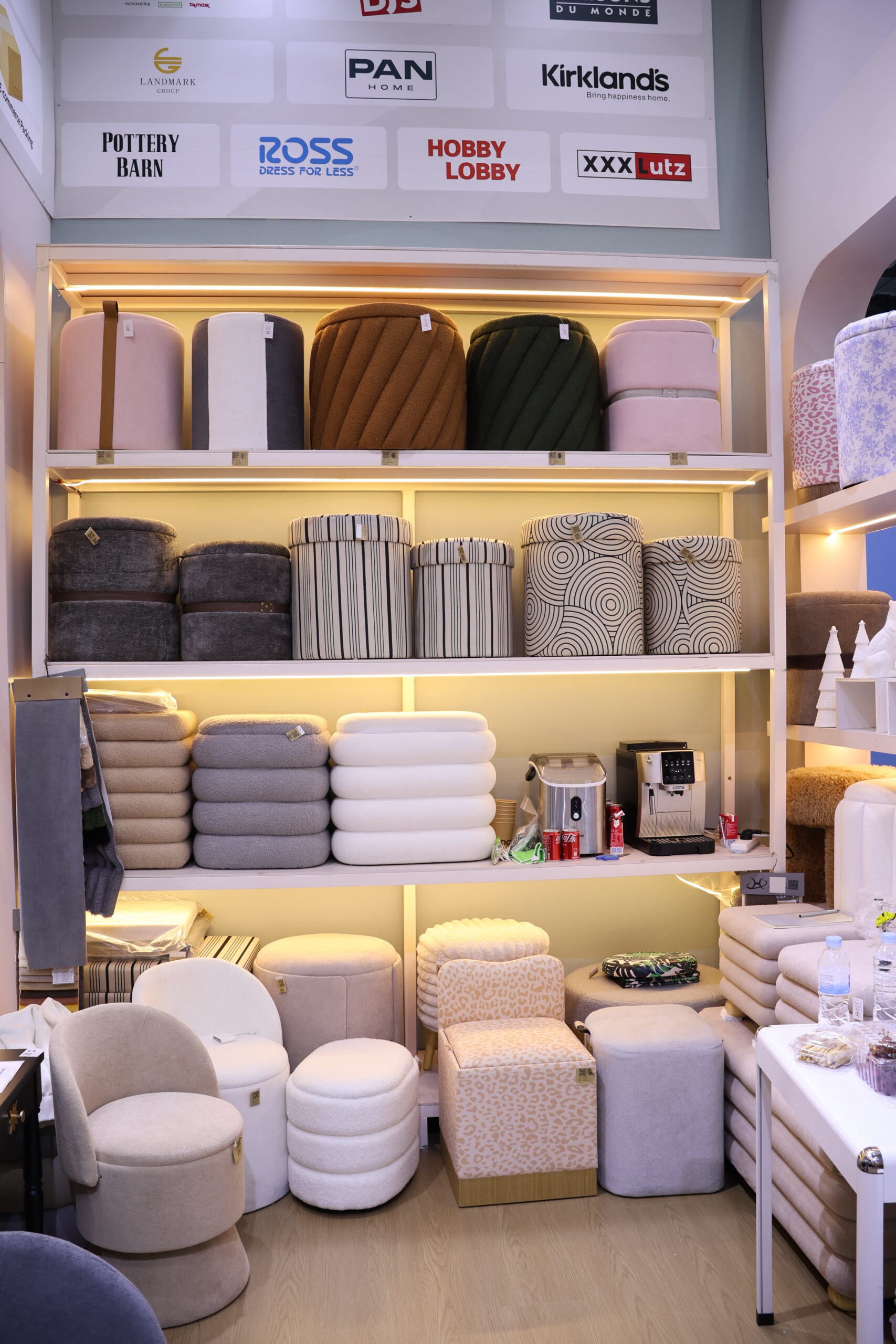
Ottomans & Benches Buying Guide: How Buyers Choose Small Seating That Looks Good, Sells Fast, and Reorders Safely
Ottomans & Benches Buying Guide: Why Small Seating Is Not a Small Decision
Ottomans and benches look simple.
A soft cushion.
A metal or wood base.
A nice fabric.
A clean retail photo.
But for a retail buyer, this category carries more risk than it appears.
The product has to look decorative enough to attract attention, strong enough to support daily use, compact enough to ship efficiently, and flexible enough to work in several rooms. A bench that looks good in a sample room may be too large for a small apartment. An ottoman with a beautiful fabric may become difficult to reorder if the material changes. A vanity bench with a pretty gold base may fail if the frame finish scratches too easily.
That is why ottomans and benches should be bought as a category, not as random accent pieces.
Teruierdecor helps buyers think through the full chain: shape, fabric, frame, size, packaging, shelf logic, and reorder risk.
What Are Ottomans & Benches in Home Décor Buying?
In retail home décor, ottomans and benches usually sit between furniture and decorative accessories.
They are not large furniture items like sofas or dining tables.
They are also not purely decorative objects like vases or wall décor.
They belong to a useful middle category: small seating with visual value.
This may include:
- upholstered ottomans
- soft cube ottomans
- storage ottomans
- vanity benches
- entryway benches
- accent stools
- bedroom benches
- small footstools
- mixed-material benches with metal or wood legs
For buyers, the real value of this category is flexibility.
One product can work in a bedroom, entryway, living room, dressing area, guest room, or apartment corner. That makes ottomans and benches especially useful for retail assortments, because they give the shopper a quick way to update a room without buying major furniture.
The First Buyer Question: Where Will the Customer Use It?
Before choosing an ottoman or bench, the buyer should ask:
What room problem does this product solve?
A vanity bench solves the “where do I sit while getting ready” problem.
An entryway bench solves the “where do I sit to put on shoes” problem.
A cube ottoman solves the “I need extra seating or a soft footrest” problem.
A small accent stool solves the “this corner looks empty” problem.
This matters because the product role affects everything:
- size
- cushion thickness
- leg height
- fabric type
- frame strength
- packaging method
- target price
- shelf presentation
A bench without a clear use case becomes hard to sell.
A bench with a clear room role is much easier for the customer to understand.
Size: The Hidden Risk in Small Seating
Small seating must feel useful, but it cannot feel bulky.
For retail buyers, size is one of the most important decisions.
If the bench is too large, it becomes difficult for smaller homes and apartments. If it is too small, customers may see it as decorative but not useful. If the ottoman is too tall or too low, it may feel awkward next to a chair, bed, or vanity table.
A practical buying review should check:
| Product Type | Buyer Should Check | Common Risk |
|---|---|---|
| Soft cube ottoman | Height, footprint, cushion firmness | Too small to feel useful |
| Vanity bench | Seat height, width, leg stability | Too decorative, not comfortable |
| Entryway bench | Length, weight capacity, frame strength | Too weak for daily use |
| Accent stool | Visual shape, balance, portability | Looks cute but lacks function |
| Bedroom bench | Proportion with bed, fabric durability | Too large for retail floor or carton |
Good small seating should be easy to imagine in a real room.
If a customer needs to think too hard about where to place it, the product may lose momentum on the retail floor.
Fabric: The First Thing Customers Notice
Fabric decides the emotional value of ottomans and benches.
A simple frame can become attractive with the right upholstery. A safe shape can feel new when the fabric has texture, pattern, or a soft hand feel.
Common retail-friendly fabric directions include:
- boucle
- linen-look fabric
- velvet
- chenille
- woven texture
- neutral upholstery
- ticking stripe
- botanical floral
- windowpane check
- faux leather
- performance-style textured fabric
For buyers, fabric should not only be judged by beauty.
It should be checked for:
- hand feel
- color consistency
- abrasion risk
- stain visibility
- seam behavior
- pattern alignment
- fabric supply stability
- batch-to-batch repeatability
A floral bench may look strong in a product photo, but if the pattern placement changes too much across production, the product can feel unstable. A boucle ottoman may look premium, but if the fabric sheds, pills, or attracts lint too easily, it can create customer complaints.
The safer approach is not to avoid interesting fabric.
The better approach is to choose fabric with both visual appeal and production control.
Frame and Leg Design: Where Decorative Value Meets Real Use
For ottomans and benches, the leg design often decides whether the product feels ordinary or retail-ready.
A simple cushion with the right base can become a strong SKU.
Popular frame and leg directions may include:
- soft gold metal legs
- bronze finish frames
- black metal bases
- natural wood legs
- bobbin or turned-leg details
- curved metal bases
- X-base vanity bench frames
- low-profile square bases
- mixed wood-and-metal frames
But buyers should be careful.
A decorative leg can improve the product, but it can also increase risk.
The buyer should check:
- frame stability
- welding quality
- finish consistency
- scratch resistance
- leg angle
- floor protection
- assembly requirements
- carton protection around legs
- whether the base can support real use
A bench is not only something customers look at.
Someone will sit on it.
That sounds obvious, but it is exactly where weak products fail.
Price Ladder: How to Build a Strong Small Seating Assortment
Ottomans and benches should not all sit at the same price level.
A good assortment usually needs a price ladder.
| Product Role | Retail Function | Example Product |
|---|---|---|
| Entry item | Easy add-on seating | Small accent stool |
| Mid-level item | Main volume seller | Soft cube ottoman |
| Statement item | Visual anchor | Upholstered bench with metal base |
| Seasonal item | Freshness driver | Floral or textured fabric bench |
| Functional item | Practical room solution | Storage ottoman or entryway bench |
| Giftable / apartment item | Compact purchase | Small vanity stool or footstool |
The goal is not to fill the assortment with more products.
The goal is to give customers clear choices.
Some customers want a safe neutral piece.
Some want a soft decorative accent.
Some want a bench that solves an entryway problem.
Some want a bedroom piece that feels more finished.
A smart price ladder helps the buyer avoid relying on one “hero” product. It spreads the risk across different use cases and price points.
Pattern: Use It Carefully, Not Everywhere
Pattern can make ottomans and benches feel fresh.
But too much pattern can scare buyers.
For mass retail and off-price style channels, the safest pattern strategy is often controlled use:
- floral panel instead of all-over floral
- striped fabric on a simple cube shape
- windowpane check in neutral tones
- botanical pattern on a small accent stool
- patterned cushion with a clean metal base
- solid body with a patterned side panel
This gives the product visual interest without making it too risky.
A bench fully covered in loud floral fabric may look interesting in a showroom, but it can become hard to place in many homes. A neutral bench with a floral front panel is often easier to sell because it gives the customer personality without demanding too much commitment.
Good product design does not always mean more decoration.
Sometimes it means knowing where to stop.
Packaging: Small Seating Still Needs Serious Protection
Ottomans and benches are softer than ceramic décor, but that does not mean they are easy to ship.
They can still face problems:
- fabric stains during packing
- leg scratches
- frame dents
- cushion compression
- carton crushing
- hardware loss
- uneven stacking
- moisture exposure
- corner damage
- dirty packaging during warehouse handling
For wholesale orders, buyers should check:
- carton size
- gross weight
- inner protection
- fabric dust cover
- leg wrapping method
- hardware bag position
- assembly instruction clarity
- drop test expectations
- stackability
- mixed-container loading logic
Packaging is part of the product.
A bench that arrives dirty, scratched, or compressed creates the same problem as a bad product: claims, delays, and margin loss.
QC: What Buyers Should Check Before Production
Small seating QC should focus on both appearance and use.
Key checkpoints include:
- cushion shape
- seam alignment
- fabric tension
- pattern placement
- color consistency
- cushion firmness
- leg balance
- frame strength
- welding points
- metal or wood finish
- screw hole accuracy
- wobble testing
- weight capacity notes
- packaging fit
- carton labeling
- batch comparison
For upholstered items, the buyer should also check how the product looks after handling.
Some items look perfect when first unpacked but wrinkle, flatten, or shift after use. A retail-ready ottoman or bench should stay visually clean after normal handling.
Sample Development: Do Not Approve Only by Photo
Ottomans and benches must be reviewed in person whenever possible.
Photos can show color and shape, but they cannot fully show:
- seat comfort
- cushion firmness
- fabric hand feel
- frame stability
- real height
- product weight
- wobble
- assembly experience
- fabric reaction under light
A practical sample review process should include:
- Check the overall proportion
- Sit on the sample and test stability
- Review fabric under natural and indoor lighting
- Check seams, corners, and pattern placement
- Inspect the frame and leg finish
- Review carton structure
- Confirm MOQ, cost, and lead time
- Confirm whether fabric and frame finish can be repeated
A good sample is not just attractive.
A good sample is one that can become a stable production item.
How Ottomans & Benches Work With Other Home Décor Categories
Ottomans and benches are strong because they connect categories.
They can work with:
- mirrors in vanity or bedroom settings
- ceramic décor in entryway displays
- wall décor in room story setups
- trays and tabletop pieces in living room displays
- pillows and throws in soft furnishing assortments
- small furniture collections for apartment living
This is where Teruierdecor’s cross-border design manufacturing model becomes useful.
The buyer sees the retail trend.
The design team turns that trend into shape, fabric, and finish options.
The factory team checks structure, packaging, and production feasibility.
The sourcing team helps control materials, cost, and reorder logic.
The result is not just a bench.
It is a product that fits a room story, a price ladder, and a retail buying plan.
Comparison: Random Accent Seating vs Category Buying
| Buying Method | What It Focuses On | Main Risk |
|---|---|---|
| Random accent buying | One attractive stool or bench | Weak assortment logic |
| Price-only buying | Lowest unit cost | Poor frame, weak fabric, high claims |
| Trend-only buying | Popular fabric or shape | Short selling window |
| Photo-based buying | Good sample image | Hidden comfort, structure, and packaging issues |
| Category buying | Use case, size, fabric, frame, price ladder, reorder | Requires better supplier coordination |
For serious buyers, category buying is safer.
It helps buyers see the product as part of a room, a shelf story, and a reorder plan.
FAQ: Ottomans & Benches Buying Questions
What should buyers check first when sourcing ottomans and benches?
Buyers should first check the use case, size, frame stability, fabric quality, packaging method, and price ladder fit. A good ottoman or bench should be attractive, useful, stable, and easy to place in a retail assortment.
What makes an ottoman easier to sell?
An ottoman is easier to sell when it has a clear room use, comfortable height, soft but durable fabric, stable construction, and a style that works with several décor settings.
Are neutral ottomans safer than patterned ottomans?
Neutral ottomans are usually safer for wider retail use, but controlled patterns can create stronger visual appeal. The best approach is often a safe base shape with limited pattern, texture, or panel detail.
What should buyers ask about upholstered bench packaging?
Buyers should ask about carton size, inner protection, leg wrapping, fabric dust cover, hardware packaging, assembly instructions, and drop test expectations.
Why is frame stability important for benches?
A bench is a usable seating product, not only a decorative item. If the frame wobbles, bends, scratches easily, or feels weak, the product may create customer complaints and after-sale problems.
What makes ottomans and benches reorder-friendly?
They are easier to reorder when the fabric supply is stable, the frame finish can be repeated, the size and structure are consistent, packaging is documented, and the supplier keeps clear production notes.
Final Buying Judgment
Ottomans and benches should pass five tests before becoming wholesale products:
Can the customer understand where to use it?
Does the size fit real rooms?
Is the fabric attractive but controllable?
Is the frame stable enough for daily use?
Can the product ship and reorder without surprises?
If a product only looks good in a photo, it is not enough.
For retail buyers, small seating must do more than decorate a room. It has to solve a room problem, support a price ladder, survive logistics, and remain stable across future orders.
That is how ottomans and benches become more than accent pieces.
They become retail-ready small seating.
Leave a Reply