

Why the Export Operations Team Matters More Than Buyers Think
As an American home decor designer, I can spot a beautiful vase quickly.
But when I work with B2B buyers, I know the real decision is not just about the product. It is about whether the supplier can move the product from sample to carton, from carton to shipment, and from shipment to reorder without making the buyer chase every detail.
That is why an export operations team home decor buyers can trust is so important.
A good export team does not only “ship goods.” It connects product development, sampling, MOQ, lead time, packaging, documentation, inspection, and delivery timing into one working process.
For home decor buyers, that process often matters as much as the product itself.
A Short Tabletop Décor Buying Guide for Export Risk
A practical tabletop décor buying guide should not only ask whether the item looks good.
Buyers should ask:
Can the product be packed safely?
Can the finish be repeated?
Can the supplier manage mixed SKUs?
Can the MOQ support a test assortment?
Can the lead time match the launch calendar?
Can the export team keep the buyer updated before problems become urgent?
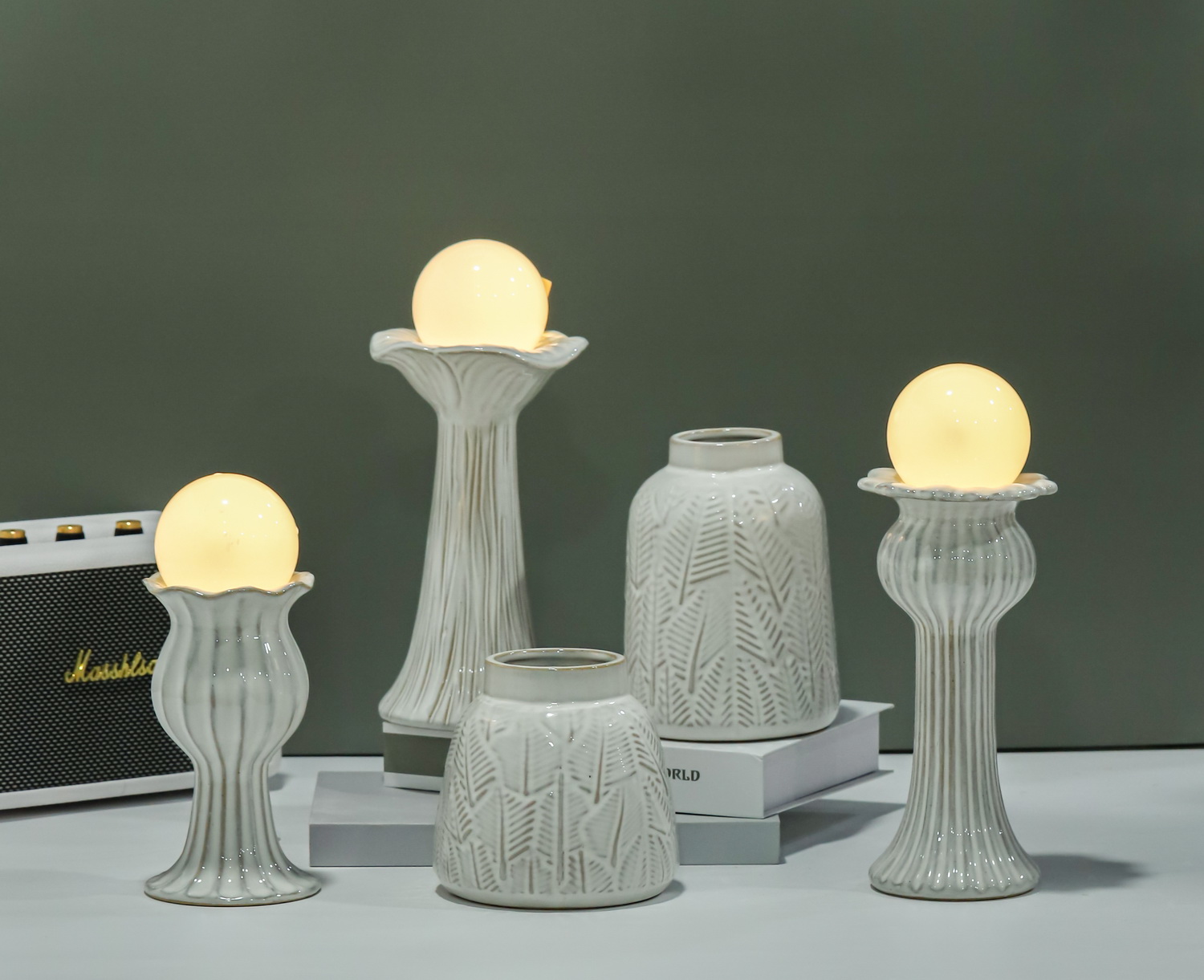
This matters for wholesale ceramic vases, candle holders, trays, bowls, and small sculptural accents. A tabletop collection may look simple, but the export details can get complicated quickly when multiple sizes, finishes, cartons, labels, and inspection points are involved.
Home Decor Product Development Needs Operations Discipline
Good home decor product development is not only creative.
It is operational.
A buyer may start with one vase shape, then add a smaller size, then a ceramic sculpture, then a candle holder, then packaging revisions. Each step affects cost, MOQ, lead time, carton planning, and production scheduling.
Stanford d.school identifies Prototype and Test as core parts of design thinking, which fits home decor sourcing well: samples help buyers learn before committing to full production. But once the sample is approved, the export team must turn that learning into a controlled order.
A good export team keeps the product from getting lost between design excitement and production reality.
Why Ceramic Categories Need Better Coordination
Ceramic home decor has a beautiful surface problem: the things that make it attractive also make it harder to manage.
For ceramic sculpture wholesale, the shape may be irregular. For ceramic candle holders wholesale, the cup size, base stability, and finish control matter. For wholesale ceramic vases, the rim, glaze, weight, and carton structure all affect shipment quality.
A serious export operations team watches these details:
Sample approval version.
Finish range.
Packing method.
Carton marks.
Inner protection.
Inspection standard.
Shipment schedule.
Mixed assortment loading.
That is how buyers avoid the classic problem: the sample looked good, but the final shipment created too many surprises.
Building a Small but Profitable Assortment
Many buyers do not need a huge collection at first.
They need a small assortment that can prove itself.
That is why building a small but profitable assortment is often smarter than ordering too many risky SKUs. A strong starting assortment may include one hero vase, one smaller add-on vase, one ceramic candle holder, one tray, and one sculptural accent.
The export team’s job is to help make that assortment practical.
Can the SKUs share carton logic?
Can the MOQ work across several items?
Can the lead time stay realistic?
Can the supplier prepare documents clearly?
Can the packaging protect both product and margin?
A small assortment becomes profitable when it can sell, ship, and reorder without constant correction.
Home Décor MOQ and Lead Time Are Not Just Sales Terms
Buyers often ask about home décor MOQ and lead time early.
That is smart. MOQ affects cash flow. Lead time affects launch planning.
But MOQ and lead time are not just numbers on a quotation sheet. They are connected to material preparation, sampling, production scheduling, packaging materials, inspection, and export coordination.
If a supplier promises too much too quickly, the buyer may pay later through delays, weak packaging, inconsistent finish, or rushed inspection.
A good export operations team gives buyers realistic answers, not just attractive answers.
Why Recent U.S. Trends Make Export Coordination More Important
Recent Spring 2026 High Point Market coverage pointed to draped forms, artisanal textures, menswear patterns, oversized scale, and more detailed interiors. These trends create opportunities for sculptural ceramics, oversized vases, textured tabletop décor, and more expressive home accents—but they also require better coordination before shipment.
A larger vase affects carton size.
A textured finish affects protection.
A sculptural ceramic object affects inner packing.
A more detailed assortment affects inspection time.
Trend-driven products need more operational discipline, not less.
TikTok Can Create Demand. Export Operations Turns It Into Delivery.
TikTok now moves home decor taste quickly. ELLE Decor reported 2026 TikTok-driven interior trends such as skirted furniture, broken floor plans, friction-maxxing, and cabbagecore, showing how fast tactile and personality-driven interiors can enter the design conversation.
But TikTok does not answer the buyer’s export questions.
Can the product be produced on time?
Can the packaging hold up?
Can the MOQ support a test order?
Can the assortment ship cleanly?
Can the supplier repeat the order next season?
That is where export operations becomes part of the product value.
Packaging Stability Still Protects the Order
For fragile home decor, packaging cannot be an afterthought.
ISTA notes that many package testing protocols begin by defining product damage tolerance and package degradation allowance before testing. For ceramic vases, candle holders, wall décor, and sculptural accents, this matters because buyers need to know what kind of damage is unacceptable before goods move through real distribution.
A strong export operations team should make packaging part of the order plan:
Which products need extra rim protection?
Which finishes need surface separation?
Which cartons need stronger stacking resistance?
Which SKUs need clearer handling marks?
Which items need revised packing before bulk production?
This is how export operations reduces risk before shipment.
FAQ: Export Operations Team Home Decor
What does an export operations team do in home decor sourcing?
An export operations team manages the practical order process: sample tracking, production timing, MOQ coordination, packaging, inspection, documentation, shipment planning, and buyer communication.
Why does the export team matter for ceramic home decor?
Ceramic home decor often involves fragile rims, textured finishes, different sizes, mixed cartons, and packaging risks. A strong export team helps control these details before shipment.
How does export operations affect MOQ and lead time?
MOQ and lead time depend on material preparation, sampling, production schedule, packaging supply, inspection, and shipment booking. Good export coordination makes those timelines more realistic.
Why is export operations important for small assortments?
A small assortment may include several SKUs with different sizes, finishes, and packaging needs. Export operations keeps the order organized so buyers can test the market without creating unnecessary risk.
Final Thought: The Export Team Is Part of the Product
A beautiful sample opens the door.
A strong export operations team keeps the order moving.
That is why export operations team home decor matters in B2B sourcing. It helps buyers manage tabletop décor, ceramic sculpture, candle holders, wholesale ceramic vases, MOQ, lead time, packaging, and reorder confidence.
The product gets attention.
The operations team protects the business.
Leave a Reply