

Home Decor Assortment Strategy Starts With Editing
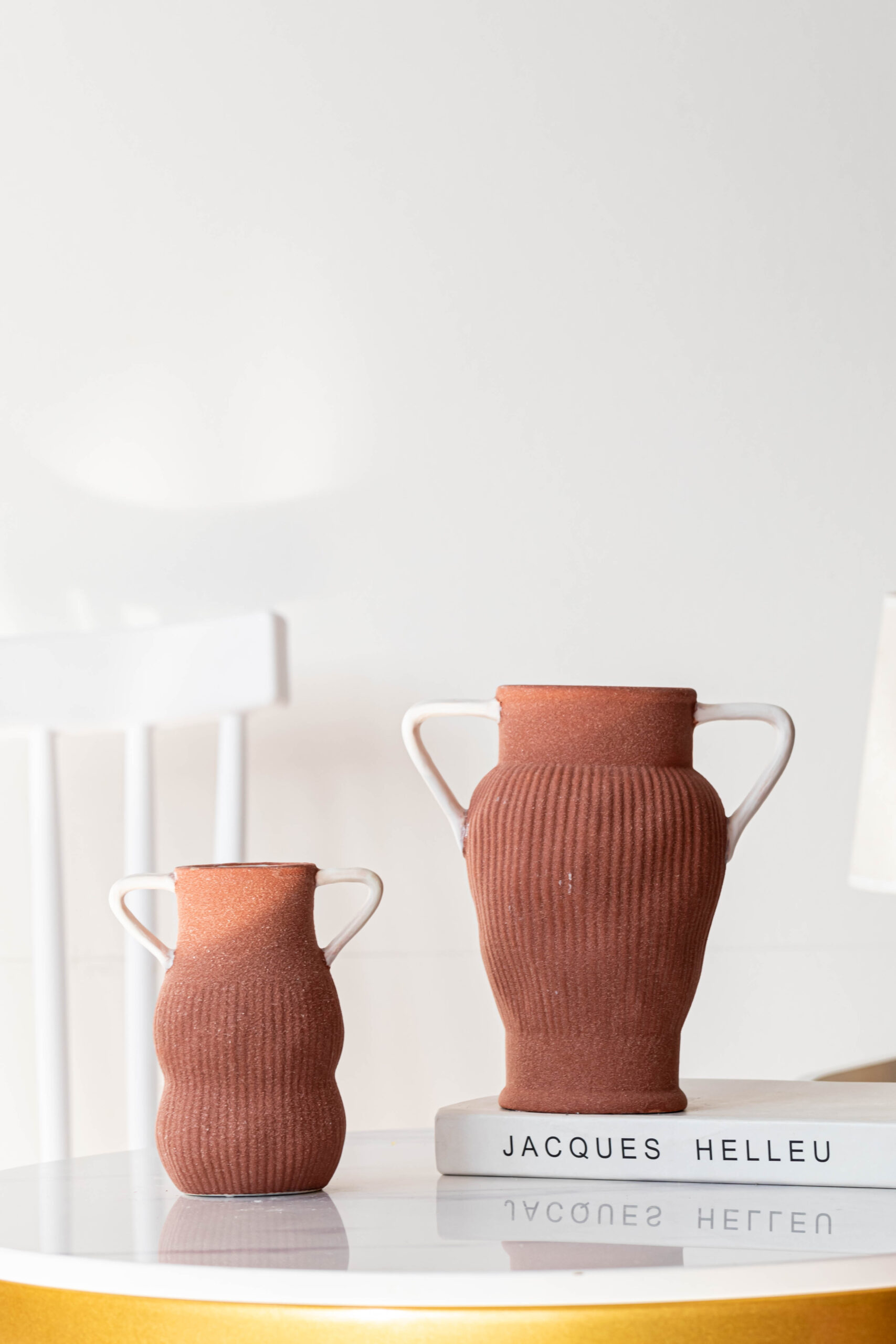
As an American home decor designer, I love a beautiful product: a sculptural vase, a piece of collectible ceramic art, a textured tray, a quiet wall accent, or soft matte ceramic decor.
But buyers do not need more random beauty.
They need a shelf that makes sense.
That is why home decor assortment strategy matters. It helps buyers decide which products should lead, which should support, which should be simplified, and which should stay out of the collection completely.
A strong assortment is not built by adding more SKUs.
It is built by editing.
Why Buyers Want the Trend Signal, Not the Full Trend Weight
This is why buyers want the trend signal not the full trend weight.
Spring 2026 High Point Market coverage points to draped forms, artisanal textures, Southwest influence, menswear patterns, oversized scale, and more detailed interiors. These are useful trend signals, but that does not mean every vase, tray, mirror, or wall accent should carry the whole trend at full volume.
A buyer may only need:
a softer curve,
a warmer glaze,
a tactile surface,
a slightly irregular edge,
or one stronger hero item supported by quieter pieces.
That is how a trend becomes buyable.
What a Strong Assortment Usually Needs
A practical home decor assortment usually includes:
One hero item that catches attention.
One mid-price piece that carries the style.
One smaller add-on that feels easy to buy.
One texture or finish anchor.
One functional piece, such as a tray, candle holder, mirror, or wall décor item.
One reason for the buyer to reorder.
This is where home decor product development becomes more than making samples. It becomes collection planning.
A vase may be beautiful alone. But if it cannot sit beside a wall piece, a tray, and a smaller ceramic accent, it may not help the buyer build a complete shelf.
How Buyers Build Confidence Before Reorder
The first order tests market interest.
The reorder tests whether the assortment was built correctly.
That is how buyers build confidence before reorder: they watch whether the finish stays stable, whether packaging works, whether the price ladder still makes sense, and whether the supplier can repeat the approved sample without starting the whole conversation again.
Stanford d.school’s design thinking guide treats prototyping and testing as ways to learn from users before moving forward. For B2B home decor, sample review works the same way: it helps buyers learn before production becomes expensive.
A good assortment gives the buyer commercial calm after launch.
A weak assortment creates questions after every shipment.
Why Making Depth Improves Sourcing Confidence
This is how making depth improves sourcing confidence.
A catalog can show the product.
A workshop can explain what may go wrong.
Will the matte finish rub during shipment?
Will the ceramic rim chip?
Will the wall décor frame need corner protection?
Will the clay body support the shape?
Will the glaze repeat across the second order?
MIT professor Eric von Hippel’s research on “sticky local information” explains why useful product knowledge often stays close to the place where the problem is being solved. In home decor, that knowledge often lives near the workshop: material behavior, finish control, shaping limits, packing risk, and repeat production.
That is why buyers trust suppliers who can explain risk early.
A Short Wall Décor Buying Guide for Assortments
A practical wall décor buying guide should not only ask, “Does it look good?”
It should ask:
Can it support the collection story?
Does the frame or surface match the finish direction?
Can it be packed safely?
Does it give the shelf vertical balance?
Can it work with ceramic pieces, trays, mirrors, and small decorative objects?
Wall décor is often what makes a collection feel complete. Without it, the assortment can feel flat. With the wrong piece, the shelf can feel confused.
Why TikTok Starts Trends, But Assortment Strategy Decides the Order
TikTok is now part of the home decor trend cycle. ELLE Decor’s 2026 TikTok interior trend coverage points to skirted furniture, broken floor plans, friction-maxxing, and cabbagecore as signs of nostalgic, tactile, personality-driven interiors entering the wider design conversation.
But TikTok does not answer buyer questions.
Can this become a product family?
Can the finish be repeated?
Can the collection ship safely?
Can the shelf stay clear?
Can the product still make sense after the viral moment fades?
That is where home decor assortment strategy does the real work.
FAQ: Home Decor Assortment Strategy
What is home decor assortment strategy?
Home decor assortment strategy is the process of building a coordinated product mix with clear style direction, price structure, shelf rhythm, packaging logic, and reorder potential.
Why does assortment strategy matter for B2B buyers?
Because buyers do not only need attractive single products. They need collections that can be displayed, explained, shipped, sold, and reordered.
How does sample review support assortment strategy?
A home decor product sample review helps buyers test finish, size, weight, packaging risk, collection fit, and whether the supplier understands revision before production.
Why does matte ceramic decor need careful assortment planning?
Matte ceramic decor can look premium and calm, but it needs finish control, surface protection, and the right supporting pieces so the shelf does not feel flat or dusty.
Final Thought: A Good Assortment Feels Easy After Launch
A good assortment does not create chaos after launch.
The finish does not trigger complaints.
The packaging does not create damage claims.
The shelf story still makes sense.
The reorder does not feel like starting over.
That is the real value of home decor assortment strategy.
It helps buyers turn trend signals into products that look current, ship safely, and have a real chance to sell again.
Leave a Reply