

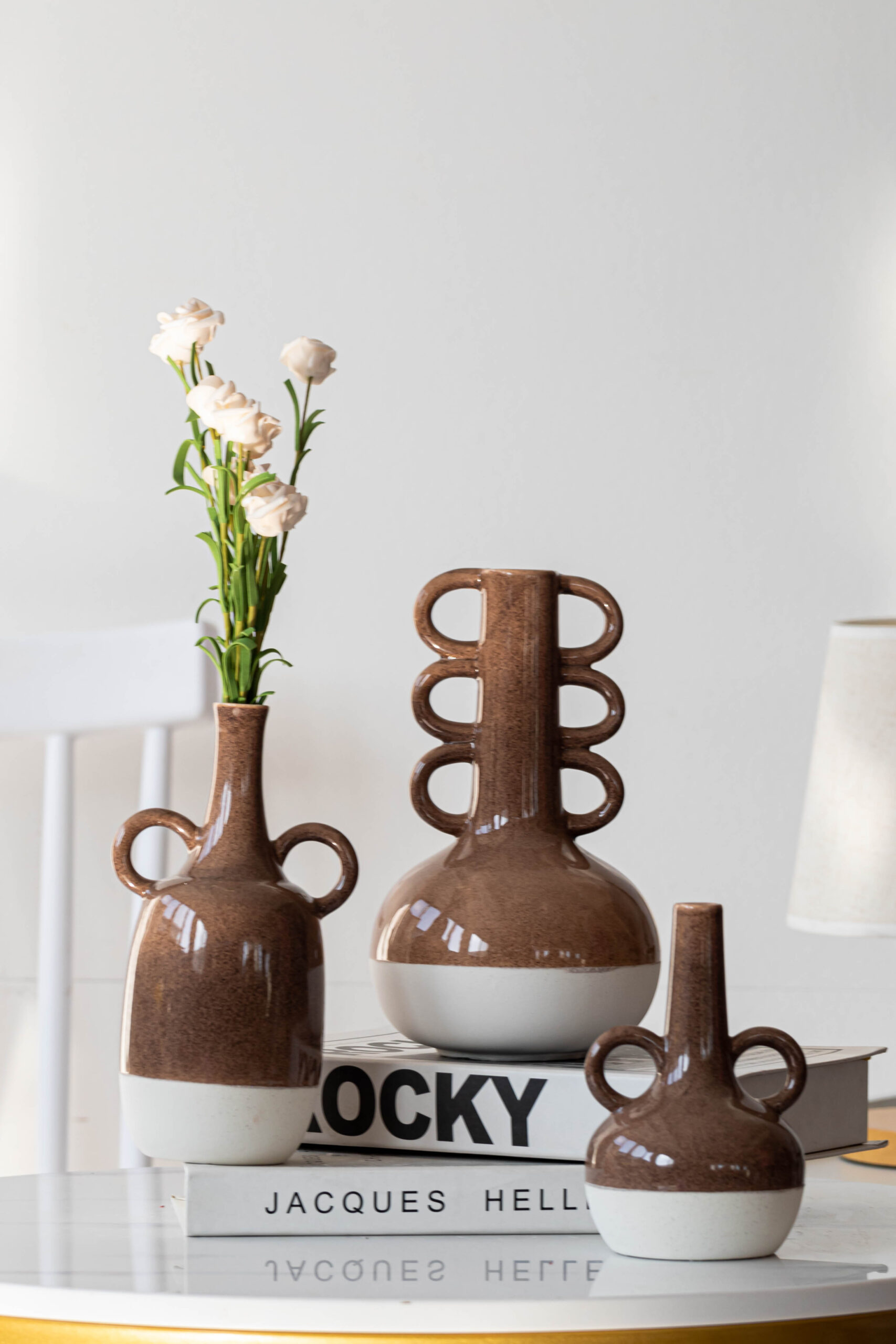
Home Decor Assortment Strategy Starts With Editing
As an American home decor designer, I see beautiful products every week: ceramic vases, sculptural trays, candle holders, mirrors, wall accents, and small decorative objects.
But a buyer does not need more random beauty.
A buyer needs a shelf that makes sense.
That is why home decor assortment strategy matters. It helps buyers decide which products should lead, which should support, which should be simplified, and which should never enter the assortment at all.
A strong assortment is not built by adding more SKUs. It is built by editing.
What Buyers Are Really Trying to Build
A good assortment usually needs:
A hero item that catches attention.
A mid-price piece that carries the story.
A smaller add-on that feels easy to buy.
A finish or texture anchor.
A practical item that makes the shelf feel complete.
A clear reason to reorder.
That is the difference between a product group and a real collection.
Retail assortment planning is about choosing the right mix of products, styles, sizes, colors, and channels to meet customer demand. In home decor, that means a buyer is not just buying a vase or tray. The buyer is building a shelf story that can sell, ship, and repeat.
Why Recent U.S. Trends Need Assortment Discipline
Spring 2026 High Point Market showed strong signals: menswear patterns, draped forms, indoor-outdoor materials, oversized scale, richer texture, and more expressive interiors. These ideas are useful, but they need translation before becoming a commercial product line.
A trend may look exciting in one photo.
But will it work across five SKUs?
Will the finish repeat?
Will the price ladder make sense?
Will the shelf feel calm enough to buy?
Will the product still look good after shipping?
This is where home decor assortment strategy becomes a buyer’s filter. The goal is not to carry the whole trend at full volume. The goal is to take the part of the trend that can become a retail-ready collection.
Why Collectible Design Needs Commercial Control
Collectible Design has influenced the way buyers think about decorative objects. More buyers now want pieces that feel sculptural, personal, and artful—not just functional filler.
That is good news for ceramic objects, bold vases, carved forms, and small statement pieces.
But there is a catch.
A product can feel collectible and still need to be commercially clear. If the shape is too fragile, the finish too unpredictable, or the price too hard to explain, the piece may win attention but lose the order.
A good assortment strategy asks:
Is this item the hero?
Does it need quieter support pieces?
Can it be packed safely?
Can the finish be repeated?
Does it belong in a shelf story, or is it only a one-off object?
What Makes a Finish Feel Commercially Believable
A finish does not need to be plain to be commercial.
But it needs to feel controlled.
That is what makes a finish feel commercially believable. A matte finish should look soft, not dusty. A glossy surface should feel rich, not cheap. A reactive glaze should look crafted, not random. A carved texture should add value, not create defect risk.
As U.S. home trends move toward tactile materials and stronger surface interest, finish judgment becomes more important. Buyers need suppliers who can explain which finishes can be repeated, packed, and reordered without surprise.
Why Workshop Reality Makes Samples More Believable
This is why workshop reality makes samples more believable.
A catalog shows the finished look.
A workshop shows the product risk.
Will the rim chip?
Will the glaze vary too much?
Will the base sit flat?
Will the surface scratch in transit?
Will the carton protect the shape without killing margin?
MIT professor Eric von Hippel’s research on “sticky local information” explains why some useful product knowledge is hard to move away from the place where the work is actually being solved. In home decor, that knowledge often lives near the workshop: material behavior, finish control, shaping limits, packaging risk, and repeat production.
That is how making depth improves sourcing confidence. Buyers trust suppliers more when the supplier can explain not only what can be made, but what should be adjusted before production.
How to Compare Home Decor Suppliers
When buyers compare home decor suppliers, price is only one part of the decision.
A stronger comparison looks at:
Sample quality.
Finish control.
Assortment thinking.
Packaging awareness.
Revision speed.
Production repeatability.
Clear communication.
The most useful supplier does not only say, “We can make it.”
A better supplier says:
“This finish is attractive, but this version will be more stable.”
“This sculptural item should be the hero, not the add-on.”
“This tray helps the collection feel complete.”
“This product needs packaging review before bulk shipment.”
“This assortment needs one quieter SKU so the shelf does not feel too loud.”
That kind of answer tells the buyer the supplier understands product decisions, not just production.
Why Home Decor Product Sample Review Matters
A home decor product sample review should not be a quick yes-or-no check.
It should answer practical questions:
Does the product look good in real light?
Does the finish match the assortment?
Does the weight feel right?
Does the item support the price ladder?
Does the product belong on the shelf?
Does the supplier understand what to revise?
Stanford d.school identifies Prototype and Test as key parts of design thinking. For home decor sourcing, samples work the same way: they help buyers learn before full production becomes expensive.
TikTok Can Create Interest. Assortment Strategy Decides the Order.
TikTok is now part of the home decor trend cycle. ELLE Decor reported that 2026 TikTok-driven interior trends include skirted furniture, broken floor plans, friction-maxxing, and cabbagecore, all pointing toward nostalgic, tactile, personality-driven homes.
But TikTok does not answer buyer questions.
Can this become a product family?
Can the finish be repeated?
Can the collection ship safely?
Can the shelf stay clear?
Can the product still make sense after the viral moment fades?
That is where assortment strategy does the real work.
FAQ: Home Decor Assortment Strategy
What is home decor assortment strategy?
Home decor assortment strategy is the process of building a coordinated product mix with clear style direction, price structure, shelf rhythm, packaging logic, and reorder potential.
Why does assortment strategy matter for B2B buyers?
Because buyers do not only need attractive single products. They need collections that can be displayed, explained, shipped, sold, and reordered.
How should buyers compare home decor suppliers?
Buyers should compare suppliers by sample quality, finish control, product judgment, packaging awareness, communication, revision ability, and whether the supplier can help build complete collections.
What makes a finish commercially believable?
A finish feels commercially believable when it looks intentional, repeatable, suitable for retail lighting, safe to pack, and stable enough for reorder production.
Final Thought: A Good Assortment Feels Calm After Launch
A good home decor assortment does not create chaos after launch.
The finish does not trigger complaints.
The packaging does not create damage claims.
The price ladder still makes sense.
The reorder does not feel like starting over.
That is the real value of home decor assortment strategy.
It helps buyers move from trend excitement to product confidence—and from one attractive sample to a collection that can actually sell.
Leave a Reply