

Home Decor Packaging Standards Are Where Design Meets Business
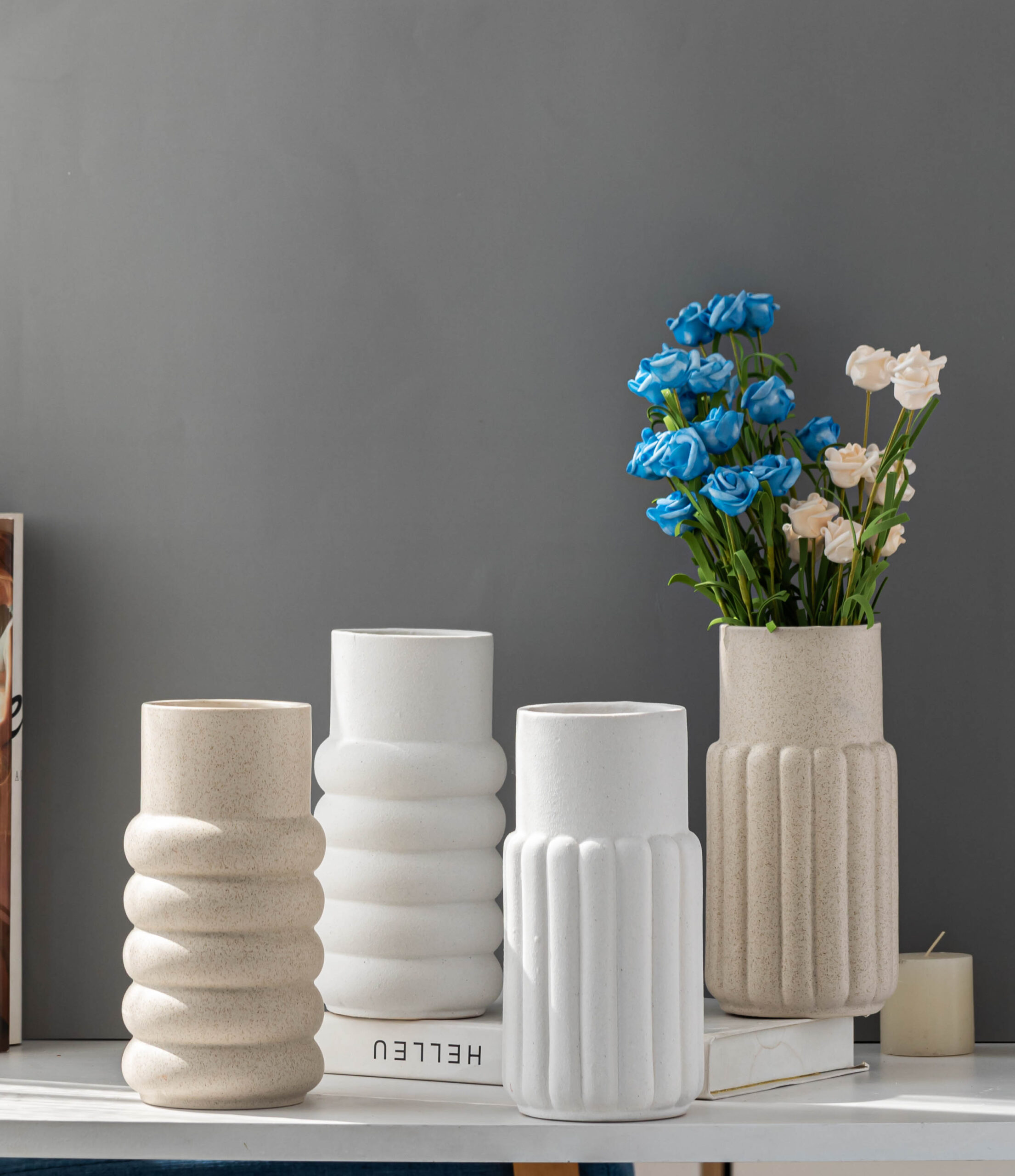
As an American home decor designer, I love a product with presence: bulk ceramic vases with bold proportions, matte surfaces, sculptural curves, and enough personality to stop someone at the shelf.
But a buyer has to ask the harder question:
Will this product survive shipping, handling, warehouse stacking, store display, and reorder?
That is why home decor packaging standards matter. Packaging is not a back-end detail. For B2B home decor, packaging protects the product, the finish, the buyer’s margin, and the possibility of a second order.
A beautiful product gets attention.
A well-packed product gets a better chance to become part of a profitable home decor assortment.
Why Material Judgment Starts on the Ground
This is why material judgment starts on the ground.
A catalog can show the final vase.
A workshop can explain what may go wrong.
Will the clay body support the shape?
Will the rim chip?
Will the matte finish rub in transit?
Will the vase lean because the base is too narrow?
Will the carton need too much inner protection?
Will the landed cost still make sense after packaging is added?
MIT professor Eric von Hippel’s research on “sticky local information” explains why some useful problem-solving knowledge stays close to the place where the problem is actually being solved. In home decor, that often means the workshop floor, where people understand material behavior, finish control, packing pressure, and repeat production.
This is why heritage craft home decor sourcing is not just about a nice origin story. It is about using making knowledge to prevent expensive product mistakes.
What Makes a Finish Feel Commercially Believable
A finish can be beautiful in a sample and still be risky in bulk.
That is why buyers ask what makes a finish feel commercially believable.
A matte ceramic finish should feel soft, not dusty.
A glossy surface should feel rich, not plastic.
A reactive glaze should feel crafted, not random.
A textured surface should look intentional, not like a defect waiting to happen.
Recent U.S. market coverage shows why finish judgment matters. Houzz reported that Spring 2026 High Point Market highlighted more substantial, tactile expressions of natural materials, while Architectural Digest noted recurring themes such as draped forms, oversized scale, menswear patterns, and indoor-outdoor materials at High Point Market.
These trends are good for ceramic decor. They also make packaging more important.
When the product value lives in the surface, packaging has to protect the surface—not just the object.
Why Bold Proportions Need Smarter Packaging
Bold proportions can make a product feel current.
They can also make it harder to ship.
A large ceramic vase may look strong on a console table, but its height, rim, base, and weight distribution all affect packaging. A tall narrow piece may need stronger internal support. A wide sculptural piece may need more carton space. A textured finish may need separation so it does not rub against the packaging during transit.
This is where home decor packaging standards become part of product development.
For bulk ceramic vases, packaging should consider:
rim and edge protection,
surface separation,
inner structure,
carton compression,
drop and vibration risk,
stacking safety,
and whether the final carton size still fits the target channel.
ISTA describes its role as helping organizations minimize product damage through effective package design and resource optimization. For buyers, that is the exact point: packaging should reduce damage without destroying margin.
How Making Depth Improves Sourcing Confidence
This is how making depth improves sourcing confidence.
A basic supplier says, “We can make this vase.”
A stronger supplier says:
“This rim needs more protection.”
“This matte finish may rub if packed too tightly.”
“This base should be adjusted before production.”
“This bold proportion is attractive, but the carton cost may rise.”
“This finish looks good, but this version will be easier to repeat.”
That kind of answer matters because buyers do not want surprises after shipment. They want a supplier who can see risk before the purchase order becomes expensive.
For Teruierdecor, packaging is not separate from design. It is part of the value translation from trend idea to retail-ready product.
Why Recent Trend Cycles Make Packaging More Important
TikTok and social platforms can make home decor trends move fast. ELLE Decor’s 2026 TikTok interior trend coverage points to skirted furniture, broken floor plans, friction-maxxing, and cabbagecore as examples of nostalgic, tactile, personality-driven interiors gaining attention.
But fast trend energy does not answer buyer questions.
Can the finish be repeated?
Can the product ship safely?
Can bold proportions fit the carton plan?
Can the collection survive warehouse handling?
Can the style still make sense after the viral moment fades?
Packaging is where trend excitement meets commercial reality.
What Good Home Decor Packaging Standards Should Protect
Good packaging protects more than the product body.
It protects:
the finish,
the rim,
the base,
the retail presentation,
the buyer’s margin,
the supplier relationship,
and the next order.
For ceramic home decor, this means packaging should be discussed early—during sample development, not after final approval.
A product that looks good but ships badly is not truly retail-ready.
A product that arrives clean, intact, and easy to handle gives the buyer something more valuable than excitement: commercial calm.
FAQ: Home Decor Packaging Standards
What are home decor packaging standards?
Home decor packaging standards are the practical requirements used to protect decorative products during shipping, handling, storage, and display. They include carton strength, inner protection, surface protection, drop risk, compression risk, and finish safety.
Why do packaging standards matter for bulk ceramic vases?
Bulk ceramic vases often involve fragile rims, heavy bodies, matte or textured finishes, and large proportions. Packaging must protect both the ceramic structure and the visible finish.
Why does material judgment matter in packaging?
Material judgment helps buyers understand whether the finish may rub, the rim may chip, the base may crack, or the shape may need stronger inner support before bulk production.
How does better packaging support a profitable home decor assortment?
Better packaging reduces damage claims, protects margins, improves warehouse handling, preserves retail presentation, and makes buyers more confident about reorder.
Final Thought: Packaging Is the Quiet Test of a Supplier
A product photo creates interest.
A sample starts the conversation.
But packaging proves whether the product is ready for business.
That is why home decor packaging standards should enter the discussion early. They help buyers protect finishes, control shipping risk, support bold proportions, and build a profitable home decor assortment that can actually reorder.
Leave a Reply