

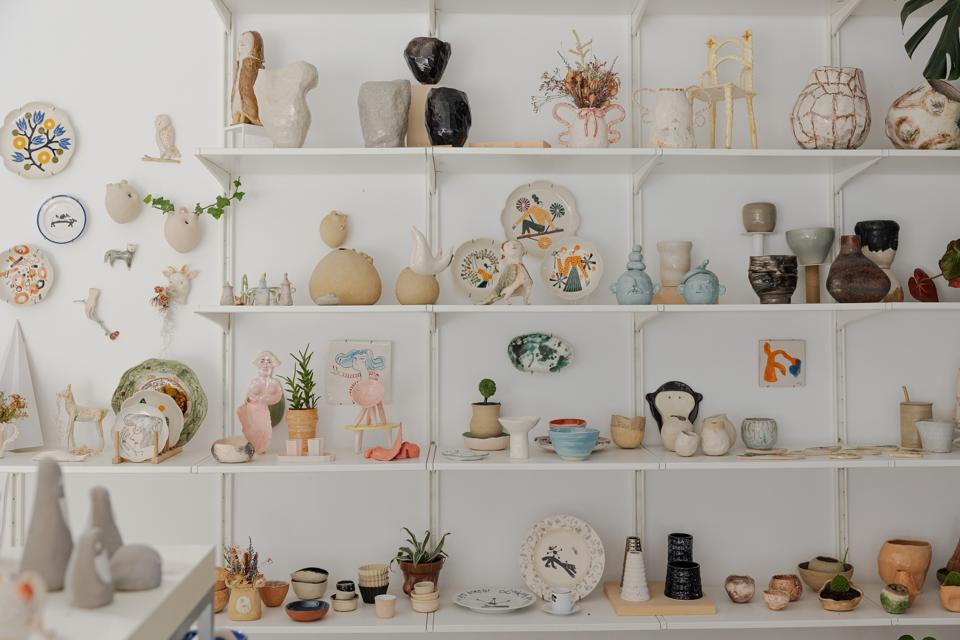
In home decor, inspiration is abundant. The tricky part is turning it into something a buyer can actually order, ship, merchandise, and reorder without a mild sense of regret. That is why trend-to-SKU execution matters so much right now. In 2026, North American market signals are pointing toward more expressive interiors, elevated craftsmanship, warmer minimalism, sculptural form, and comfort with personality. High Point’s Spring 2026 theme centers on “Preserve,” ASID’s 2026 outlook emphasizes purpose and performance alongside beauty, and Las Vegas Market’s January themes highlight restorative softness and shape-led accents. The message is clear: trends are getting more nuanced, not less.
And nuanced trends do not automatically become good products. A mood, a color direction, or a sculptural silhouette is not yet a SKU. MIT research on product development notes that rapid prototyping allows earlier testing and tighter feedback loops, which helps teams reduce uncertainty before scaling. That principle is especially useful in home decor, where subtle details—finish, proportion, glaze, weight, carton design—can make the difference between a pretty concept and a commercially workable line.
Trend-to-SKU is where design taste meets factory intelligence.
This is precisely where Teruierdecor’s factory advantage can feel persuasive. A strong supplier in a craft-rich manufacturing ecosystem should not merely reproduce a reference image. It should translate it. That means understanding why a trend is moving, which parts of it will survive contact with retail reality, and how to shape the final object so it belongs in a buyer’s assortment rather than just on a Pinterest board.
A real home decor product development team knows the difference. It asks the useful questions early: Should the vase be slightly taller for shelf presence? Is the glaze soft enough to feel current but stable enough for volume? Can the handle, lip, base, or silhouette be refined so the object feels editorial without becoming impractical? That is the actual craft inside trend-to-SKU execution.
The current market is asking for softness, shape, and personality—but with discipline.
Recent trade and media signals support that. Home Accents Today describes 2026’s direction as a warmer, more tactile post-minimalism—clean, yes, but softer and more lived-in. Its Pinterest coverage also points toward comfort, authenticity, bold stripes, sculptural silhouettes, and more curated self-expression. These are lovely directions for product development, especially for ceramic vases for home décor, because ceramics respond beautifully to shape, surface, and subtle finish variation. But they also require discipline. Too much softness, and the item loses edge. Too much novelty, and it loses reorder potential.
That is why custom home decor manufacturing matters more than simple production capacity. In a supplier-buyer relationship worth keeping, manufacturing is not the last step. It is part of interpretation. The factory helps edit the trend into a more stable, scalable, and retail-legible form.
Social media has made the gap between trend and product much more visible.
TikTok, naturally, has accelerated this. ELLE Decor reports that TikTok continues to have outsized influence on interiors in 2026 and cites research indicating that about half of furniture buyers begin their inspiration phase on social platforms. TikTok’s own North America trend report also shows users moving away from generic “hype” toward real-world testing, public recommendations, and high-engagement comment culture. Which means a home decor product is no longer judged only by how it looks in a styled image. It is judged by whether it works in the room, in motion, and in public opinion.
That shift raises the bar for private label home decor in particular. A private label line cannot simply look fashionable at launch. It needs to feel coherent, protected, and commercially believable across the whole customer experience. The product must arrive with enough integrity to support the brand story attached to it.
Packaging is not the boring part of the SKU. It is part of the SKU.
This is especially true for ceramic vase wholesale, where the object may be visually delicate even when materially strong. A vase may survive the kiln quite beautifully and still fail the wholesale journey if the packaging logic is careless. Academic research increasingly frames packaging as a foundational design decision, because product protection, logistics, and sustainability all meet there. In practical terms, that makes packaging for fragile home decor part of product development, not a separate afterthought.
A supplier with real trend-to-SKU maturity understands that the shape of the vase, the thickness of the wall, the finish sensitivity, and the carton design are all having the same conversation. That is why a good SKU feels complete. Not merely pretty. Complete.
The best suppliers do not just spot trends. They stabilize them.
That, finally, is what makes Teruierdecor’s core advantage worth writing about. It is not only that the factory can make. It is that the factory can help convert trend language into product language. It can take a shifting style signal and guide it through development, refinement, material choice, packaging logic, and wholesale readiness without losing the charm that made the trend worth chasing in the first place.
So yes, let the trend be airy, sculptural, warm, and just a touch irresistible. But let the SKU be clearer than the trend. Let it be manufacturable, protectable, brandable, and reorderable. Because in home decor, inspiration may start the conversation—but trend-to-SKU execution is what turns that conversation into business.
Leave a Reply