

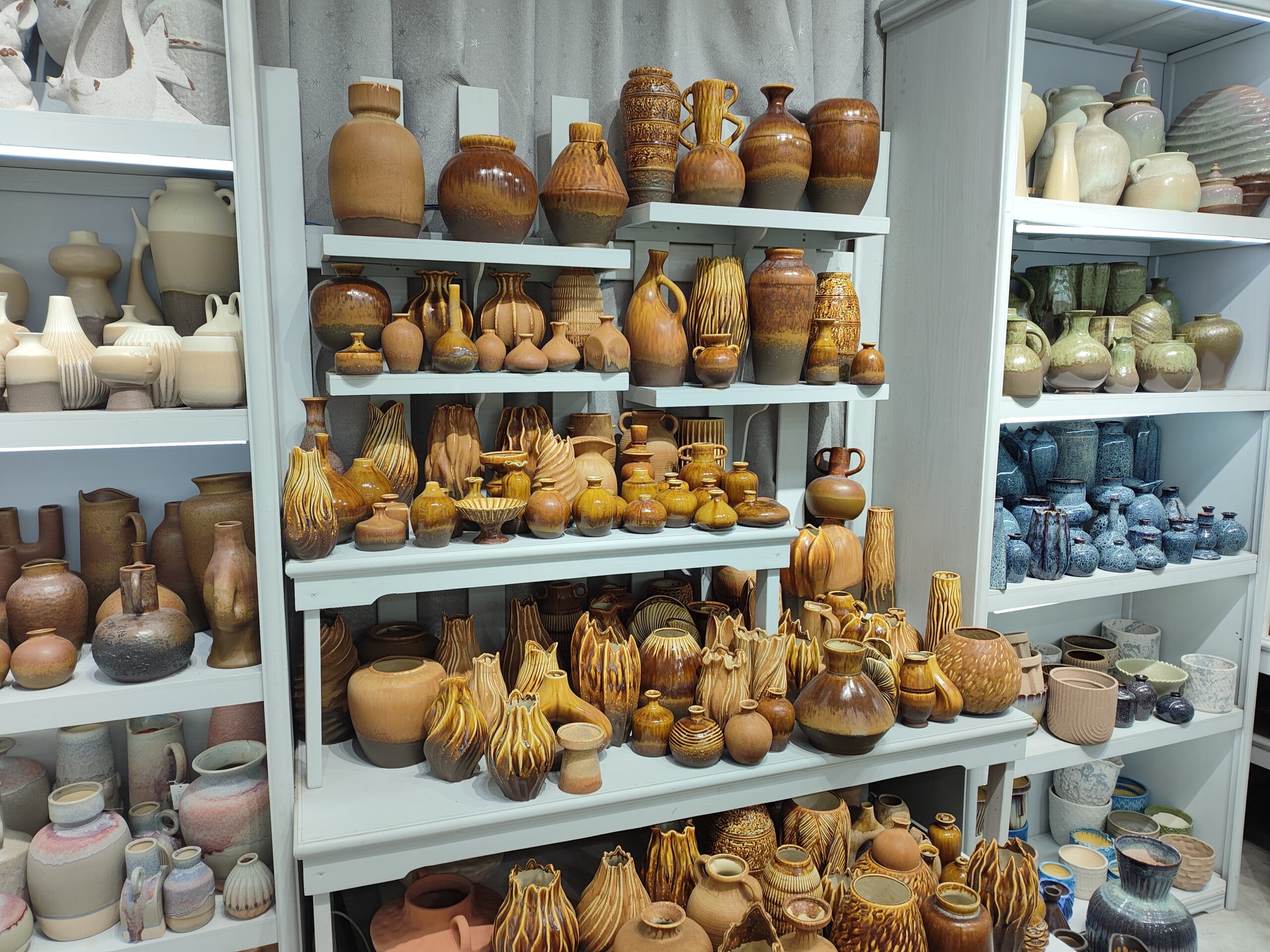
As a designer, I can forgive a trend arriving a season late more easily than I can forgive a product arriving wrong. The wrong tone of glaze. A slightly uneven finish. A carton that looked confident on paper and collapsed emotionally somewhere between factory and freight. That is why strict QC checkpoints home decor is not a dry factory phrase to me. It is a buying advantage. It is the difference between “That looked pretty in the sample room” and “Yes, I would place the reorder.”
And in 2026, that difference matters more. High Point Market’s Spring 2026 direction leans into “Preserve,” while ASID’s 2026 outlook points to expressive interiors, elevated craftsmanship, and design rooted in purpose and performance. In other words, buyers are not only sourcing style; they are sourcing credibility. The more nuanced the look becomes, the less tolerance there is for inconsistency.
A beautiful product still needs to survive contact with reality.
Recent High Point programming makes this wonderfully clear. One session this spring teaches designers how packaging affects freight class and damage prevention. Another focuses on how retailers are reducing damage, improving visibility, and lowering cost across dock-to-door operations. These are not side conversations anymore. They are part of the product conversation. In home furnishings, operations has quietly become part of aesthetics. A piece that arrives cleanly, consistently, and on spec simply feels more premium.
That is exactly where strict QC checkpoints home decor becomes meaningful. Good quality control is not a dramatic final inspection under fluorescent lights. It is a sequence of intelligent checkpoints: surface consistency, color tolerance, finish match, structural integrity, carton method, labeling accuracy, and shipment readiness. Recent research on predictive quality assurance argues that traditional quality systems often lack the traceability and adaptability needed in dynamic supply chains. That is a neat academic way of saying something buyers already know in their bones: vague QC creates expensive surprises.
The trend cycle is speeding up, so inconsistency gets noticed faster.
TikTok has a hand in this, of course. ELLE Decor reports that TikTok continues to shape interior design in 2026, and cites consumer research indicating that about half of furniture buyers begin the inspiration phase on social platforms. TikTok’s own North America trend report also shows a shift away from generic hype toward real-world testing, high comment engagement, and recommendation logic built in public. So now, if a product arrives chipped, off-tone, or slightly disappointing, it does not stay a private sourcing issue for long. It becomes visible, searchable, and strangely social.
This is why a smart ODM home decor supplier should never treat QC as a hidden back-office ritual. The checkpoint structure is part of the trust structure. It tells the buyer that the supplier understands the pressure of the modern market: shorter attention spans, faster trend adoption, more public scrutiny, and less patience for preventable mistakes.
A real factory advantage is not just making. It is catching.
Teruierdecor’s strength, in that sense, is not simply about being located in a craft-rich manufacturing region. It is about turning that ecosystem into control. A real quality control team manufacturer does not only know how to make a decorative item look right once. It knows how to make it look right again, and again, and again. That repetition is where factory maturity shows itself.
And that maturity is visible long before the first container sails. A strong sample development team may be glamorous in theory, but in practice its value is wonderfully practical: it reveals where a finish shifts, where proportions feel unstable, where a paint edge needs discipline, where an insert needs more protection, where the visual intent and production reality are still having a disagreement. Done properly, the sample is not just approval theater. It is the first checkpoint in a longer quality chain. MIT research on product development also emphasizes earlier testing and more iterative feedback loops, because stronger prototypes reduce uncertainty before scale.
QC is also merchandising, whether people say it that way or not.
I rather like this point, because it is rarely phrased elegantly enough. True merchandising support for retailers is not only about helping choose the right assortment, color story, or silhouette direction. It is also about making sure the goods arrive in a condition that still deserves the merchandising effort. An elegant display loses some of its magic if one item has a blemish, another leans oddly, and a third arrives with carton dust and a dented corner. Consistency is visual. It reads instantly on shelf, on table, and on camera.
That is where the export operations team home decor matters too. Quality is not complete when the product passes inspection on a factory bench. Quality is complete when the item moves through packing, export handling, freight, receiving, and floor placement without quietly degrading along the way. Academic work on packaging design increasingly frames packaging as a fundamental design decision because product performance, logistics, and sustainability now intersect there. In wholesale home decor, the carton is not separate from the experience. It is part of the experience.
The best factory tour is the one that shows you where things could have gone wrong—and didn’t.
There is a reason buyers respond well to a good factory tour home decor manufacturer story. Not because factories are romantic, exactly, but because visibility feels calming. When a supplier can clearly show where it checks glaze, where it checks edges, where it checks assembly, where it checks packaging, and where it checks shipment readiness, the sourcing conversation changes tone. It becomes less about promises and more about proof.
That is the quiet charm of strict QC checkpoints home decor. It sounds technical, but what it really offers is emotional relief. Fewer surprises. Fewer avoidable claims. Fewer awkward emails after delivery. And in a market that is getting more design-sensitive, more logistics-aware, and more publicly reviewed, that sort of reliability feels almost luxurious.
So yes, let the product be lovely. Let it be expressive, tactile, well-shaped, and very much of the moment. But let it also be checked properly, packed properly, and repeated properly. Because in wholesale home decor, charm opens the door. Consistency is what gets invited back in.
Leave a Reply