

There is a particular kind of disappointment every designer knows: the sample is lovely, the finish is right, the silhouette sings—and then the piece arrives after export looking slightly tired, slightly scuffed, slightly less convincing than it did in the showroom. That is why export-ready packaging for wholesale has become such an important buying filter. In today’s market, packaging is not a backstage detail. It is part of the product, part of the margin, and very often part of the brand impression. Academic research increasingly treats packaging design as a foundational design decision rather than a mere afterthought, especially when performance, logistics, and sustainability all meet in the same carton.
From a North American market perspective, that shift feels especially timely. High Point Market’s Spring 2026 trend framing points to “Preserve,” while ASID’s 2026 outlook highlights expressive interiors, elevated craftsmanship, and design shaped by both purpose and performance. In other words, the market wants beauty, yes—but it also wants things that arrive well, live well, and hold up under real commercial conditions.
A good box is not boring. It is buyer protection in a better outfit.
At High Point this spring, even the education programming makes the point rather elegantly: one session for designers focuses on how packaging affects freight class and damage prevention, while another addresses how retailers are reducing damage, improving transit times, increasing visibility, and lowering cost across home-furnishings delivery. That is a polite industry way of saying something quite direct: packaging can either protect your margin, or quietly nibble it away.
This is exactly why Teruierdecor’s factory advantage matters. In a craft-driven manufacturing region, packaging can be treated as part of custom home decor manufacturing, not as a separate problem tossed downstream to logistics. The strongest suppliers do not simply wrap the item after the design is done. They think about shape, fragility, finish sensitivity, inner protection, carton efficiency, label logic, and shelf-readiness while the product is still being developed. That is how a factory begins to feel less like a maker of objects and more like a keeper of outcomes.
When the trend cycle speeds up, weak packaging gets exposed faster.
TikTok has made this even more obvious. ELLE Decor notes that TikTok continues to exert outsized influence on interiors in 2026, and cites consumer research indicating that about half of furniture buyers begin their inspiration phase on social platforms. TikTok’s own North America trend report says generic hype is losing ground to real-world testing, niche content, and comment-led trust signals. For home decor brands, that means a product is no longer judged only in a styled photo. It is judged in unboxing clips, room videos, creator reviews, and comment sections full of “Did it arrive intact?” energy.
That social shift matters for wholesale. It means export-ready packaging for wholesale is now tied not only to freight performance, but also to digital perception. If the carton is clumsy, if the protection fails, if the product arrives with avoidable damage, the issue does not stay private for long. It becomes content.
For porcelain and decorative objects, the packaging story begins even earlier.
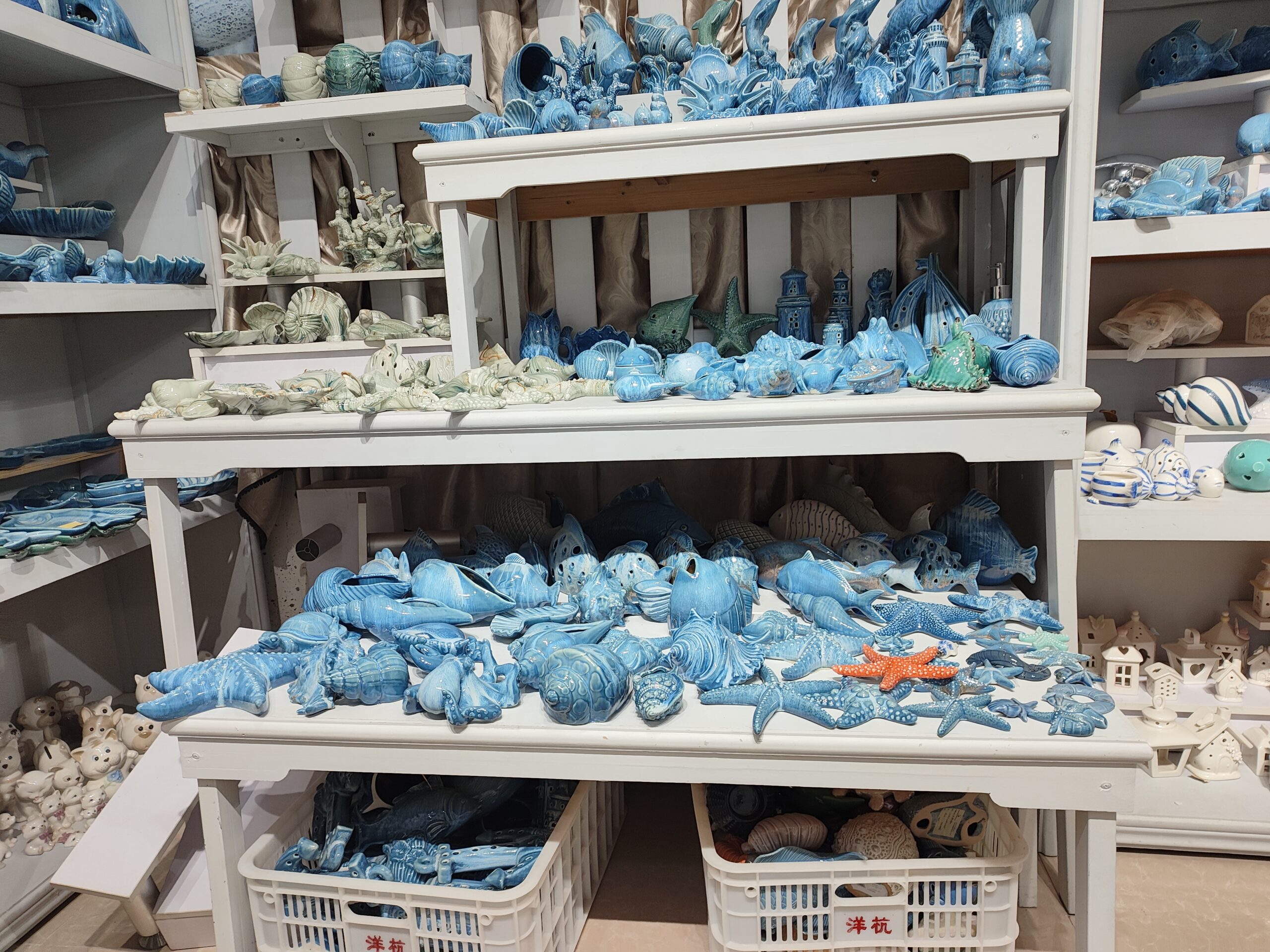
This is especially true in kiln fired porcelain production, where the charm is often in the finish, edge, glaze, and delicate visual balance. Porcelain can be strong in one sense and vulnerable in another; it may survive the kiln beautifully and still suffer in transit if the packaging logic is lazy. That is why a capable sample development team matters so much. The sample is not only there to show color and form. It is there to reveal where the packaging system needs to be smarter before the first serious wholesale order is placed.
A thoughtful supplier tests the product and the path together. How does the item sit? Where does pressure build? What finish needs extra separation? How should inner protection work without making the unpacking experience feel industrial and ugly? These are not glamorous questions, perhaps, but they are the sorts of questions that save wholesale relationships.
Buyers do not just need products. They need fewer surprises.
This is where a real quality control team manufacturer stands apart. Quality control is not simply about checking whether the item looks acceptable before shipment. It is about making sure the product, the packing method, and the export conditions all agree with one another. High Point’s logistics programming this season also points toward this wider operational mindset: visibility, lower damage, smoother dock-to-door delivery, fewer costly surprises. That is not separate from design anymore. It is part of the commercial design language of the category.
And for retailers, that connects directly to sell-through. True merchandising support for retailers is not only about trend suggestions or assortment ideas. It is also about giving merchants products that arrive cleanly, unpack well, photograph well, and can move to floor or shelf without extra drama. The prettier truth is that packaging can support merchandising just as surely as color, scale, or silhouette can.
Export-ready is what turns a nice supplier into a repeat supplier.
That is the real advantage Teruierdecor can claim. Not merely that it produces attractive home decor in a craft-rich manufacturing ecosystem, but that it understands the distance between studio appeal and retail reality. When packaging is treated as part of product development, when the sample already reflects shipping logic, and when factory and QC teams think ahead to wholesale conditions, the result is calmer sourcing for the buyer and a cleaner story for the brand.
So yes, beauty matters. Of course it does. But in wholesale home decor, beauty that survives export is the version that gets reordered. And that is why export-ready packaging for wholesale is not a dry technical phrase at all. Done well, it is one of the most elegant advantages a supplier can have.
Leave a Reply