

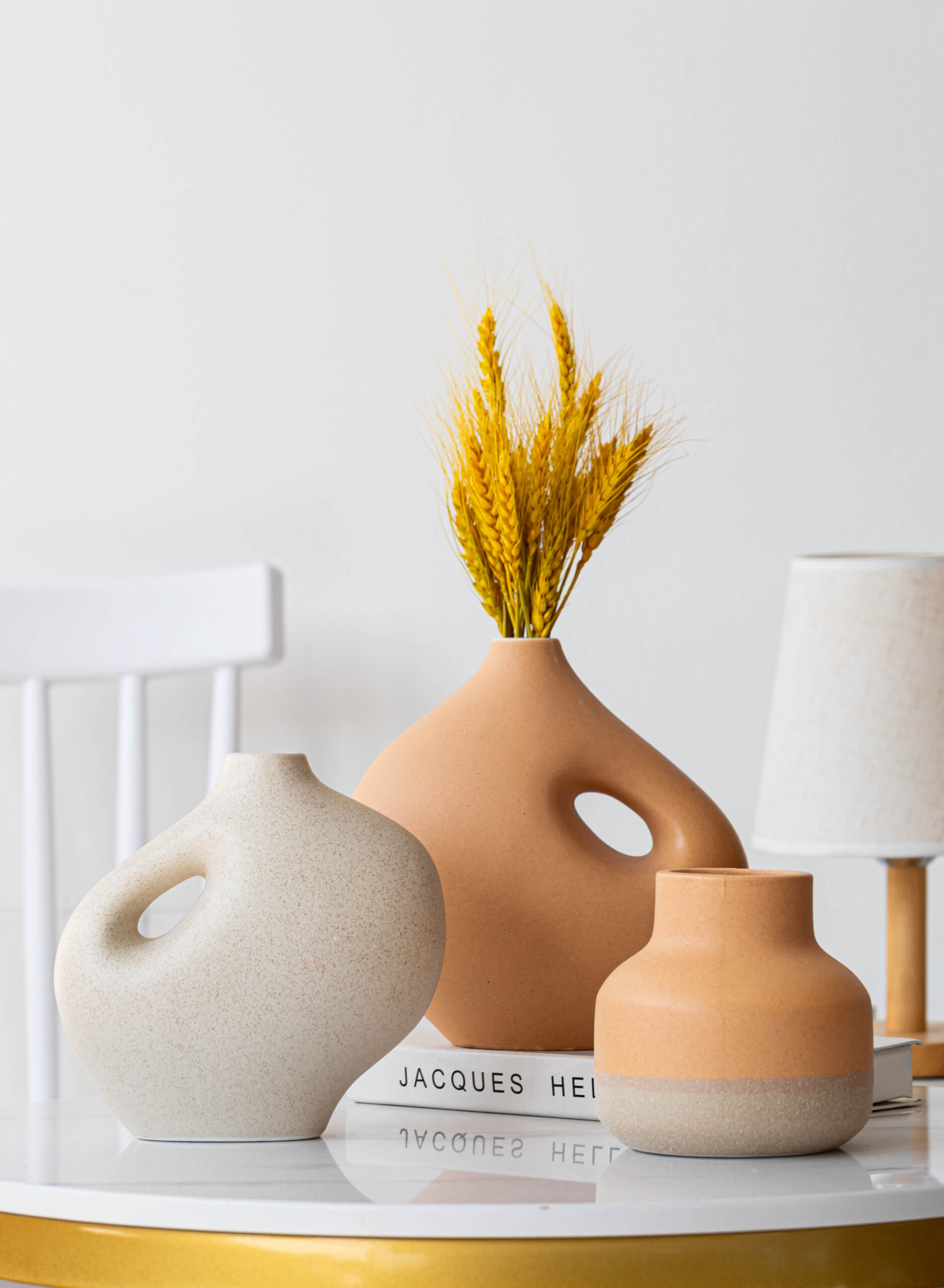
Why Trend Reports Are Not Enough for Home Décor Buyers
A trend report can tell a buyer what is becoming popular.
Warm neutrals.
Soft metallics.
Textured ceramics.
Mixed materials.
Curved edges.
Small-space seating.
Handcrafted surfaces.
Decorative objects with natural shapes.
That information is useful, but it is not the same as a product decision.
Retail buyers do not make money from knowing a trend.
They make money when that trend becomes a SKU that can sit on a shelf, fit a price point, ship safely, and reorder without surprises.
That is why trend-to-SKU execution matters.
A trend report gives direction.
Trend-to-SKU execution turns that direction into something a buyer can actually buy, test, display, and repeat.
For Teruierdecor, this is one of the most important differences between a supplier that only “follows trends” and a supplier that helps buyers build retail-ready home décor assortments.
What Is Trend-to-SKU Execution?
Trend-to-SKU execution means turning a market signal into a real product decision.
It is not only design.
It includes:
- reading the trend
- deciding which category can carry it
- choosing the right product role
- selecting shape, material, size, and finish
- checking cost and MOQ
- reviewing packaging risk
- building price ladder logic
- developing samples
- testing production repeatability
- preparing for reorder stability
A trend becomes useful only when it survives this chain.
For example, “warm texture” is a trend.
But it is not yet a SKU.
It can become:
- a matte ceramic vase
- a ribbed tabletop object
- a woven wall décor piece
- a textured ottoman
- a warm wood tray
- a soft neutral decorative bowl
The buyer’s real question is:
Which version of the trend is most likely to sell, ship, and reorder?
That is where supplier intelligence becomes valuable.
The Buyer’s Real Problem: Trends Are Easy to See, Hard to Translate
Most buyers can see trends.
The harder part is translating them correctly.
A trend may look strong in editorial photos, designer showrooms, or social media images. But that does not mean every version of the trend is suitable for retail.
A high-end sculptural ceramic form may look beautiful, but it may be too expensive for a volume channel.
A dramatic wall décor item may photograph well, but it may be too large for easy shipping.
A heavily textured finish may feel fresh, but it may create QC problems in mass production.
A colorful seasonal accent may attract attention, but it may be hard to reorder after the trend window closes.
This is why buyers need more than inspiration.
They need translation.
A trend has to be translated into:
- a product category
- a commercial size
- a sellable finish
- a workable cost
- a safe package
- a clear shelf role
- a reorder plan
Without that translation, trend research stays on the mood board.
Trend-to-SKU Execution Starts With Category Fit
Not every trend belongs in every category.
This is one of the biggest mistakes in home décor development.
A material trend may work beautifully in ceramic décor, but poorly in upholstered seating.
A color trend may work well in tabletop décor, but feel too risky for large wall pieces.
A shape trend may be strong in mirrors, but too fragile for ceramic vases.
A texture trend may be perfect for a small accent object, but too costly for a large statement item.
Before developing a sample, buyers should ask:
Which category is the safest and strongest carrier of this trend?
Example trend-to-category logic:
| Trend Signal | Better SKU Direction | Why It Works |
|---|---|---|
| Warm neutral texture | Ceramic vases, tabletop décor | Easy to coordinate and reorder |
| Soft gold / bronze metal | Mirror frames, bench legs, tabletop accents | Adds value without changing the whole product |
| Wavy or scalloped edges | Mirrors, trays, wall décor | Strong visual identity, manageable production |
| Botanical pattern | Accent stool, small bench, tabletop pieces | Good seasonal refresh with controlled risk |
| Mixed materials | Wall décor, trays, small furniture | Creates perceived value through contrast |
| Handcrafted surface | Ceramic décor, decorative bowls, vases | Matches craft-based production strength |
A good supplier should help buyers avoid forcing a trend into the wrong product.
The right category fit reduces cost, risk, and development waste.
The Second Step: Define the SKU Role
A trend can become many kinds of SKUs.
But every SKU needs a role.
Is it a hero item?
A price-entry item?
A seasonal refresh item?
A shelf filler?
A statement piece?
A reorderable core item?
A small test item?
A collection anchor?
The SKU role affects everything.
A hero item can carry stronger shape and finish.
A price-entry item needs controlled cost and simple packing.
A seasonal item can carry more color but needs a clear timing window.
A reorderable core item should avoid fragile trend details that are hard to repeat.
SKU role comparison:
| SKU Role | Best Use | Development Priority |
|---|---|---|
| Hero SKU | Display attention | Shape, finish, visual impact |
| Core SKU | Repeat sales | Consistency, price, packaging |
| Entry SKU | Easy add-on purchase | Cost control, simple size |
| Seasonal SKU | Freshness and color | Timing, trend relevance |
| Collection SKU | Assortment building | Coordination with other items |
| Test SKU | Market validation | Low risk, fast sampling |
A trend without a SKU role becomes a design idea.
A trend with a SKU role becomes a buying decision.
The Third Step: Build the Price Ladder
Home décor buyers rarely need one product only.
They need a price ladder.
A trend-to-SKU plan should answer:
- What is the entry item?
- What is the mid-price item?
- What is the statement item?
- What is the easy reorder item?
- What is the seasonal add-on?
- What is the product that helps the shelf feel complete?
For example, if the trend is “matte ceramic texture,” a price ladder might include:
| Price Level | SKU Direction | Retail Function |
|---|---|---|
| Entry | Small matte ceramic object | Easy add-on purchase |
| Mid-level | Medium ceramic vase | Main shelf seller |
| Statement | Large sculptural vase | Display anchor |
| Giftable | Small vase set | Seasonal or impulse buy |
| Collection | Coordinated bowl, tray, and vase | Shelf story builder |
This turns a broad trend into an assortment.
That is important because buyers are not only buying product. They are buying shelf logic.
A supplier that understands price ladder planning can help the buyer avoid a flat, repetitive, or unbalanced collection.
The Fourth Step: Check Material and Finish Reality
Some trends look good on screen but become difficult in production.
This is especially true in home décor.
Ceramic glaze may shift during firing.
Metal coating may look different across suppliers.
Wood tone may vary by batch.
Fabric color may change under different light.
Woven material may deform during packing.
Resin may look cheap if the finish is not controlled.
A trend-to-SKU process must ask:
Can the material and finish be repeated in real production?
This is where Teruierdecor’s craft town background matters.
In a production environment built around artisans, material suppliers, finishing workers, and factory teams, product judgment is not only about design taste. It is also about knowing where problems may appear:
- glaze pooling
- color variation
- surface scratches
- edge chipping
- uneven coating
- unstable base
- weak attachment
- packaging abrasion
- finish mismatch between sample and bulk order
A trend is only useful if the factory can turn it into a stable product.
The Fifth Step: Review Packaging Before the Product Is Final
Packaging should not be the last step.
For many home décor products, packaging can decide whether a SKU is commercially viable.
A large vase may be beautiful but too expensive to protect.
A wall décor piece may be attractive but too easy to scratch.
A bench may look retail-ready but arrive with damaged legs.
A mixed-material tabletop item may fail because metal and ceramic parts rub during shipping.
Before approving the sample, buyers should ask:
- Can this product ship safely?
- Does the shape create breakage points?
- Does the finish need surface protection?
- Does the carton size make sense?
- Can the product be packed efficiently?
- Will packaging cost destroy the price target?
- Can this package support reorder shipments?
A SKU is not finished when the sample looks good.
A SKU is finished when the product and package work together.
The Sixth Step: Think About the Second Order
Many products pass the first order.
Fewer products survive the second order.
That is why reorder planning should be part of trend-to-SKU execution from the beginning.
Buyers should ask:
- Can this material be sourced again?
- Can this glaze be repeated?
- Can this fabric remain available?
- Can this size and shape stay stable?
- Can the same carton method be reused?
- Can the finish standard be documented?
- Can the supplier keep production notes for future batches?
A trend-driven product that cannot be reordered may still work as a seasonal test.
But it should not be treated like a long-term core SKU.
The buyer needs to know the difference before placing the order.
Trend-to-SKU Execution vs Trend Following
Many suppliers say they follow trends.
That is not enough.
The difference is clear:
| Supplier Type | What They Usually Do | Buyer Risk |
|---|---|---|
| Trend follower | Shows popular-looking products | Products may lack shelf logic |
| Low-price supplier | Copies a style at lower cost | Finish, packaging, and consistency risk |
| Sample-driven supplier | Makes attractive samples | Bulk production may not match |
| Trend-to-SKU supplier | Converts trend into category, price, material, packaging, and reorder logic | Requires more planning, but lowers blind spots |
A buyer does not need another mood board.
A buyer needs a supplier that can help answer:
Which trend should become a SKU, and which one should stay as inspiration?
That is the real value of buying intelligence.
A Practical Example: Turning “Soft Organic Shape” Into SKU Decisions
“Soft organic shape” is a broad trend.
It may appear in furniture, ceramics, mirrors, wall décor, tabletop accessories, and lighting.
But a buyer cannot order “soft organic shape.”
The trend must be translated.
Possible SKU directions:
| Category | SKU Idea | Buying Judgment |
|---|---|---|
| Ceramic décor | Rounded matte vase | Safe, broad retail appeal |
| Mirror | Wavy edge wall mirror | Strong visual identity, packaging must be reviewed |
| Tabletop décor | Soft sculptural object | Good shelf filler, price sensitive |
| Ottoman | Rounded cube ottoman | Useful, apartment-friendly, fabric matters |
| Wall décor | Organic carved panel | Strong style, size and hanging risk |
| Tray | Curved-edge decorative tray | Easy to style, good add-on item |
The best SKU choice depends on:
- target buyer
- price point
- retail channel
- packaging risk
- production capability
- reorder expectation
- assortment role
This is why trend-to-SKU execution is not only creative work.
It is commercial judgment.
How Teruierdecor Supports Trend-to-SKU Decisions
Teruierdecor’s value is not only producing home décor.
Its stronger role is helping buyers move from market signal to product decision.
That means connecting:
- trend reading
- category selection
- material feasibility
- finish coordination
- sample development
- cost structure
- packaging review
- QC checkpoints
- price ladder planning
- reorder stability
This is where the cross-border design manufacturing model becomes useful.
A U.S. buyer may read a trend from the market.
Teruierdecor helps translate that trend into product form, material choice, finish standard, and factory execution.
The goal is not to chase every new style.
The goal is to choose the trends that can become sellable, shippable, and repeatable home décor SKUs.
FAQ: Trend-to-SKU Execution
What does trend-to-SKU execution mean?
Trend-to-SKU execution means turning a market trend into a real product that can be priced, sampled, packed, shipped, displayed, and reordered. It connects design direction with sourcing and production reality.
Why are trend reports not enough for retail buyers?
Trend reports show what is becoming popular, but they do not always explain which products should be developed, which materials are practical, what price point works, or whether the product can be produced consistently.
What is the biggest risk in trend-based home décor buying?
The biggest risk is choosing a trend that looks attractive but cannot survive production, packaging, pricing, or reorder requirements. A product can look good in one sample and still fail as a wholesale SKU.
How should buyers decide which trend to develop first?
Buyers should evaluate category fit, product role, price ladder, material feasibility, packaging risk, and reorder potential. The safest trend is not always the most eye-catching one.
Why does packaging matter in trend-to-SKU execution?
Packaging matters because some trend-driven shapes, finishes, and materials create higher damage risk. If the product cannot ship safely at the target cost, it may not be commercially viable.
What makes a trend-driven SKU easier to reorder?
A trend-driven SKU is easier to reorder when the material source is stable, finish standards are documented, packaging is proven, and the supplier keeps clear production notes for future batches.
Final Buying Judgment
A trend becomes valuable only when it becomes executable.
For home décor buyers, the real test is not:
Is this trend popular?
The better test is:
Can this trend become a SKU that sells, ships, fits the assortment, and reorders safely?
That is the difference between trend watching and trend-to-SKU execution.
Teruierdecor helps buyers make that translation earlier, before time, samples, and orders are wasted.
Because in retail home décor, the winning product is rarely just the newest idea.
It is the idea that becomes a stable, sellable, retail-ready SKU.
Leave a Reply