

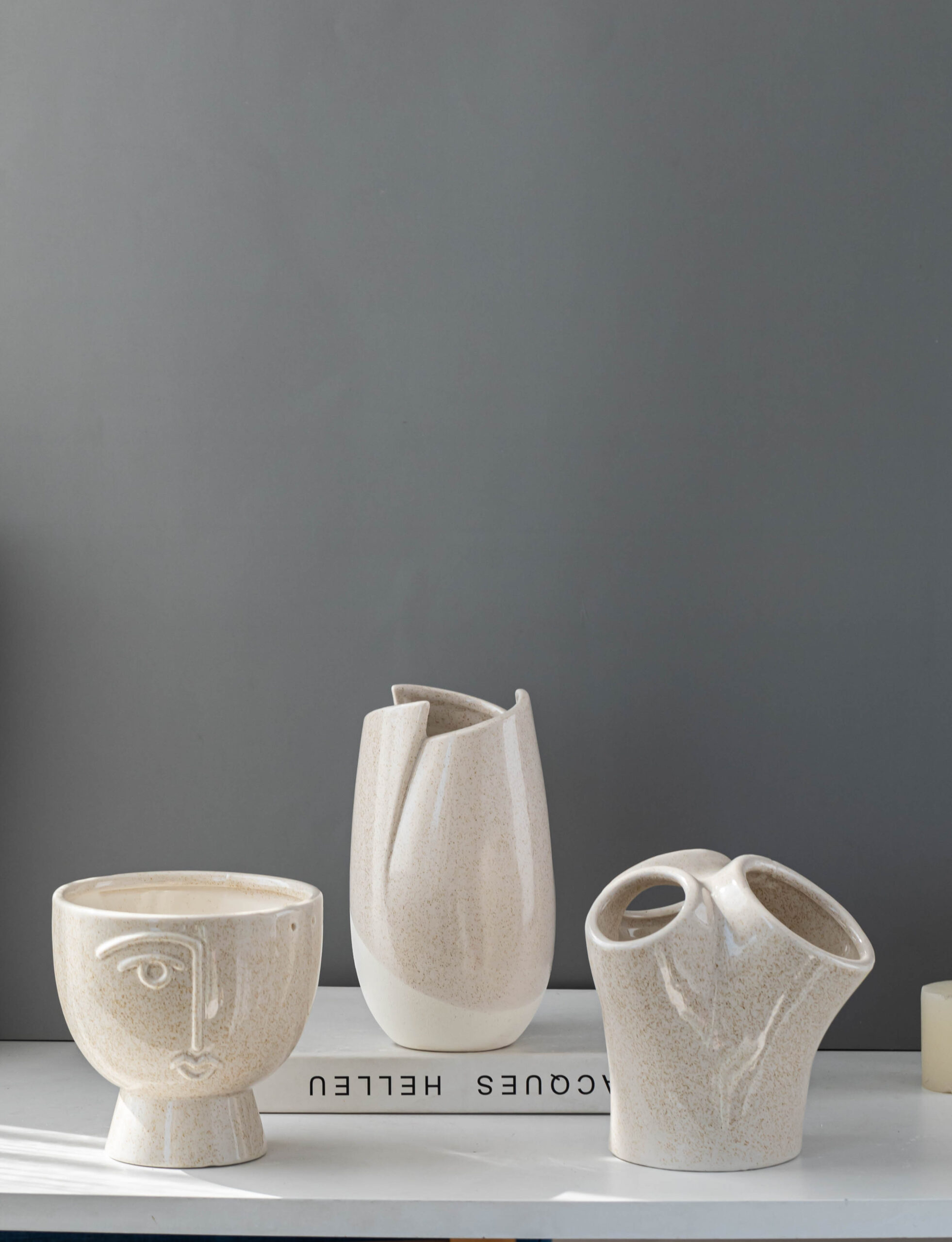
Retail Buyers Do Not Need More Random Products
Retail buyers see products every day.
New vases.
New tabletop pieces.
New wall décor.
New ottomans and benches.
New finishes.
New colors.
New “trend” collections.
The problem is not a lack of product options.
The real problem is deciding which products can actually work inside a retail assortment.
A product may look good in a supplier photo, but that does not mean it can sell through, ship safely, fit the price ladder, or repeat in the second order.
For retail buyers, the real question is not:
Can this supplier make home décor products?
The better question is:
Can this supplier help me choose products that are easier to sell, easier to display, easier to ship, and easier to reorder?
That is where Teruierdecor positions its value.
What Retail Buyers Usually Need From a Home Décor Supplier
Retail buyers are not only buying objects.
They are managing shelf space, customer taste, margin, risk, timing, and reorder pressure.
A good home décor supplier should support more than production. It should help the buyer make clearer product decisions.
Retail buyers usually need help with:
- trend-to-SKU execution
- assortment planning
- price ladder building
- sample development
- finish and material selection
- packaging review
- QC checkpoints
- reorder stability
- product notes and specifications
- category coordination
This is especially important for decorative categories such as:
- ceramic décor
- decorative vases
- tabletop décor
- wall décor
- ottomans and benches
- mixed-material home décor
- seasonal accents
- small decorative furniture
These categories are visual, fragile, trend-sensitive, and detail-heavy.
That means the buyer needs both design sense and production control.
The First Buyer Problem: Will This Product Fit the Shelf?
A retail buyer has to think about shelf logic.
A product cannot only look good alone. It has to work with other products.
A ceramic vase may need to sit beside trays, bowls, candle holders, and wall décor.
An ottoman may need to coordinate with mirrors, soft furnishings, and bedroom displays.
A tabletop item may need to fill a price gap in the assortment.
A wall décor piece may need to create a focal point without becoming too large or too risky to ship.
Before placing a wholesale order, buyers should ask:
What role does this product play in the assortment?
Common roles include:
| Product Role | Retail Purpose | Example |
|---|---|---|
| Visual anchor | Creates attention | Large vase, wall décor, mirror |
| Main seller | Carries volume | Medium vase, tabletop décor, ottoman |
| Add-on item | Supports basket size | Small ceramic object, candle holder |
| Seasonal refresh | Updates the shelf | color-driven or trend-driven accent |
| Collection builder | Connects several products | coordinated vase, tray, wall décor group |
| Reorder core | Supports repeat business | stable finish, safe shape, proven packaging |
Teruierdecor helps buyers look at products through this role-based logic.
The goal is not to send more random samples.
The goal is to help buyers build a retail-ready home décor assortment.
The Second Buyer Problem: Does the Product Support the Price Ladder?
A strong retail assortment needs a price ladder.
If every product sits at the same price level, the shelf feels flat.
If every product is a statement item, the assortment becomes too expensive.
If every product is an entry item, the display may lack value.
Retail buyers need a balance of:
- entry items
- mid-level sellers
- statement pieces
- giftable products
- seasonal items
- reorderable core products
For example, a ceramic décor assortment may include:
| Price Level | Product Direction | Retail Function |
|---|---|---|
| Entry | Small ceramic object | Easy add-on purchase |
| Mid-level | Medium matte vase | Main shelf seller |
| Statement | Large sculptural vase | Display anchor |
| Giftable | Small vase set | Seasonal or impulse purchase |
| Collection | Coordinated bowl, vase, tray | Shelf story builder |
The buyer is not just asking, “What is the unit price?”
The better question is:
Does this product look like it belongs at this price?
Teruierdecor helps buyers connect shape, finish, material, packaging, and price so the assortment feels commercially logical.
The Third Buyer Problem: Can the Sample Become a Real SKU?
Sample development is not only about making a beautiful first piece.
For retail buyers, a sample must answer harder questions:
- Can the finish be repeated?
- Can the size stay stable?
- Can the material be sourced again?
- Can the packaging protect the product?
- Can the cost support the target retail price?
- Can the product be made again for a second order?
A nice sample is only the beginning.
A retail-ready sample should be reviewed through production reality.
This is especially important for:
- reactive ceramic glazes
- matte finishes
- metallic coatings
- wood tones
- textured upholstery
- mixed-material products
- fragile decorative shapes
- oversized wall décor
- hand-applied surface details
Teruierdecor’s sample development process focuses on turning a design idea into something that can move into production with fewer surprises.
The Fourth Buyer Problem: Will the Product Ship Safely?
Home décor buying often fails in logistics, not design.
A vase may look beautiful but break at the rim.
A wall décor piece may scratch during transport.
A bench may arrive with damaged legs.
A mixed-material item may rub against itself inside the carton.
A matte ceramic surface may show marks after packing.
For retail buyers, packaging is not a back-end detail.
Packaging protects margin.
A supplier should help buyers review:
- inner box structure
- carton strength
- surface protection
- fragile point protection
- hardware packaging
- master carton layout
- drop test expectations
- barcode and label placement
- mixed-SKU packing logic
- warehouse handling risk
A product that cannot ship safely is not a retail-ready SKU.
Teruierdecor treats packaging as part of the product decision, not something to fix at the end.
The Fifth Buyer Problem: Can the Second Order Match the First?
The first order tests product appeal.
The second order tests supplier reliability.
Many home décor products fail after the first order because the second batch does not match:
- glaze tone changes
- metal finish shifts
- wood color varies too much
- fabric supply changes
- packaging method changes
- shape or size drifts
- QC standards become loose
Retail buyers do not want every reorder to feel like a new development project.
They need production notes, approved samples, finish standards, packaging records, and clear QC checkpoints.
A reorder-friendly product should have:
- stable material source
- repeatable finish
- documented size and shape standard
- proven packaging method
- clear QC checklist
- stored approved sample reference
- supplier memory beyond one transaction
This is one reason Teruierdecor emphasizes second-order thinking.
A product is not truly strong because it wins the first order.
It is strong when the buyer can reorder it with confidence.
How Teruierdecor Supports Retail Buyers
Teruierdecor’s value is not only factory production.
It is helping retail buyers connect market direction with product execution.
That means supporting buyers through:
| Buyer Need | Teruierdecor Support |
|---|---|
| Trend reading | Translate market signals into product directions |
| Category planning | Build ceramic, tabletop, wall décor, vase, and small seating logic |
| Assortment structure | Help define product roles and price ladder |
| Sample development | Turn ideas into production-ready samples |
| Material selection | Review ceramic, wood, metal, fabric, woven, and mixed materials |
| Finish control | Check glaze, coating, texture, tone, and batch consistency |
| Packaging review | Reduce breakage, scratching, and shipping risk |
| QC planning | Set inspection points before bulk production |
| Reorder support | Keep production notes for second-order stability |
This is where Teruierdecor’s cross-border design manufacturing model becomes useful.
The buyer understands the retail market.
Teruierdecor understands the making process, material behavior, factory execution, and export requirements.
The value comes from connecting both sides before the product becomes expensive to correct.
Why Retail Buyers Need More Than Factory-Direct Pricing
Factory-direct pricing matters.
But price alone does not solve the buyer’s biggest problems.
A low unit price does not help if the finish changes.
A low unit price does not help if the carton fails.
A low unit price does not help if the sample cannot repeat.
A low unit price does not help if the product does not fit the shelf.
A low unit price does not help if the second order becomes unstable.
Retail buyers need pricing, but they also need judgment.
That judgment includes:
- which trend should become a SKU
- which product should stay as a sample test
- which item can become a reorder core
- which finish is too risky
- which packaging needs early review
- which size may create freight pressure
- which product role supports the assortment
Teruierdecor aims to work as more than a supplier list option.
It aims to become a product decision partner for home décor buyers.
A Practical Retail Buyer Checklist
Before choosing a home décor supplier or product line, retail buyers can ask:
Product Role
- What role does this product play in the assortment?
- Is it a hero item, main seller, add-on, seasonal refresh, or reorder core?
- Does it work with other items on the shelf?
Price Ladder
- Does the product justify its price through shape, finish, size, or material?
- Does the assortment include entry, mid-level, and statement items?
- Does the price ladder feel balanced?
Sample Development
- Can the sample become a stable production item?
- Can the finish be repeated?
- Can the material be sourced again?
- Can the supplier document the approved standard?
Packaging
- Has packaging been reviewed before bulk production?
- Are fragile areas protected?
- Does the carton structure support the shipping route?
- Will packaging cost still support the target price?
QC and Reorder
- Are QC checkpoints clear?
- Can the second order match the first?
- Are production notes kept?
- Does the supplier understand reorder stability?
These questions help buyers reduce blind spots before the order moves too far.
Comparison: Product Supplier vs Retail Buying Partner
| Supplier Type | What They Offer | Buyer Risk |
|---|---|---|
| Product-only supplier | Many items and photos | Weak assortment logic |
| Price-only supplier | Low unit cost | Quality, finish, and packaging risk |
| Sample-driven supplier | Attractive first samples | Bulk order may not repeat |
| Factory-direct supplier | Production access | May still lack retail buying support |
| Retail buying partner | Product, assortment, packaging, QC, reorder logic | Requires deeper communication, but reduces blind spots |
Retail buyers do not only need someone who can make products.
They need someone who understands how products become retail decisions.
That is the difference Teruierdecor tries to build.
FAQ: Home Décor Sourcing for Retail Buyers
What should retail buyers look for in a home décor supplier?
Retail buyers should look for a supplier that can support product development, price ladder planning, material and finish control, packaging review, QC checkpoints, and reorder stability.
Why is assortment planning important for retail buyers?
Assortment planning helps buyers avoid random product selection. It makes sure each product has a role, price point, shelf function, and reorder logic.
What makes a home décor product retail-ready?
A home décor product is retail-ready when it looks sellable, fits the assortment, supports the target price, ships safely, has clear product notes, and can be produced consistently.
Why should buyers review packaging early?
Packaging affects breakage, claims, warehouse handling, margin, and reorder confidence. If packaging is reviewed too late, the product may become commercially risky.
How can Teruierdecor help with sample development?
Teruierdecor helps buyers review shape, material, finish, cost, packaging, and production feasibility so samples can move closer to stable wholesale SKUs.
What makes a product easier to reorder?
A product is easier to reorder when the material source is stable, finish standards are documented, packaging is proven, QC checkpoints are clear, and production notes are kept for future batches.
Final Buying Judgment
Retail buyers do not need more random home décor products.
They need products that can pass the real buying tests:
Can it fit the shelf?
Can it support the price ladder?
Can the sample become a stable SKU?
Can it ship safely?
Can the second order match the first?
If a product cannot answer these questions, it may still look good in a photo, but it is not yet a strong retail item.
Teruierdecor helps retail buyers connect design, category planning, factory execution, packaging, QC, and reorder logic earlier in the process.
Because in home décor retail, the best product is not only the one that looks attractive.
It is the one that can sell, ship, and repeat.
Leave a Reply