

Why the Second Order Is the Real Test
The first order can be won by a good sample.
The second order is won by stability.
That is one of the most important truths in home décor buying. A product may look beautiful in the showroom, photograph well, and pass the first purchase order. But if the second batch comes with a different finish, weaker packaging, unstable material, or slower delivery, the buyer starts to lose confidence.
For retail buyers, the second order is not just another transaction.
It proves whether the product can become part of a real assortment.
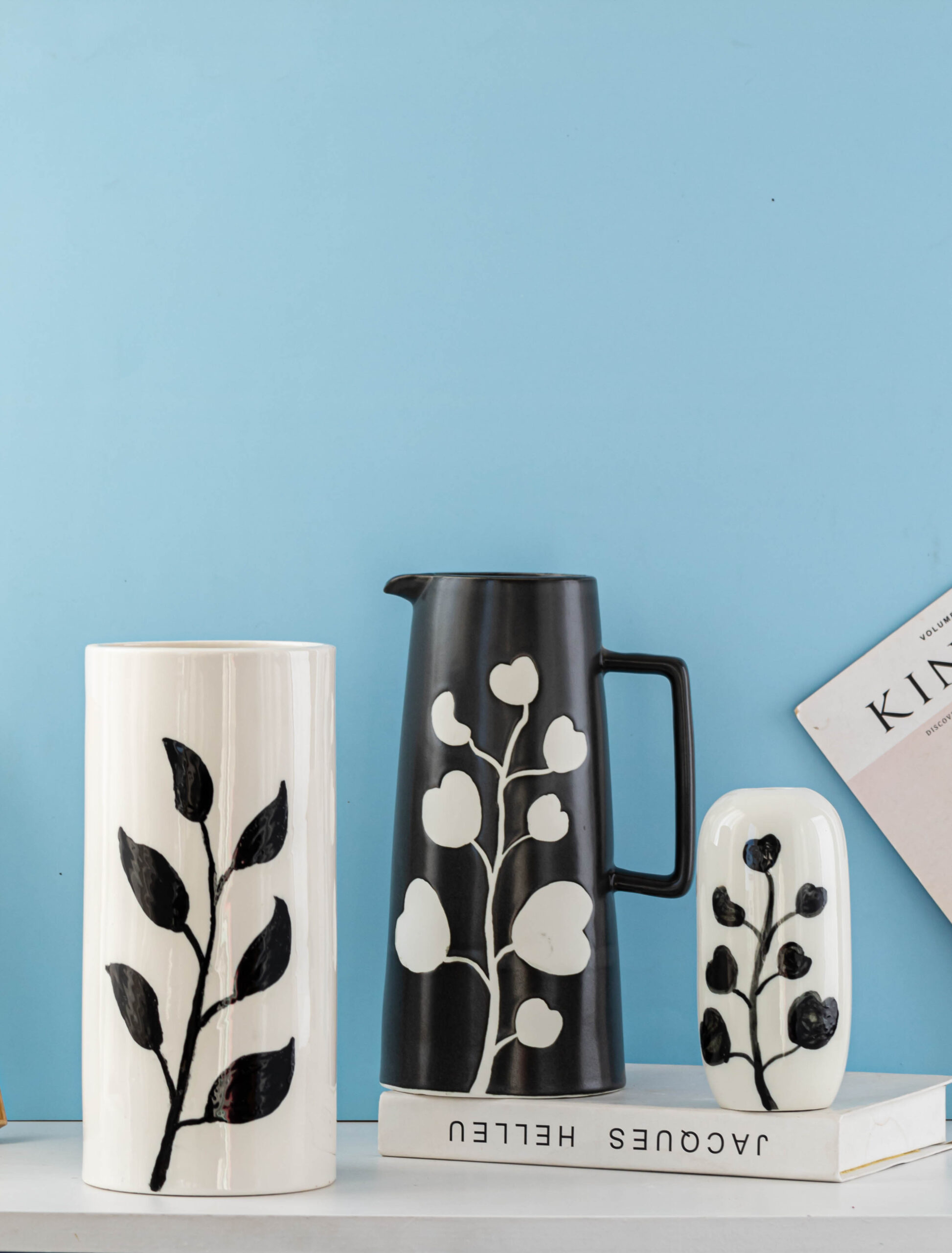
A decorative vase, tabletop item, wall décor piece, ottoman, or mixed-material product only becomes valuable when the buyer can repeat it with confidence. That is why Teruierdecor looks at home décor products not only through first-order appeal, but through second-order survival.
What Does “Survive the Second Order” Mean?
A home décor product survives the second order when it can be reordered without creating new problems.
That means:
- the finish still matches the approved standard
- the shape and size remain consistent
- the material supply is stable
- the packaging method still works
- the price logic still makes sense
- the product still fits the buyer’s assortment
- the supplier can repeat the production notes
- the second batch does not feel like a different product
This is especially important for decorative categories because many products depend on surface details.
A ceramic glaze can shift.
A metal finish can change tone.
A wood stain can look warmer or cooler.
A fabric can be discontinued.
A woven material can vary by batch.
A carton method can be changed quietly.
If these details move too far, the reorder becomes risky.
The First Order Is About Appeal. The Second Order Is About Trust.
The first order usually answers one question:
Does the buyer like this product enough to test it?
The second order answers a harder question:
Does the buyer trust this product enough to continue it?
That is a different standard.
A product can get into the first order because it is fresh, attractive, or well-priced. But to earn the second order, it must prove that it can perform inside the buyer’s real system.
That system includes:
- store display
- customer reaction
- damage rate
- warehouse handling
- sales feedback
- margin performance
- reorder timing
- supplier communication
- production consistency
A product that looks good but creates too many small problems may not survive.
A product that looks slightly simpler but repeats cleanly may become more valuable to the buyer.
Why Many Decorative Products Fail After the First Order
Many home décor products fail after the first order for very practical reasons.
Not because the design is ugly.
Usually, the failure happens because the product is not stable enough.
Common reasons include:
| Problem | What Happens to the Buyer |
|---|---|
| Finish changes in second batch | Shelf looks inconsistent |
| Packaging is not strong enough | Breakage, claims, and margin loss |
| Material source changes | Product feels different from approved sample |
| Cost rises too fast | Retail price ladder breaks |
| Shape is hard to produce | Bulk order does not match sample |
| Trend window closes quickly | Product loses urgency |
| Supplier records are weak | Reorder depends on memory, not standards |
| Quality control is loose | Buyer spends more time solving problems |
The buyer may tolerate some risk in the first test order.
But if the second order repeats the same problems, the SKU loses its place.
Finish Consistency: The Most Visible Second-Order Risk
Finish is one of the biggest reasons decorative products fail the second order.
This is true for:
- ceramic vases
- tabletop décor
- wall décor
- trays
- mirror frames
- ottomans and benches
- mixed-material home décor
Customers may not understand production details, but they notice when a product looks different.
A matte ceramic vase that was warm ivory in the first order may become too gray in the second.
A bronze metal leg may become too yellow.
A reactive glaze may shift too far from the approved sample.
A wood finish may look too orange.
A fabric may feel thinner or rougher.
For buyers, finish is not only an aesthetic detail.
Finish is continuity.
A product that cannot repeat its finish cannot become a reliable reorder item.
Packaging: The Hidden Reason Buyers Stop Reordering
Packaging is often invisible in product photos, but it can decide whether a buyer reorders.
If the first shipment has too much damage, the buyer may hesitate to place the second order even if the product sells well.
That is the painful part.
A product can have market demand, but poor packaging can still kill the reorder.
Buyers should pay attention to:
- broken ceramic rims
- scratched metal finishes
- dented wall décor corners
- compressed upholstery
- damaged handles
- dirty fabric after packing
- weak inner boxes
- carton crushing
- loose hardware
- barcode or label errors
Every damaged unit creates work.
Claims, replacements, delayed shelf fill, customer complaints, warehouse handling, internal reporting.
The product may look profitable on paper, but the operational cost starts eating the margin.
That is why packaging should be part of the second-order strategy from the beginning.
Material Stability: The Part Buyers Often Discover Too Late
A product may be easy to approve when the first sample is ready.
But can the same material still be sourced later?
That question matters.
For ceramic décor, the clay body, glaze material, and firing result must remain stable.
For upholstered benches, fabric supply must be checked.
For wall décor, wood, metal, MDF, resin, and hanging hardware should remain consistent.
For mixed-material products, every material layer adds one more reorder risk.
A buyer should ask before the first order:
- Is this material easy to source again?
- Is the finish based on a stable process?
- Is this fabric seasonal or long-term?
- Can this metal color be repeated?
- Can this wood tone be controlled?
- Can the supplier keep approved samples and production notes?
A beautiful product with unstable material may still work as a one-time seasonal buy.
But it should not be treated like a long-term reorder SKU.
Shelf Logic: Products Survive When They Keep a Role
A product survives the second order more easily when it plays a clear role in the assortment.
Some products are visual anchors.
Some are main sellers.
Some are small add-ons.
Some refresh the season.
Some connect materials across a room story.
When the product role is clear, the buyer knows why it should stay.
For example:
| Product Role | Why It May Survive |
|---|---|
| Core vase | Stable seller, easy to coordinate |
| Small tabletop item | Easy add-on purchase |
| Statement wall décor | Strong visual anchor |
| Upholstered bench | Useful room solution |
| Mixed-material tray | Connects finish story |
| Seasonal accent | Survives only if timing and sell-through are strong |
The problem begins when a product has no clear role.
It may look good once, but the buyer cannot explain why it deserves another order.
A reorderable product should have a reason to remain in the assortment.
Trend Products Need a Different Second-Order Standard
Not every product needs to become a long-term reorder item.
Some products are trend tests.
That is fine.
But buyers should separate trend-test SKUs from reorder-core SKUs.
A trend-test SKU can carry more color, shape, or novelty.
A reorder-core SKU should be more stable in material, finish, price, and production.
Simple comparison:
| SKU Type | Buying Goal | Second-Order Standard |
|---|---|---|
| Trend-test SKU | Test freshness | Sell-through speed and timing |
| Seasonal SKU | Refresh the shelf | Short-window performance |
| Core SKU | Repeat business | Finish, packaging, and supply stability |
| Hero SKU | Create visual attention | Strong display value and controlled risk |
| Add-on SKU | Increase basket size | Cost control and easy replenishment |
A buyer should not judge every product by the same standard.
The mistake is treating a short-window trend item like a core reorder product.
That creates disappointment later.
The Supplier’s Production Notes Decide the Second Order
Second-order stability depends heavily on documentation.
A supplier should not rely only on memory.
For home décor products, production notes may include:
- approved sample reference
- color standard
- finish description
- material source
- glaze formula or finish process notes
- fabric specification
- metal coating standard
- wood tone reference
- packaging method
- carton size
- inner protection details
- QC checkpoints
- approved variation range
- labeling and barcode requirements
These details protect the buyer.
They also protect the supplier.
When the second order starts, the team should not be asking, “How did we make this last time?”
They should already know.
Why a Simple Product Sometimes Reorders Better Than a Complex Product
In home décor, complexity does not always create better business.
A simple matte ceramic vase may reorder better than a very complicated sculptural vase.
A clean soft cube ottoman may reorder better than a highly decorative bench.
A warm wood tray may reorder better than a fragile mixed-material object.
A simple wall décor piece with stable hardware may reorder better than a dramatic piece that creates shipping claims.
This does not mean buyers should avoid design.
It means the best product is not always the most dramatic product.
The best reorder product is often the one with:
- clear use
- controlled finish
- manageable size
- stable material
- safe packaging
- repeatable process
- easy shelf fit
That kind of product may look less exciting in development, but it becomes more valuable in the buyer’s system.
How Teruierdecor Looks at Second-Order Risk
Teruierdecor’s value is not only in developing attractive home décor products.
The stronger value is helping buyers see which products can survive beyond the first order.
That means reviewing:
- product role
- finish repeatability
- material stability
- packaging risk
- QC checkpoints
- price ladder fit
- second-order feasibility
- supplier documentation
This is where Teruierdecor’s craft town supply chain matters.
In a production area built around artisans, materials, finishing workers, and factory experience, the team can often see small risks earlier. A glaze that may shift. A frame finish that may scratch. A shape that may break during packing. A material that may be hard to repeat.
The buyer may see a good product.
Teruierdecor helps judge whether it can become a repeatable SKU.
That is the difference between selling a sample and supporting a buying program.
A Practical Second-Order Checklist for Buyers
Before placing the first order, buyers can already ask second-order questions.
Product role
- What role does this product play in the assortment?
- Is it a core item, seasonal item, or test item?
- Does it support other products on the shelf?
Finish and material
- Can the finish be repeated?
- Is the material supply stable?
- Is acceptable variation clearly defined?
- Are approved samples stored and referenced?
Packaging
- Has packaging been reviewed before production?
- Are fragile points protected?
- Can the same packaging method be repeated?
- Does packaging cost still support the retail price?
QC and documentation
- Are QC checkpoints clear?
- Are production notes recorded?
- Are labels, barcodes, and carton details confirmed?
- Is the supplier prepared for batch comparison?
Commercial logic
- Does the product still make sense if reordered?
- Can it hold its place in the price ladder?
- Is it likely to remain relevant after the first selling window?
If a product cannot answer these questions, it may still be a test SKU.
But it should not be treated as a reorder anchor.
Comparison: First-Order Product vs Second-Order Product
| Buying Focus | First-Order Product | Second-Order Product |
|---|---|---|
| Main goal | Attract buyer interest | Build buyer confidence |
| Key test | Sample appeal | Production stability |
| Design standard | Looks fresh | Looks repeatable |
| Finish standard | Good sample | Consistent batch |
| Packaging standard | Acceptable plan | Proven protection |
| Supplier role | Develop product | Maintain continuity |
| Buyer risk | Testing risk | Operational and margin risk |
The second order is where the product becomes serious.
It proves whether the supplier can support the buyer’s business, not just win the buyer’s attention.
FAQ: Why Some Decorative Products Survive the Second Order
What does second order mean in home décor buying?
The second order means a buyer reorders the product after the first purchase order. It is an important test because it shows whether the product can repeat in quality, finish, packaging, and commercial value.
Why do some home décor products fail after the first order?
They often fail because the finish changes, packaging causes damage, material supply is unstable, production notes are weak, or the product no longer fits the buyer’s assortment strategy.
What makes a product reorder-friendly?
A product is reorder-friendly when its material, finish, size, packaging, QC standard, and production notes can be repeated with confidence.
Should every decorative product be designed for reorder?
No. Some products are seasonal or trend-test items. But buyers should clearly separate short-window products from core reorder products.
Why is finish consistency important for the second order?
Finish consistency protects shelf continuity. If the second batch looks too different from the first batch, the buyer may face customer confusion, display inconsistency, or reorder hesitation.
How can suppliers help buyers with second-order stability?
Suppliers can help by keeping approved samples, documenting finish standards, controlling material sources, maintaining packaging methods, and setting clear QC checkpoints for future batches.
Final Buying Judgment
The second order is where home décor products prove their real value.
A product should not only pass the first sample review.
It should answer five harder questions:
Can the finish repeat?
Can the material stay stable?
Can the packaging protect the product again?
Can the product still fit the assortment?
Can the buyer trust the supplier to reproduce it without surprises?
If the answer is yes, the product has a stronger chance to become part of a real retail program.
If the answer is no, it may still be a good-looking test item, but not a reliable reorder SKU.
That is why Teruierdecor treats second-order thinking as part of buying intelligence.
Because in home décor, the first order opens the door.
The second order proves whether the product belongs there.
Leave a Reply