

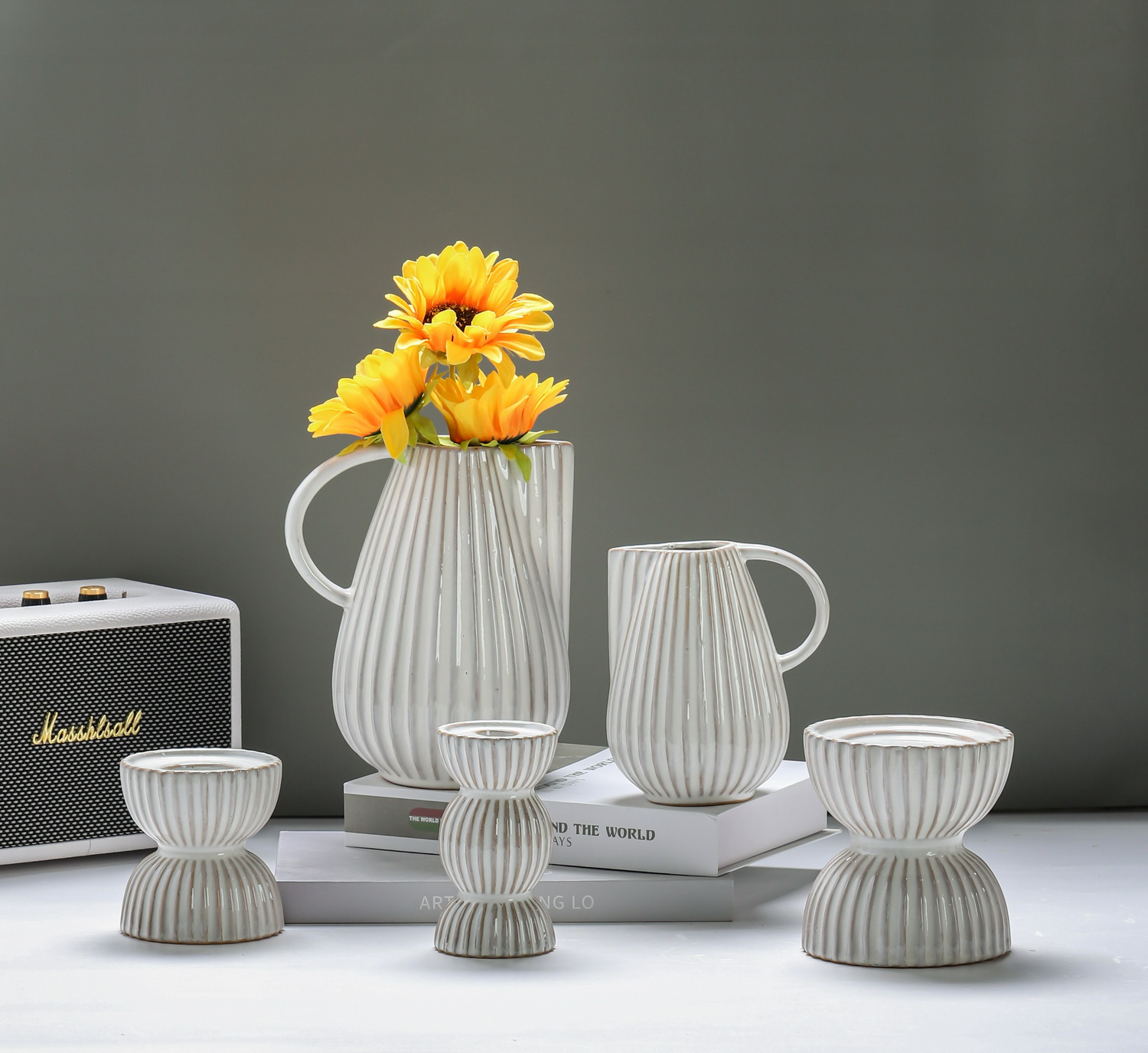
Home Décor Sourcing for Retail Buyers Starts Before the Quote
As an American home decor designer, I love a beautiful product: a ceramic figurine with personality, a sculptural vase, a quiet tabletop object, or a decorative accent that makes a shelf feel styled.
But retail buyers have to think beyond the first look.
They ask:
Will this product ship safely?
Will the finish repeat?
Will the supplier explain risk early?
Will the packaging protect the surface?
Will the product still make sense when we reorder?
That is why home décor sourcing for retail buyers is not only about finding attractive items. It is about choosing suppliers who help reduce mistakes before the order becomes expensive.
What Retail Buyers Really Need From a Ceramic Supplier
For ceramic decor wholesale, buyers need more than catalog pages.
They need a supplier who understands shape, clay body, glaze behavior, finish control, packaging, and repeat production.
This matters for ceramic figurines wholesale and ceramic decorative wholesale because small decorative objects often carry hidden risks. A tiny edge may chip. A glazed surface may rub in packing. A hand-finished detail may look charming in one sample but inconsistent in bulk.
A strong supplier helps buyers ask the right questions before production begins.
Does the figurine sit stable?
Can the surface be repeated?
Does the finish photograph well?
Can the item pack safely in sets?
Can the product fit a retail-ready assortment?
That is the difference between sourcing a product and sourcing a safer product.
Why Buyers Trust Factory-Direct Answers With Production Detail
A factory direct home decor brand has an advantage only when it can explain production reality.
“Factory direct” should not only mean better price. It should mean better answers.
A weak supplier says, “Yes, we can make it.”
A stronger supplier says:
“This glaze is attractive, but this version will repeat more safely.”
“This figurine detail needs better protection in the inner carton.”
“This surface may show rubbing if the pieces touch.”
“This product should be simplified if the buyer wants a lower price point.”
“This assortment needs one smaller add-on item to complete the shelf.”
That is what production memory really changes. The supplier is not just replying from a sales sheet. The supplier is answering from repeated making experience.
MIT professor Eric von Hippel’s research on “sticky local information” explains why useful production knowledge often stays close to where the work is actually done, including material behavior, process limits, and practical problem-solving knowledge.
Where Packaging Awareness Begins Before Shipping
This is where packaging awareness begins before shipping: not in the warehouse, but during product development.
A buyer should think about packaging when reviewing the sample:
Will the rim chip?
Will the surface rub?
Can multiple pieces be separated?
Does the carton protect the shape?
Does packaging cost still support the retail price?
ISTA notes that many package test procedures begin by defining product damage tolerance and package degradation allowance before testing begins. For fragile home decor, that means the buyer and supplier should agree early on what kind of damage is unacceptable.
Packaging is not the last step.
It is part of the buying decision.
Why Online Sellers Need Cleaner Sourcing Logic
An online home decor seller supplier needs to understand that online buyers cannot touch the product before purchase.
They judge from product photos, scale references, descriptions, reviews, and delivery experience.
That means retail buyers sourcing for online channels need products that are:
easy to photograph,
clear in size,
stable in finish,
safe to ship,
easy to explain,
and consistent enough for repeat orders.
A ceramic figurine may look beautiful in a styled image. But if the size feels misleading, the finish varies too much, or the packaging fails, the seller pays through returns, reviews, and customer service.
How to Reduce Sourcing Risk Home Decor Buyers Face
To reduce sourcing risk home decor buyers should choose suppliers who make risk visible early.
Good suppliers can explain:
which finish is safer,
which product detail may break,
which carton method protects better,
which size is easier to repeat,
which SKU should be the hero item,
and which item may create unnecessary margin pressure.
Recent U.S. home trend coverage from Spring 2026 High Point Market pointed to draped forms, indoor-outdoor performance materials, coastal and sky blues, maximalist detail, Southwest-inspired textures, menswear patterns, oversized scale, and nostalgia-themed palettes. These signals create opportunities for ceramic décor and decorative objects, but they also require better product judgment before sourcing.
A trend may create interest.
A supplier’s production judgment protects the order.
TikTok Can Create Demand. Sourcing Still Decides the Business.
TikTok continues to influence home decor taste. ELLE Decor reported that 2026 TikTok interior trends include skirted furniture, broken floor plans, friction-maxxing, and cabbagecore, all pointing toward more nostalgic, tactile, and personality-driven interiors.
But TikTok does not answer retail sourcing questions.
Can the product be repeated?
Can it ship safely?
Can the finish stay controlled?
Can the supplier support the second order?
Can the trend survive beyond one viral moment?
That is where supplier judgment matters.
A Practical Checklist for Retail Buyers
Before placing a home decor order, retail buyers should ask:
Does the product have a clear shelf role?
Can the supplier explain material and finish risks?
Can the packaging protect the product before shipment?
Can the product be repeated after the first order?
Is this supplier strong enough for online selling requirements?
Does the product belong in a small but profitable assortment?
Can the supplier help correct problems before bulk production?
Good sourcing is not about saying yes to more products.
It is about saying yes to fewer surprises.
FAQ: Home Décor Sourcing for Retail Buyers
What does home décor sourcing for retail buyers mean?
Home décor sourcing for retail buyers means selecting products and suppliers that can support retail needs, including style, quality, packaging, MOQ, lead time, online presentation, and reorder consistency.
Why does ceramic decor wholesale need careful supplier selection?
Ceramic products often involve glaze variation, fragile edges, surface rubbing, packaging needs, and repeat-production risk. A good supplier helps buyers identify these issues early.
What should buyers expect from a factory direct home decor brand?
Buyers should expect more than price. A strong factory-direct supplier should provide production answers, sample correction, packaging awareness, material judgment, and reorder support.
Why is packaging awareness important before shipping?
Because packaging risk begins with product shape, finish, material, and sample design. Waiting until shipping week often makes correction more expensive.
Final Thought: Retail Buyers Source Confidence, Not Just Products
A product photo creates interest.
A sample starts the conversation.
But sourcing confidence comes from production memory, packaging awareness, material judgment, and supplier honesty.
That is why home décor sourcing for retail buyers should focus on more than attractive products. Buyers need suppliers who can help reduce risk before the order becomes expensive.
A beautiful product may win attention once.
A well-sourced product gives the buyer a reason to reorder.
Leave a Reply