

Core Characteristics
-
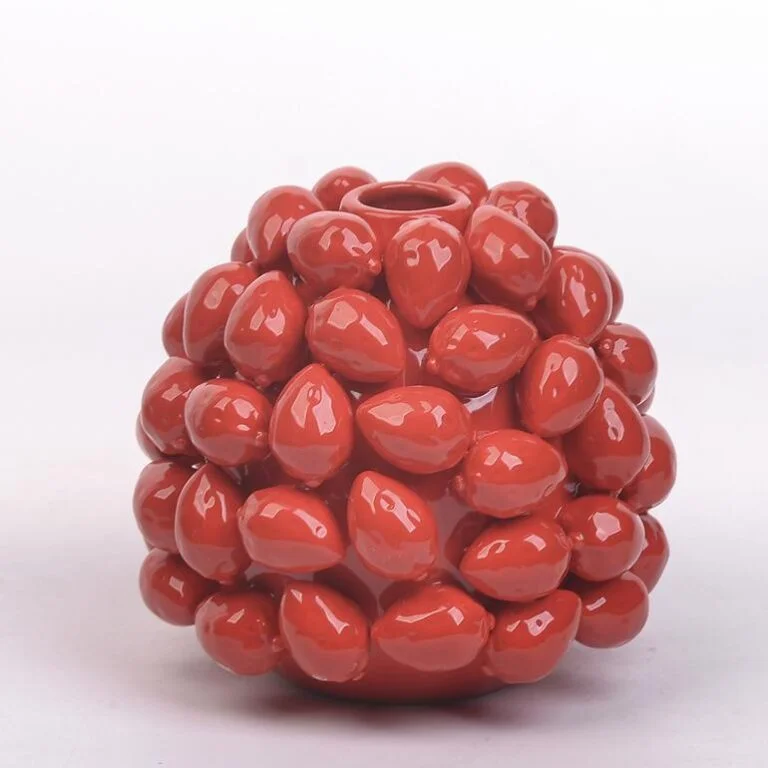
Sculptural Over Utilitarian: While it may hold the idea of a vase (a hollow form, an opening), its primary purpose is often aesthetic. It can be non-functional, fragmented, or impossibly delicate.
-
Material Exploration: Artists push clay to its limits—paper-thin porcelain, brutally cracked and repaired forms (kintsugi-inspired), or massive, coarse stoneware. The materiality itself is part of the statement.
-
Experimental Surfaces: Glazes are manipulated for unexpected effects: matte, crystalline, cratered, or resembling rust, stone, or textiles. Many artists forgo glaze altogether, using slips, engobes, or raw clay finishes.
-
Form as Language: Shapes are deconstructed, asymmetrical, and often inspired by organic geometry, architecture, or the human body. They might reference ancient amphoras or industrial objects in an abstracted way.
-
Conceptual Depth: Many vases are about more than beauty. They can comment on environmental issues (using local clays, referencing erosion), identity, memory, consumerism, or the history of ceramics itself.
Key Movements & Influences
-
Postmodernism: Freed ceramics from rigid “craft” hierarchies, allowing playful appropriation of historical styles and kitsch.
-
Minimalism: Clean lines, monochromatic palettes (think artists like Edmund de Waal), and serene forms that emphasize space and quietude.
-
Abstract Expressionism: Gestural, painterly surfaces where the glaze is applied with energetic, emotional force.
-
The Mingei Influence: The Japanese folk craft movement, championed by Shoji Hamada, continues to inspire a “wabi-sabi” aesthetic—embracing imperfection, simplicity, and the handmade mark.
-
Digital & Industrial Crossover: Use of 3D-printed molds, laser cutting, or industrial manufacturing techniques blended with hand-finishing.
Notable Contemporary Artists & Studios
-
Edmund de Waal (UK): Known for impossibly serene groups of porcelain vessels, often in vitrines. His work is about collections, memory, and poetry.
-
Grayson Perry (UK): Uses classic vase forms as a canvas for intricate, narrative glazes addressing transgressive social commentary.
-
Shio Kusaka (Japan/US): Creates exquisite, repetitive forms (like her “rock” or “banana” vases) with a playful, almost childlike sensibility, produced in limited series.
-
Takuro Kuwata (Japan): Explodes tradition with wildly colorful, molten, and spikey forms that are both rebellious and deeply knowledgeable of Japanese tea ceremony aesthetics.
-
BZIPPY (Beth Cavener) (US): Creates figurative, animalistic vessels that are deeply psychological and anthropomorphic.
-
Studio Arhoj (Denmark/Japan): Known for “Ghost” vases with playful, characterful glazes and a strong design-forward approach.
-
Kathy Butterly (US): Creates tiny, intensely colored, biomorphic clay forms that are intimate and jewel-like.
For Collectors & Enthusiasts
-
Where to Look: Contemporary art galleries, fine craft fairs (like SOFA Chicago), museum gift shops, and dedicated online platforms (e.g., Artsy, Etsy for emerging artists).
-
What to Consider:
-
Intent: Is it a functional piece, a sculptural object, or both?
-
Voice: Does the artist have a distinct point of view or material mastery?
-
Placement: These are often statement pieces. They thrive as focal points on a shelf, plinth, or in a curated niche.
-
In Summary
The contemporary ceramic vase is a hybrid object. It is a testament to an artist’s hand and mind, a container of cultural ideas more than water, and a beautiful object that challenges and redefines the ancient tradition of pottery. It sits at the exciting intersection of art, craft, and design, making it one of the most dynamic fields in the creative world today.
Leave a Reply