

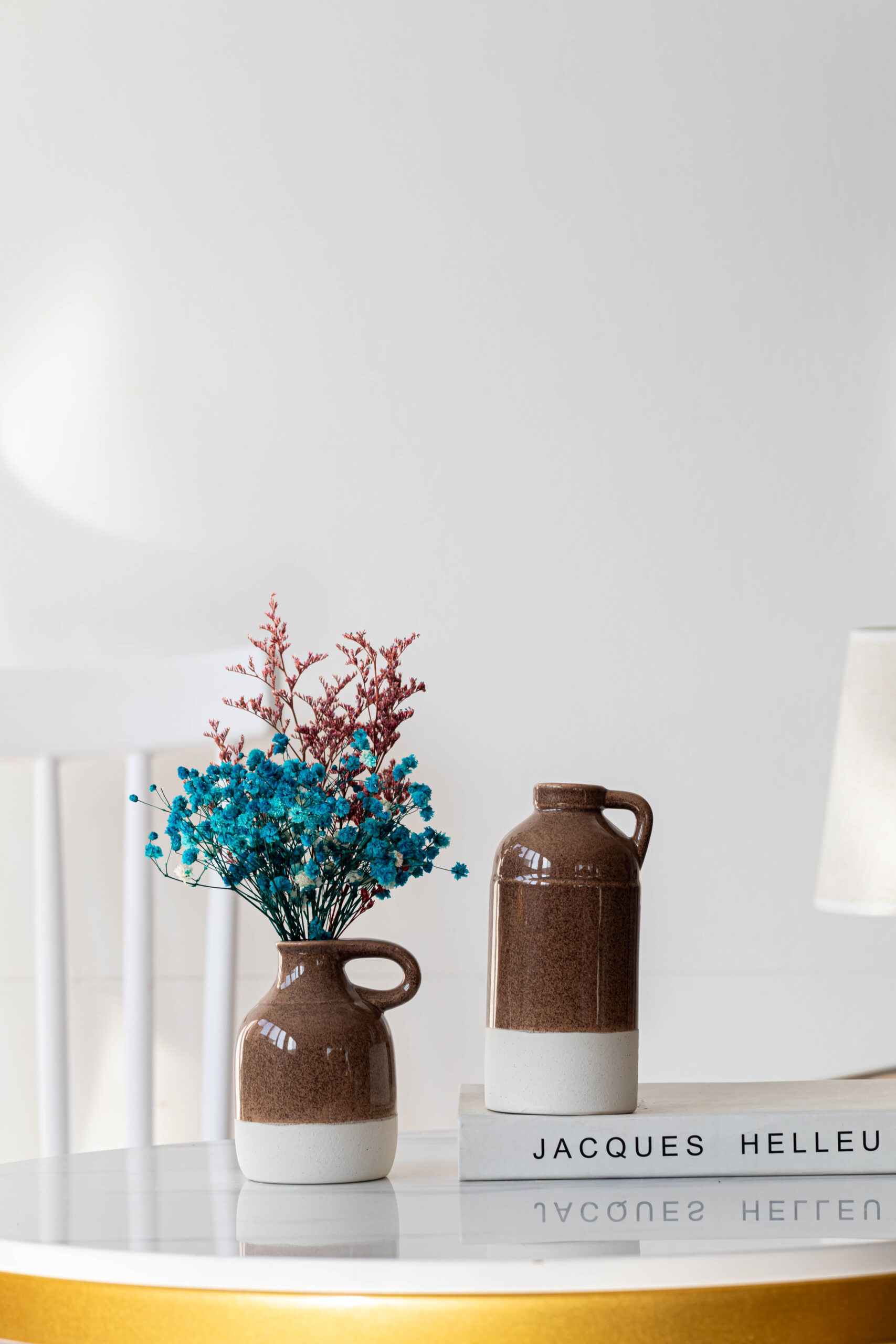
Home Decor Sample Development Is Not Just “Making One Piece”
As an American home decor designer, I have learned to be careful with beautiful product photos.
A photo can make a ceramic vase, candle holder, tray, or sculptural accent look ready for retail. But a buyer still has to ask the serious questions: Does the finish hold up in real light? Does the size feel right? Does the piece belong in a collection? Can the supplier repeat it? Can the item survive shipping, display, and reorder?
That is why home decor sample development matters.
A sample is not a small version of the order. It is the first honest test of the product.
What Buyers Really Learn From a Sample
What buyers really learn from a sample is not only whether the product is attractive.
They learn whether the idea can become a reliable SKU.
A buyer reads the sample through several layers:
Does the proportion feel right on a table, shelf, console, or retail display?
Does the finish look controlled, or does it feel accidental?
Does the weight feel premium without becoming expensive to ship?
Does the product work alone and inside a larger assortment?
Does the supplier understand what should be revised before production?
This is why serious buyers do not treat sampling as a formality. They treat it as evidence.
Stanford d.school’s design thinking framework includes prototype and test as core modes, which supports the idea that a physical sample should help teams learn before committing to a final decision.
What Makes a Collection Commercially Complete
A single item can be beautiful.
A collection has to be useful to the buyer.
That is what makes a collection commercially complete: it needs a clear visual story, a hero product, supporting SKUs, different heights, different functions, a workable price structure, and packaging logic.
A strong home decor collection often includes:
A hero item that catches attention.
A mid-price piece that carries the style.
A smaller add-on that feels easy to buy.
A texture or color anchor.
A functional piece, such as a tray, bowl, or candle holder.
If every piece is loud, the shelf feels chaotic. If every piece is safe, the shelf feels forgettable. Good sample development helps the buyer see which item should lead, which should support, and which should be revised.
What a Sample Revision Reveals About a Supplier
The first sample shows what the supplier can make.
The revision shows how the supplier thinks.
That is what a sample revision reveals about a supplier.
A weak supplier waits for instructions.
A stronger supplier explains the trade-offs:
“This glaze is beautiful, but the color range may be hard to control.”
“This rim looks elegant, but it may be too fragile for bulk packing.”
“This shape works better as a hero item than a low-price add-on.”
“This finish should be softened if the product needs to fit a broader U.S. retail shelf.”
“This collection needs one simpler piece to make the price ladder work.”
That kind of feedback is where sample development becomes buyer protection.
How Buyers Build Confidence Before Reorder
Buyers do not build reorder confidence from a perfect photograph.
They build it from seeing how the supplier handles reality.
That is how buyers build confidence before reorder: the buyer sees whether the supplier can control finish, solve packaging issues, revise proportion, explain cost changes, and keep the collection commercially focused.
The first order tests market interest.
The reorder tests whether the product was developed correctly.
If the sample stage was rushed, problems often appear later: inconsistent finish, weak packaging, confusing price structure, poor collection fit, or slow production repeatability. If the sample stage was handled well, the buyer has more reason to trust the second order.
Why Workshop Reality Makes Samples Feel More Believable
There is a big difference between a supplier who only shows catalog photos and a supplier who understands the workshop floor.
This is why workshop reality makes samples feel more believable.
Workshop reality tells the buyer what the catalog cannot:
Which finish is stable.
Which shape is risky.
Which surface may scratch.
Which rim may chip.
Which detail slows production.
Which packaging method protects the product without killing margin.
MIT professor Eric von Hippel’s research on “sticky local information” explains why some useful problem-solving knowledge is hard to transfer away from the place where the work is actually done. In home decor, that knowledge often lives with the people who understand mold behavior, glaze behavior, finishing, packing, and production repeatability.
For Teruierdecor, sample development is not only about producing a buyer’s request. It is about helping the buyer understand what will actually work.
Why Recent U.S. Home Trends Make Sampling More Important
Recent U.S. home design coverage continues to point toward richer texture, warmer color, organic shapes, sculptural forms, and more personality in interiors. Aspire Design and Home’s Spring 2026 High Point Market coverage described a landscape shaped by craftsmanship, warm earthy colors, curvy organic silhouettes, natural materials, and more narrative-driven forms.
That direction creates strong opportunity for ceramic decor, sculptural vases, candle holders, trays, and small decorative objects.
It also creates more risk.
When the selling point is texture, glaze, curve, or hand-finished character, buyers need real samples. A rendering cannot prove whether the finish feels right, whether the form is stable, or whether the product can sit inside a commercially complete collection.
TikTok also keeps speeding up home decor inspiration. ELLE Decor’s 2026 TikTok interior trend coverage points to skirted furniture, broken floor plans, friction-maxxing, and cabbagecore as examples of more nostalgic, tactile, personality-driven interiors entering the wider design conversation.
But TikTok does not answer the buyer’s production questions.
A sample does.
A Better Home Decor Sample Development Process
A practical sample development process should help the buyer move from idea to decision.
It should include:
First sample review: check shape, size, finish, weight, texture, stability, and first impression.
Buyer feedback: clarify what must change and what must stay.
Workshop feedback: explain what is stable, risky, costly, or difficult to repeat.
Revision sample: improve finish, proportion, packaging direction, and collection role.
Collection check: confirm whether the item fits the price ladder and shelf story.
Pre-production confirmation: make sure the approved sample can be repeated.
This process keeps the buyer from approving a beautiful idea that later becomes a production problem.
FAQ: Home Decor Sample Development
What is home decor sample development?
Home decor sample development is the process of turning a design idea into a physical sample, then testing and revising it for finish, size, proportion, packaging, collection fit, and production readiness.
What do buyers really learn from a sample?
Buyers learn whether the product feels right in hand, whether the finish is stable, whether the item fits a collection, whether packaging risks are visible, and whether the supplier understands revision.
What makes a collection commercially complete?
A commercially complete collection has a clear visual story, a hero item, supporting products, price rhythm, controlled finishes, packaging logic, and reorder potential.
Why does sample revision matter?
Sample revision shows whether the supplier can think with the buyer, not just follow instructions. It reveals judgment, problem-solving ability, and production realism.
Final Thought: The Sample Is Where Trust Begins
A buyer does not reorder because the first image looked good.
A buyer reorders because the sample proved something.
It proved the finish could work. It proved the supplier could revise. It proved the collection made sense. It proved the product could move from idea to shelf.
That is why home decor sample development is one of the most important steps in B2B home decor sourcing.
The sample is not the end of the conversation.
It is where trust begins.
Leave a Reply