

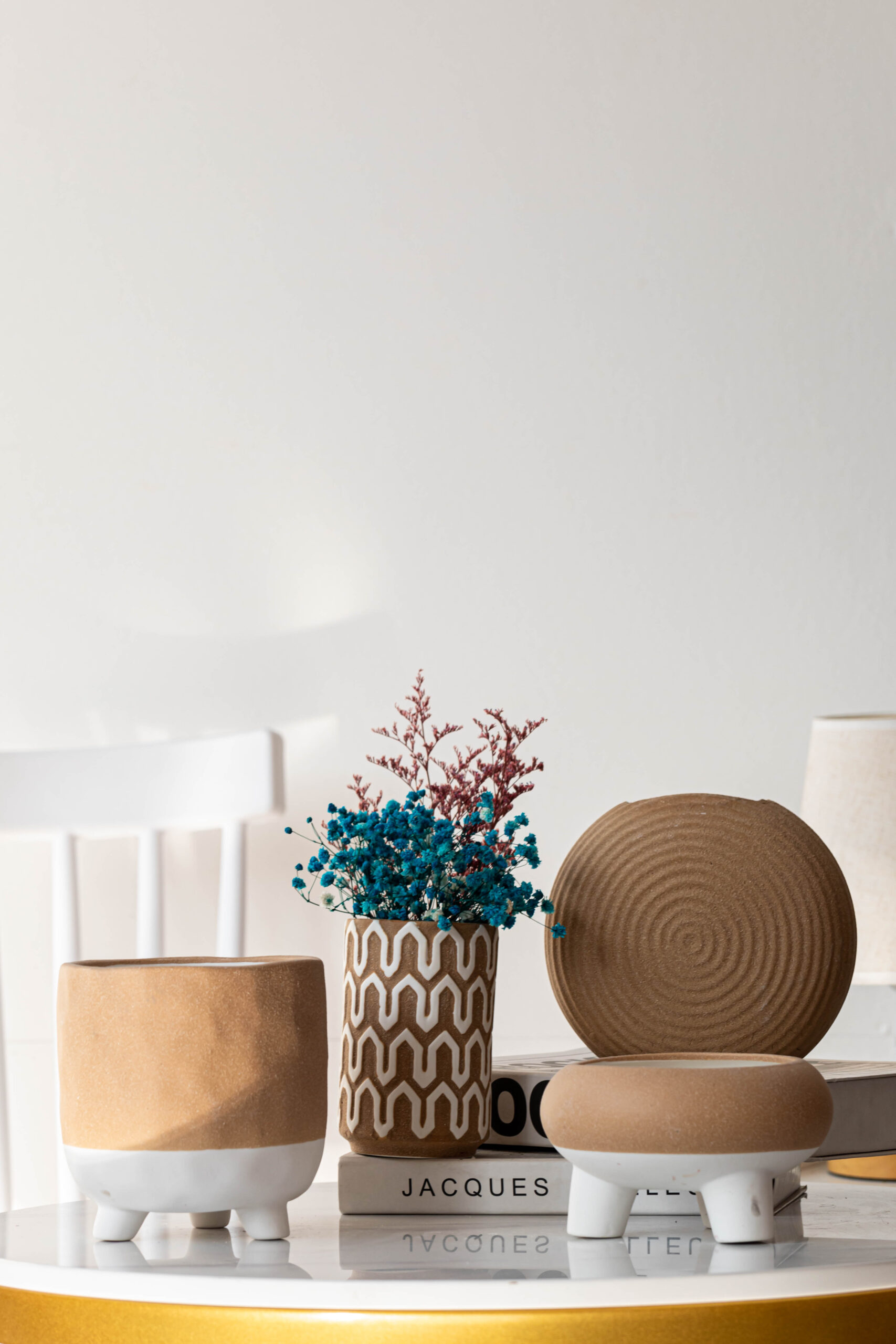
A Home Decor Collections Supplier Should Not Just Follow Trends
As an American home decor designer, I love a strong trend.
But as soon as I look at it through a buyer’s eyes, I get more careful.
A trend may look beautiful in a showroom, on TikTok, or in a designer’s home. But a buyer has to ask: can this idea become a product family, sit on a shelf, ship safely, and still make sense at retail?
That is why choosing the right home decor collections supplier matters.
A good supplier does not simply copy a trend. A good supplier helps buyers decide which part of the trend is useful, which part is too heavy, and which part can become a retail ready home decor assortment.
Why Buyers Want the Trend Signal, Not the Full Trend Weight
This is the part many suppliers miss: why buyers want the trend signal not the full trend weight.
A buyer may like the direction of a trend—warmer color, sculptural curves, artisanal texture, coastal blue, draped forms, or oversized scale. But that does not mean the entire trend should be copied into every product.
Architectural Digest’s Spring 2026 High Point Market recap pointed to repeated themes such as menswear patterns, draped shapes, indoor-outdoor furniture, and oversized scale. It also described undulating wood and metal forms that mimic the softness of fabric drapes. For a home decor buyer, these are useful signals—but not every SKU should become oversized, wavy, or theatrical.
A buyer usually wants just enough trend to feel current:
A softer curve on a vase.
A more tactile finish on a tray.
A slightly asymmetrical silhouette.
A warmer glaze.
A detail that hints at craftsmanship without making the item expensive or hard to pack.
That is how trends become buyable.
Why Some Trends Break Down on Shelf
Some trends look great in a single photo and fail the moment they become a collection.
That is why some trends break down on shelf.
The color may be too strong across multiple items.
The shape may be too dramatic for supporting SKUs.
The finish may vary too much.
The hero piece may have no easy add-on.
The product may look artistic but hard to explain.
The shelf may become visually loud instead of commercially clear.
Retail assortment planning is about offering the right styles, sizes, colors, and channels, while balancing variety, variation, and customer demand. Oracle notes that assortment planning helps retailers offer the right products at the right time and can improve sales, cash flow, and profitability when executed well.
For home decor, that means a collection should not only look “on trend.” It should have shelf rhythm.
What a Home Decor Collections Supplier Should Actually Do
A strong home decor collections supplier helps buyers build a product story, not a pile of products.
That usually means:
One hero item that catches attention.
One or two supporting pieces that carry the style.
One smaller add-on that feels easy to buy.
One texture or finish anchor.
One practical item that makes the assortment easier to display.
If a buyer is comparing Miami contemporary vase suppliers, for example, they are not only looking for one modern vase shape. They are likely looking for a supplier who can help build a vase family: different heights, related silhouettes, controlled finishes, and a price structure that works for retail, design projects, and reorder planning.
How Buyers Compare Home Decor Suppliers
When buyers compare home decor suppliers, they usually look beyond the unit price.
They compare:
Sample quality.
Trend judgment.
Collection logic.
Finish stability.
Packaging awareness.
Communication speed.
Reorder confidence.
A weak supplier says, “We can make this trend.”
A stronger supplier says, “This part of the trend is useful, but this part may be too risky for your shelf.”
That difference matters.
Stanford d.school’s design guidance treats prototypes and testing as ways to learn before making larger commitments. In home decor sourcing, a sample collection works the same way: it lets buyers test whether a trend, finish, shape, or shelf story actually works before full production.
TikTok Can Start the Trend. Buyers Still Need the Filter.
TikTok is now a real force in home design. ELLE Decor reported that TikTok accelerates the interior design cycle and highlighted 2026 trends such as skirted furniture, broken floor plans, friction-maxxing, and cabbagecore. It also noted that social platforms often influence furniture buyers weeks or months before they are ready to buy.
But TikTok does not answer the buyer’s sourcing questions.
Can this trend become a product family?
Can the finish be repeated?
Can the collection fit a price ladder?
Can the shape ship safely?
Can the look still feel relevant after the viral moment fades?
This is where a supplier’s judgment becomes valuable. The supplier has to help the buyer separate trend energy from product risk.
Packaging Still Decides Whether a Collection Is Ready
A collection is not truly retail-ready until the packaging makes sense.
The International Safe Transit Association explains that pre-shipment transport packaging tests help decision-makers judge whether packaging will protect contents during distribution; its testing procedures range from early design screening to simulations of shipment hazards.
For home decor, this matters because many products are fragile, textured, glazed, mirrored, oversized, or sculptural.
A trend-heavy vase may look beautiful but need costly protection.
A sculptural object may sit poorly in a carton.
A tray may scratch if the surface is not protected.
A mirror may need packaging adjustment before it can fit the channel.
A good supplier brings packaging into the conversation before the order becomes expensive.
FAQ: Home Decor Collections Supplier
What is a home decor collections supplier?
A home decor collections supplier helps buyers source coordinated product groups, not just individual SKUs. The goal is to build a retail-ready assortment with clear style, shelf rhythm, price structure, packaging logic, and reorder potential.
Why do buyers want trend signals instead of the full trend?
Because the full trend may be too bold, expensive, fragile, seasonal, or hard to display. Buyers usually need a controlled version of the trend that can sell inside a real assortment.
Why do some trends break down on shelf?
Some trends break down because the color, scale, shape, finish, or detail becomes too heavy when repeated across multiple products. A trend must be translated into shelf logic before it becomes commercial.
How should buyers compare home decor suppliers?
Buyers should compare suppliers by product taste, sample quality, trend judgment, collection planning, finish control, packaging awareness, communication, and reorder reliability.
Final Thought: The Best Supplier Edits the Trend
A buyer does not need every trend at full volume.
A buyer needs the part of the trend that can become a shelf-ready collection.
That is why the right home decor collections supplier is not just a product source. It is a filter, a translator, and a product decision partner.
The best supplier helps buyers turn trend signals into assortments that look current, ship safely, make commercial sense, and have a real chance to reorder.
Leave a Reply