

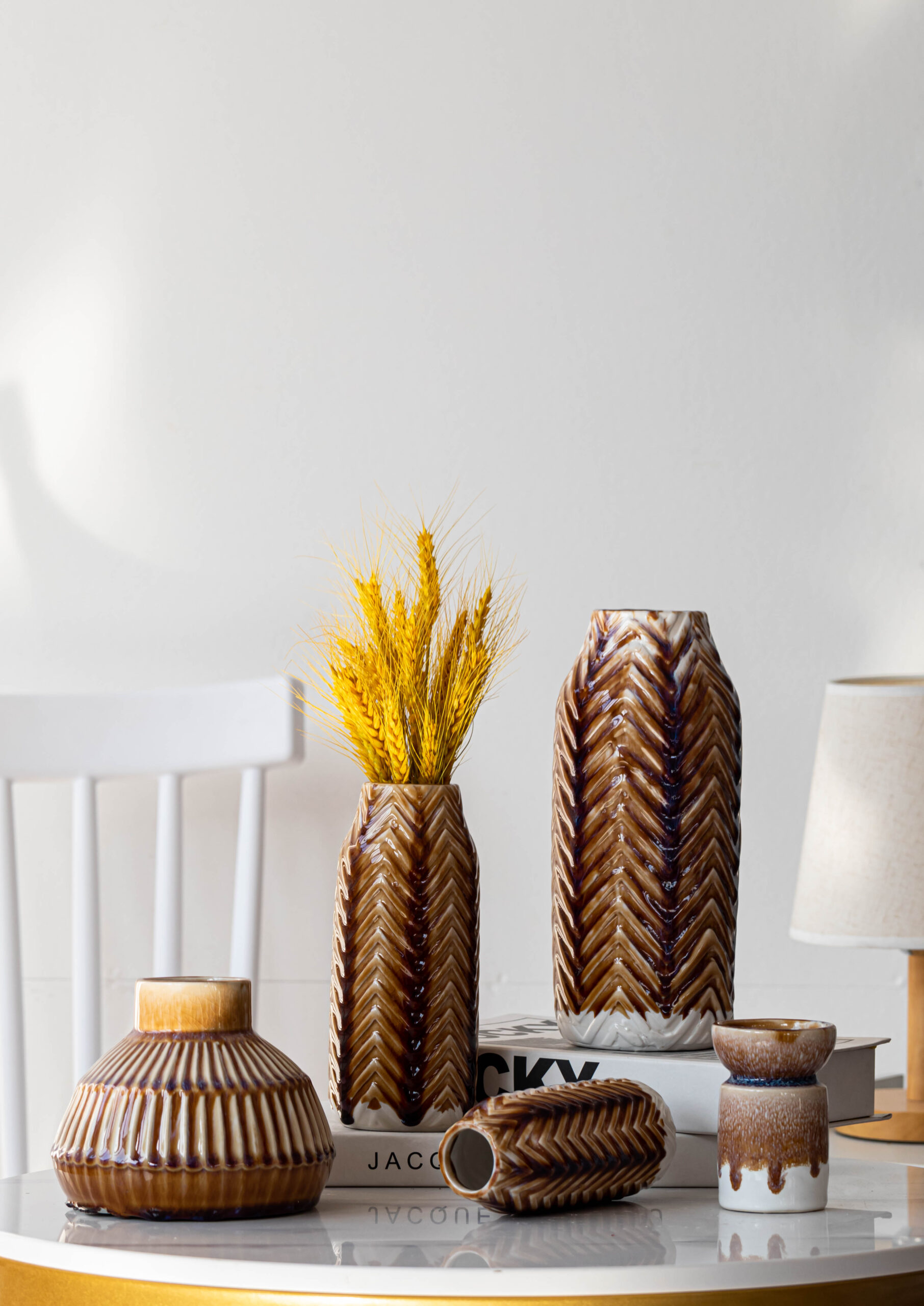
Home Decor Sample Development Is Where the Product Becomes Real
As an American home decor designer, I can appreciate a beautiful product photo. But buyers need more than a beautiful photo.
They need to know whether a vase, candle holder, tray, mirror, or Art Object can survive the real path from idea to shelf: size, finish, weight, packaging, price, display, and reorder.
That is why home decor sample development matters.
A sample is not just one piece made before production. It is the first real proof that the product can move from inspiration to a buyer-ready SKU.
Stanford d.school treats “Prototype” and “Test” as core parts of the design thinking process, which is exactly how buyers should think about home decor samples: as tools for learning before making a bigger commitment.
What Buyers Notice Before They Inquire
Before buyers even send a serious inquiry, they are already reading the product.
This is what buyers notice before they inquire:
Does the silhouette feel current?
Does the finish look stable or overly risky?
Does the product look easy to explain?
Can it fit a collection?
Does it look like one size only, or can it become a family?
Would the packaging be simple or painful?
For a Multiple Sizes Vase Supplier, this matters a lot. Buyers often do not want only one vase. They want a small, medium, and large version that can create a stronger shelf story. But the size range must feel intentional, not copied and stretched.
A 6-inch vase, 9-inch vase, and 13-inch vase should not simply be three sizes. They should create visual rhythm.
What a Sample Revision Reveals About a Supplier
The first sample shows whether a supplier can make the item.
The revision shows whether the supplier understands the business.
That is what a sample revision reveals about a supplier.
A weak supplier says, “We can change it.”
A better supplier says:
“This glaze looks good, but the color range may be hard to control.”
“This size works as a hero piece, but the smaller version needs a stronger base.”
“This Art Object looks interesting, but the surface may scratch in packing.”
“This vase family needs one safer commercial size for the price ladder.”
“This finish feels trendy, but a softer tone may work better for U.S. retail.”
That kind of response helps buyers trust the supplier, not just the sample.
Why Workshop Reality Makes Samples Feel More Believable
A catalog can show the final product.
A workshop explains what may go wrong before the buyer pays for it.
That is why workshop reality makes samples feel more believable.
The people close to production know when a rim is too thin, when a glaze is difficult to repeat, when a shape may lean, when a sculpture will need stronger packaging, or when one small change can make the product easier to scale.
MIT professor Eric von Hippel’s work on “sticky local information” explains why some product knowledge is hard to transfer away from the place where the problem is being solved. In home decor, that knowledge often lives with the makers who understand material, finish, shape, and repeatability.
For Teruierdecor, sample development is not only about making one piece. It is about using workshop knowledge to help buyers make better product decisions.
How Buyers Build Confidence Before Reorder
Buyers do not build reorder confidence from one beautiful image.
They build it from the development process.
That is how buyers build confidence before reorder:
The finish is tested.
The size is adjusted.
The packaging risk is discussed early.
The product family is checked.
The supplier explains what is stable and what is risky.
The approved sample can be repeated in production.
The first order tests market interest. The reorder tests whether the sample was developed correctly.
If the sample stage is rushed, problems usually appear later: color inconsistency, weak packing, wrong size structure, poor collection fit, or slow repeat production.
Recent U.S. Home Trends Make Sampling More Important
Recent home design coverage shows that U.S. decor is moving toward richer color, tactile surfaces, playful accents, nostalgic details, and more personality. Better Homes & Gardens recently reported that lilac is emerging as a 2026 home decor color trend, especially as a playful accent; Homes & Gardens also pointed to terracotta as a major warm color direction for spring and summer 2026.
TikTok is also accelerating home decor taste cycles. ELLE Decor’s 2026 TikTok interior trend coverage pointed to skirted furniture, broken floor plans, friction-maxxing, and cabbagecore as examples of nostalgic, tactile, personality-driven interiors entering broader design conversation.
These trends create opportunity, but they also create risk.
A trendy color may look good online but fail in glaze control.
A sculptural Art Object may look fresh but pack poorly.
A vase family may look strong in a photo but feel awkward across multiple sizes.
That is why real samples still matter.
A Better Home Decor Sample Development Process
A practical sample development process should help buyers move from idea to confidence.
First sample: test shape, size, finish, weight, and first impression.
Buyer feedback: define what must change and what must stay.
Workshop feedback: explain what is stable, risky, costly, or hard to repeat.
Revision sample: improve proportion, finish, packaging direction, and collection role.
Size family check: confirm whether the product works as one item or multiple sizes.
Pre-production confirmation: make sure the approved sample can be repeated.
This process protects buyers before the purchase order becomes expensive.
FAQ: Home Decor Sample Development
What is home decor sample development?
Home decor sample development is the process of turning a design idea into a physical sample, then testing and revising it for finish, size, proportion, packaging, collection fit, and production readiness.
Why do buyers care about sample revision?
Sample revision shows whether the supplier can solve problems, not just follow instructions. It reveals judgment, workshop experience, and commercial awareness.
Why does a multiple-size vase collection need sampling?
Because different sizes must work together visually and commercially. A vase family needs height rhythm, stable proportion, safe packing, and a clear shelf role.
What do buyers learn before reorder?
Buyers learn whether the finish can be repeated, whether the supplier can revise, whether the product fits the collection, and whether production can stay consistent.
Final Thought: A Sample Is Where Trust Starts
A buyer does not reorder because the first photo looked good.
A buyer reorders because the sample proved something.
It proved the finish could work. It proved the supplier could revise. It proved the product family made sense. It proved the workshop understood the real risks.
That is why home decor sample development is one of the most important steps in B2B home decor sourcing.
The sample is not the end of the process.
It is where trust begins.
Leave a Reply