

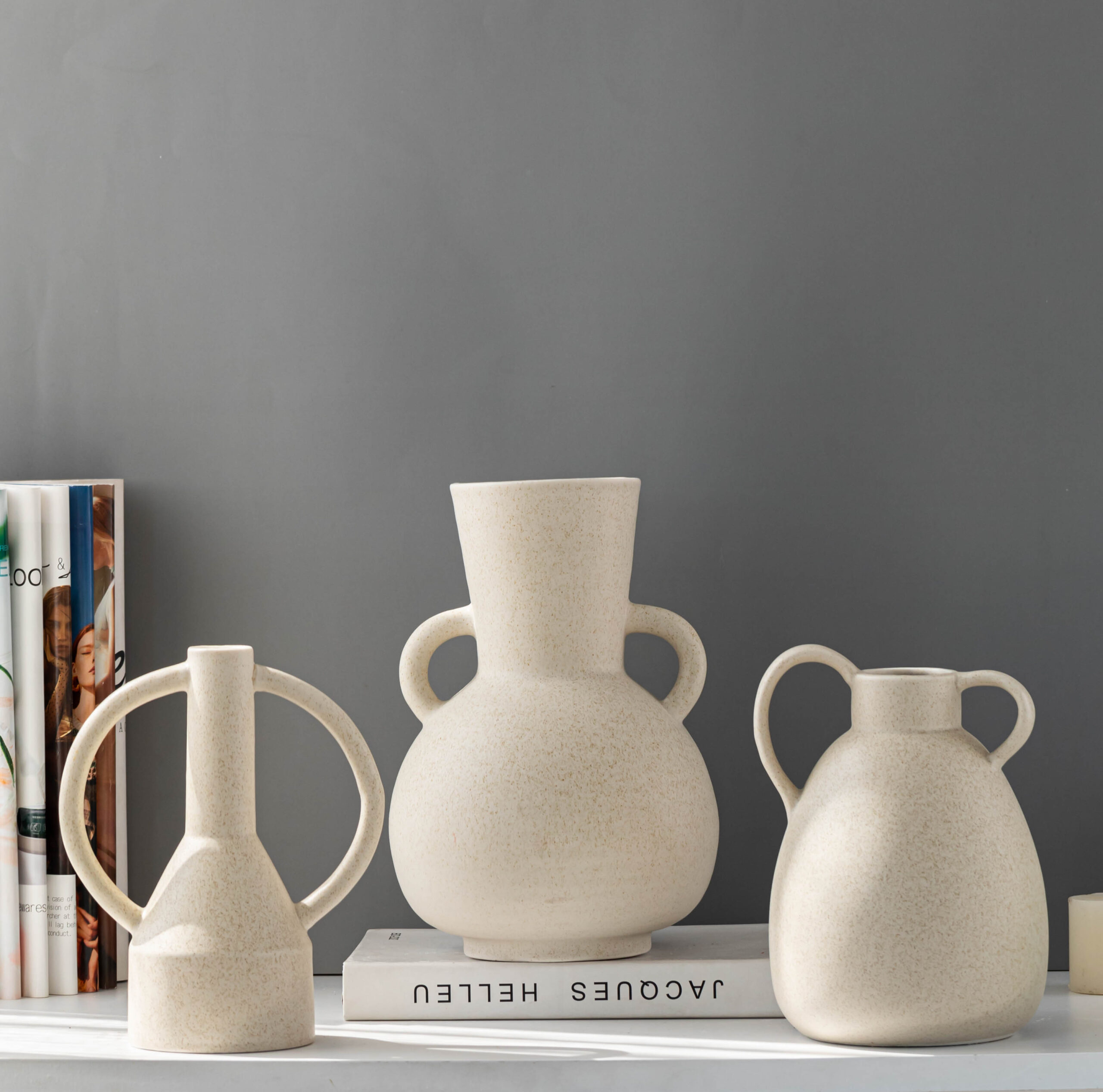
Mixed Materials Home Décor Buying Guide: How Buyers Choose Products That Look Designed, Not Random
Mixed Materials Home Décor Buying Guide: Why Material Pairing Matters
Mixed-material home décor can make a product feel more valuable.
A ceramic vase with a small metal detail.
A bench with soft upholstery and bronze legs.
A wall accent that combines wood, metal, and texture.
A tabletop tray that uses ceramic, rattan, or warm wood together.
When the material pairing is right, the product feels designed.
When it is wrong, the product looks confused.
For retail buyers, mixed materials are attractive because they help products stand out without relying only on loud color or complicated shapes. But they also create more buying risk. Different materials age differently, pack differently, react differently in production, and require different QC checkpoints.
That is why Teruierdecor treats mixed-material home décor as a category decision, not just a style choice.
What Is Mixed Materials Home Décor?
Mixed materials home décor refers to decorative products that combine two or more materials in one item or one coordinated collection.
Common combinations include:
- ceramic and metal
- wood and ceramic
- metal and upholstery
- rattan and wood
- glass and metal
- resin and wood
- fabric and metal
- ceramic and woven details
- mirror glass and decorative frames
- stone-look finishes with metal accents
In wholesale home décor buying, mixed materials may appear in:
- decorative vases
- tabletop décor
- trays
- candle holders
- ottomans and benches
- wall décor
- mirror frames
- small furniture
- seasonal decorative accents
For buyers, the key question is not:
“Does this product use more materials?”
The better question is:
Do these materials make the product easier to sell, easier to display, and still safe to produce and reorder?
More materials do not automatically mean better product.
Better coordination does.
The First Buyer Question: Why Are These Materials Together?
Mixed-material design should have a reason.
A product should not combine ceramic, metal, wood, and fabric just to look “special.”
Each material should do one clear job.
Common material roles include:
| Material Role | What It Adds | Example |
|---|---|---|
| Structure | Strength and support | Metal bench frame, wood base |
| Surface value | Texture and hand-feel | Ceramic glaze, woven panel |
| Warmth | Softer room feeling | Wood, rattan, fabric |
| Contrast | Visual interest | Metal detail on matte ceramic |
| Premium signal | Higher perceived value | Bronze trim, soft gold legs |
| Category bridge | Connects products in a display | Matching finish across vases, mirrors, and benches |
A mixed-material item works best when the customer can understand the design quickly.
If the customer has to wonder why those materials are together, the product may feel overdesigned.
Good mixed-material home décor should feel intentional, not assembled.
Material Pairing: Safe Combinations Usually Sell Better
Some material pairings are naturally easier for retail buyers.
They feel familiar, but still have enough detail to look fresh.
Practical mixed-material directions include:
| Material Pairing | Retail Advantage | Buyer Risk |
|---|---|---|
| Ceramic + metal | Adds premium detail to a familiar material | Metal rubbing, color mismatch |
| Wood + ceramic | Warm, natural, shelf-friendly | Wood tone variation |
| Fabric + metal | Strong for ottomans and benches | Frame scratches, fabric stains |
| Rattan + wood | Soft, casual, warm | Moisture and shape variation |
| Glass + metal | Giftable, decorative, bright | Breakage and scratching |
| Upholstery + wood | Soft and home-friendly | Fabric supply and wood finish consistency |
| Ceramic + woven detail | Craft feel, texture value | Glue, edge finish, durability |
The safest mixed-material products usually have one main material and one supporting detail.
For example:
- matte ceramic vase with a small bronze rim
- upholstered bench with clean soft gold legs
- wood tray with ceramic insert
- wall décor with wood base and metal accent
- tabletop object with ceramic body and woven texture detail
This keeps the product visually rich without making production too complicated.
Finish Coordination: The Buyer’s Hidden Control Point
Mixed materials can fail when finishes do not match.
A product may have a nice shape, but if the metal finish looks too yellow, the wood looks too red, or the ceramic glaze feels too cold, the whole item feels off.
Buyers should check finish coordination across:
- ceramic glaze tone
- metal coating color
- wood stain
- fabric color
- woven material tone
- surface texture
- matte vs glossy balance
- warm vs cool undertone
This is especially important when products are meant to sit together in one assortment.
For example:
A bronze mirror frame should not fight with the metal legs of a bench.
A warm white ceramic vase should not look gray next to a beige upholstered ottoman.
A wood wall accent should not feel too orange beside a taupe tabletop collection.
Good finish coordination makes the assortment feel like one retail story.
Bad finish coordination makes every item look like it came from a different supplier.
The Three-Finish Rule for Retail Displays
For retail buyers, one useful rule is simple:
Most home décor displays should not carry too many finish languages at once.
A practical mixed-material assortment can often work with three finish families:
- A base neutral
- A warm material
- A small accent finish
For example:
- Base neutral: ivory ceramic, beige fabric, soft taupe
- Warm material: natural wood, rattan, warm brown
- Accent finish: bronze, soft gold, black metal
This gives the shelf enough depth without making it messy.
A buyer does not need every product to match perfectly.
But the products should speak the same visual language.
That is what makes a retail-ready home décor assortment feel easier to buy.
Category Fit: Mixed Materials Should Support the Whole Assortment
Mixed materials are most valuable when they connect categories.
A buyer may use the same finish logic across:
- vases
- tabletop décor
- wall décor
- ottomans and benches
- mirrors
- trays
- candle holders
- small furniture
For example:
A soft gold detail on a ceramic vase can connect with soft gold bench legs.
A bronze wall accent can coordinate with a mirror frame.
A woven tabletop piece can connect with rattan or wood home décor.
A matte ceramic item can soften a display with stronger metal and glass pieces.
This is where mixed materials become more than product decoration.
They become a merchandising tool.
The buyer is not just choosing one item.
The buyer is building a room story.
Price Ladder: Mixed Materials Can Raise Perceived Value
Mixed-material products often help buyers create better price ladders.
A plain ceramic object may sit at one price level.
Add a metal detail, special texture, or wood base, and the product may support a higher perceived value.
But the buyer must be careful.
More materials also mean higher cost, more QC work, and more packaging complexity.
A practical mixed-material price ladder may include:
| Product Level | Retail Function | Example Direction |
|---|---|---|
| Entry item | Easy add-on purchase | Small ceramic item with simple texture |
| Mid-level item | Main shelf seller | Ceramic vase with metal detail |
| Statement item | Display anchor | Large mixed-material wall décor |
| Functional item | Useful and decorative | Upholstered bench with metal frame |
| Seasonal item | Freshness driver | Woven, ceramic, or color-accented tabletop piece |
| Collection item | Builds full room story | Coordinated vase, tray, wall accent, and bench |
A good price ladder helps the buyer avoid two problems:
First, the assortment should not look too basic.
Second, it should not become so expensive that the customer hesitates.
Mixed materials are useful when they help the product feel worth more without making it hard to sell.
Packaging: More Materials Mean More Damage Points
Mixed-material products often need more careful packaging.
Different materials can damage each other during transport.
Metal can scratch ceramic.
Wood can rub against painted surfaces.
Fabric can stain.
Glass can crack.
Woven parts can deform.
Corners can dent.
Small attached details can break.
Buyers should ask suppliers about:
- surface separation
- corner protection
- metal part wrapping
- fabric dust cover
- ceramic or glass protection
- inner box structure
- hardware protection
- carton strength
- master carton layout
- drop test expectations
- moisture protection
- mixed-material abrasion prevention
Packaging should be reviewed early, not after the product is approved.
A mixed-material item can look excellent in a sample room and still fail if the materials rub against each other in the carton.
For buyers, packaging protects margin.
It also protects trust in the second order.
QC: Mixed Materials Need Multi-Point Inspection
Mixed-material home décor needs wider QC than single-material products.
A ceramic vase mainly needs glaze, shape, stability, and packing checks.
A mixed ceramic-and-metal item needs all of that plus metal finish, attachment strength, rubbing risk, and color coordination.
Key QC checkpoints include:
- material match
- finish consistency
- color coordination
- attachment strength
- glue marks
- screw or hardware accuracy
- surface scratches
- edge finishing
- coating durability
- fabric cleanliness
- wood tone variation
- ceramic glaze quality
- metal rubbing
- packaging fit
- batch comparison
For mixed-material products, buyers should also check whether the product still looks good after handling.
Some products look strong when first unpacked but show marks quickly after touch, movement, or display setup.
That is a real retail problem.
Sample Development: One Good Sample Is Not Enough
Mixed-material samples need more review time.
A buyer should not approve the product only because the first sample looks impressive.
A practical sample review should include:
- Check why the materials are combined
- Review finish coordination under different lighting
- Test attachment strength
- Check whether materials rub against each other
- Inspect back, bottom, and hidden areas
- Review packaging method
- Compare with other products in the assortment
- Confirm cost impact
- Confirm MOQ and lead time
- Confirm whether each material can be repeated in future orders
This is especially important when the product uses:
- custom metal finishes
- special ceramic glazes
- fabric upholstery
- natural wood
- woven material
- hand-applied details
A good mixed-material sample is not just attractive.
It must be repeatable.
Supplier Coordination: Why Mixed Materials Need Better Factory Control
Mixed-material home décor often involves more than one production process.
One item may require:
- ceramic forming
- glazing and firing
- metal coating
- wood finishing
- fabric cutting
- assembly
- hardware fitting
- packaging testing
If these steps are not coordinated, problems appear late.
The ceramic is ready, but the metal tone is wrong.
The fabric arrives, but the frame finish changed.
The sample looked balanced, but the production batch feels mismatched.
The item ships, but materials rub inside the carton.
This is why Teruierdecor’s cross-border design manufacturing model matters.
The buyer may start with a market trend.
The design team translates it into product direction.
The factory checks material behavior and production limits.
The sourcing team coordinates finish, cost, packaging, and reorder notes.
Mixed-material products need that kind of coordination.
Otherwise, the product may look designed in the photo but become messy in production.
Comparison: Single-Material Buying vs Mixed-Material Category Buying
| Buying Method | What It Focuses On | Main Risk |
|---|---|---|
| Single-material buying | One material, simpler production | May look basic or lack perceived value |
| Random mixed-material buying | More materials and stronger appearance | Overdesigned, hard to repeat |
| Price-only buying | Lowest unit cost | Weak finish, poor attachment, high claims |
| Trend-only buying | Popular material combination | Short selling window |
| Photo-based buying | Strong visual sample | Hidden QC and packaging problems |
| Category buying | Material role, finish coordination, packaging, price ladder, reorder | Requires stronger supplier coordination |
Mixed materials are powerful when the buyer controls the logic.
They are risky when the buyer only sees the surface.
FAQ: Mixed Materials Home Décor Buying Questions
What should buyers check first when sourcing mixed-material home décor?
Buyers should first check why the materials are combined, whether the finishes coordinate, whether the product can be packed safely, and whether the supplier can repeat the same material quality in future orders.
Are mixed-material products better than single-material products?
Not always. Mixed-material products can create stronger perceived value, but they also bring more QC and packaging risk. They are better only when the material pairing improves the product’s retail value.
What material combinations are safer for retail home décor?
Ceramic with metal, wood with ceramic, fabric with metal, and rattan with wood are common retail-friendly combinations. The key is to keep the material pairing clear and not overcomplicate the product.
Why is finish coordination important?
Finish coordination decides whether products feel like one assortment. If the ceramic, metal, wood, and fabric tones do not work together, the display can look messy even when each item looks good alone.
What packaging risks exist with mixed-material products?
Mixed-material products may face scratches, rubbing, dents, broken attachments, fabric stains, and surface damage. Buyers should review surface separation, inner protection, carton strength, and drop test expectations.
What makes mixed-material home décor reorder-friendly?
A mixed-material product is easier to reorder when material sources are stable, finish standards are documented, assembly methods are controlled, packaging is proven, and production notes are kept for future batches.
Final Buying Judgment
Mixed-material home décor should pass five tests before becoming a wholesale product:
Do the materials have a clear reason to be together?
Do the finishes coordinate with the wider assortment?
Does the product feel more valuable, not just more complicated?
Can it ship without materials damaging each other?
Can it be reordered with the same look and quality?
If a mixed-material product only looks impressive in one sample photo, it is not enough.
For retail buyers, mixed materials must create better shelf value, stronger room stories, and safer reorder logic.
That is how mixed-material home décor becomes more than decoration.
It becomes a retail-ready assortment tool.
Leave a Reply