

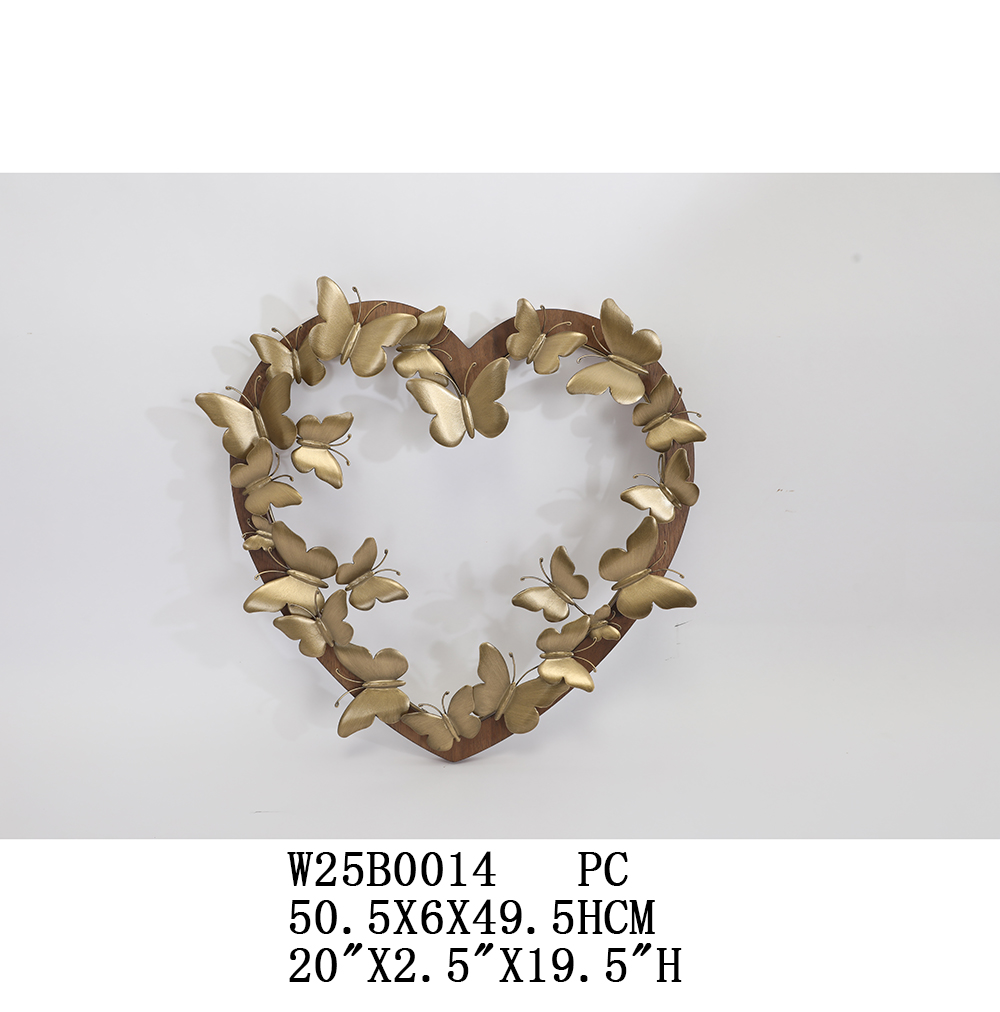
Wall Décor Buying Guide: How Buyers Choose Pieces That Fill the Wall, Fit the Room, and Reorder Without Risk
Wall Décor Buying Guide: Why Wall Products Are Harder Than They Look
Wall décor looks like an easy category.
A framed piece.
A metal accent.
A woven wall item.
A carved panel.
A mirror-like decorative object.
A set of wall pieces that can fill empty space.
But for retail buyers, wall décor is not just about finding something attractive. It has to solve a real room problem: empty walls.
That sounds simple, but it creates many buying questions.
Is the size right for apartments and family homes?
Can the product hang safely?
Does the material feel valuable enough in person?
Can it ship without bending, scratching, or breaking?
Will the finish stay consistent in a reorder?
Can the piece work with furniture, ceramic décor, ottomans, mirrors, and seasonal displays?
A wall décor item is not only decoration. It is a visible product that sits at eye level. If the quality looks weak, the customer notices immediately.
That is why Teruierdecor treats wall décor as a category decision, not a random decorative add-on.
What Is Wall Décor in Retail Buying?
Wall décor refers to decorative products designed to be displayed on walls in homes, hospitality spaces, apartments, entryways, bedrooms, living rooms, and retail room settings.
In a wholesale home décor assortment, wall décor may include:
- framed wall art
- metal wall accents
- carved wall panels
- woven wall décor
- wood wall pieces
- decorative plaques
- wall-mounted ceramic pieces
- mixed-material wall décor
- mirror-inspired decorative wall accents
- seasonal wall decorations
For retail buyers, the better question is not:
“Is this wall décor beautiful?”
The better question is:
Can this piece help a customer finish a room without creating sourcing, packaging, or reorder problems?
That is the real buying standard.
The First Buyer Question: What Wall Problem Does This Product Solve?
Most customers do not think like product developers.
They think in simple room problems:
“This wall is too empty.”
“This entryway feels unfinished.”
“This bedroom needs something warmer.”
“This living room needs a focal point.”
“This apartment needs personality, but not too much.”
A strong wall décor product should answer one of these problems clearly.
Common wall décor roles include:
| Product Role | Retail Function | Example Direction |
|---|---|---|
| Focal point | Creates a main visual anchor | Large framed or sculptural wall piece |
| Soft filler | Makes a room feel warmer | Woven, textured, or neutral wall décor |
| Accent piece | Adds personality to a small wall | Small metal, ceramic, or wood accent |
| Set-building item | Helps buyers create grouped displays | Two-piece or three-piece wall sets |
| Seasonal refresh | Updates the room without replacing furniture | Spring, holiday, or color-driven wall décor |
| Material bridge | Connects furniture, mirrors, ceramic, and textiles | Mixed wood, metal, fabric, or ceramic elements |
If the product does not have a clear room role, it becomes harder to sell.
Good wall décor does not just “look nice.”
It gives the customer a reason to place it somewhere.
Size: The First Real Retail Test
Size decides whether wall décor feels useful or awkward.
A wall item can fail in two ways.
It can be too small, so it feels weak on the wall.
It can be too large, so it becomes difficult to ship, stock, display, and sell.
For retail buyers, the right size depends on the target channel.
A community home store may prefer medium-size, easy-to-carry wall pieces.
A larger retailer may need broader size options for room displays.
An importer may care more about carton efficiency and container loading.
A project buyer may need larger pieces for hospitality or fit-out use.
Buyers should check:
- product height and width
- wall coverage effect
- carton size
- gross weight
- hanging method
- store display feasibility
- warehouse handling
- mixed-container planning
- customer carry-out convenience
A wall décor product should feel large enough to matter, but not so large that it becomes a logistics burden.
That balance is where many buying decisions are won or lost.
Material: Where Wall Décor Gets Its Value
Wall décor depends heavily on material impression.
Customers often judge wall décor from a distance first, then close up. The material must hold up under both views.
Common materials include:
- wood
- MDF
- metal
- ceramic
- resin
- glass
- textile
- rattan or woven fibers
- printed canvas
- mixed materials
Each material creates a different retail signal.
Wood can feel warm and natural.
Metal can feel modern, bold, or architectural.
Ceramic can add craft and surface value.
Woven materials can soften a room.
Mixed materials can make a simple product feel more designed.
But material also brings risk.
Wood may warp or vary in tone.
Metal may scratch or dent.
Ceramic may break.
Textile may collect dust or stain.
Printed surfaces may look cheaper in person than in photos.
A strong wall décor supplier should help buyers understand not only what the material looks like, but also how it behaves in production, packing, and reorder.
Finish: The Detail Customers Notice at Eye Level
Wall décor sits at eye level. That makes finish control especially important.
A small defect on a ceramic vase may be less visible on a lower shelf.
A finish defect on wall décor can be seen immediately.
Buyers should pay attention to:
- paint coverage
- edge finishing
- metal coating
- wood stain consistency
- glue marks
- surface scratches
- frame corners
- hanging hardware
- texture repeatability
- color shift across batches
Common finish directions include:
| Finish Direction | Retail Advantage | Buyer Risk |
|---|---|---|
| Matte neutral finish | Easy to coordinate, modern | Surface marks may show |
| Distressed finish | Warm, rustic, forgiving | Can look inconsistent if uncontrolled |
| Metallic finish | Strong shelf impact | Scratches and color variation |
| Natural wood tone | Warm and familiar | Batch color difference |
| Textured surface | Higher perceived value | Dust, abrasion, and uneven application |
| Mixed-material finish | More design value | Requires tighter QC coordination |
For Teruierdecor, finish is not just a surface choice. It is a production control issue.
A finish must look good in a photo, in a sample, in a full batch, and in the reorder.
Style: Safe Does Not Mean Boring
Wall décor needs personality, but it cannot become too narrow.
A very trendy wall piece may get attention, but it may also lose relevance quickly. A very plain piece may be safe, but it may not create enough visual reason to buy.
Retail-friendly wall décor often sits between these two extremes.
It should be recognizable, but not difficult.
Fresh, but not strange.
Decorative, but not overdesigned.
Practical style directions include:
- warm neutral wall décor
- architectural wall accents
- botanical or nature-inspired pieces
- soft modern farmhouse updates
- Mediterranean-inspired textures
- subtle metallic wall accents
- wood and ceramic combinations
- woven wall panels
- sculptural but simple forms
- seasonal color accents
The strongest products usually have one clear design idea.
Not five ideas fighting each other.
Price Ladder: Wall Décor Needs More Than One Price Point
Wall décor works better when buyers build a price ladder.
Not every customer wants a large statement piece.
Not every store wants to carry only small accents.
A good assortment usually includes several product roles.
| Product Level | Retail Purpose | Example |
|---|---|---|
| Entry item | Easy impulse purchase | Small wall plaque or accent piece |
| Mid-level item | Main volume seller | Medium framed or mixed-material piece |
| Statement item | Room anchor | Large wall panel or sculptural piece |
| Set item | Higher basket value | Two-piece or three-piece wall set |
| Seasonal item | Refresh driver | Color or theme-based wall décor |
| Project item | Larger space use | Hospitality or commercial wall accent |
This price ladder gives the buyer flexibility.
It allows one category to serve different rooms, store formats, and shopper budgets.
A wall décor program built only around one size and one price often feels thin. A balanced price ladder gives the category more shelf life.
Packaging: Wall Décor Can Fail Before It Reaches the Wall
Wall décor has a hidden risk: shape and surface damage.
It may not be as fragile as ceramic décor, but it can still suffer from:
- scratched surfaces
- bent metal
- broken corners
- cracked frames
- damaged hanging parts
- crushed cartons
- moisture exposure
- rubbing between pieces
- loose hardware
- dirty surfaces after unpacking
For wholesale wall décor, packaging should be reviewed early.
Buyers should ask about:
- inner protection
- corner guards
- surface protection
- carton strength
- master carton layout
- hanging hardware protection
- label position
- drop test expectations
- carton size and gross weight
- mixed-SKU packing options
Packaging is not a back-end detail.
For wall décor, packaging protects the product’s visible value. If the surface arrives scratched, the item loses its retail appeal before it ever reaches the customer’s wall.
Hanging Hardware: A Small Detail That Can Create Big Problems
Wall décor must be easy and safe to hang.
This is one area buyers should never ignore.
A product may look good, but if the hanging hardware is weak, confusing, uneven, or not properly fixed, it creates customer frustration.
Buyers should check:
- hook strength
- hardware placement
- weight balance
- back panel quality
- screw position
- wall mounting instructions
- whether the piece hangs straight
- whether hardware is protected during shipping
A wall product should not make the customer guess.
If the buyer needs to explain too much, the product is not retail-ready enough.
QC: What Buyers Should Check Before Production
Wall décor QC should focus on appearance, structure, and hanging safety.
Key checkpoints include:
- size accuracy
- color consistency
- surface finish
- frame alignment
- corner quality
- back panel strength
- hanging hardware
- glue marks
- scratches or dents
- weight consistency
- packaging fit
- carton labeling
- batch comparison
- moisture protection
- product cleaning before packing
For mixed-material wall décor, QC becomes even more important because different materials may react differently during production and shipping.
A wood-metal-ceramic wall piece may look more valuable, but it also needs tighter control.
Sample Development: Do Not Approve Wall Décor Only From the Front
Wall décor is often judged by front-view photos.
That is not enough.
A buyer should check the product from several angles:
- front view
- side thickness
- back structure
- hanging hardware
- edge finishing
- surface under light
- packaging fit
- wall-hanging test
The back of the product matters because it affects safety, stability, and customer experience.
A wall piece with a beautiful front but weak back structure is not a strong wholesale product.
How Wall Décor Works With Other Home Décor Categories
Wall décor rarely sells alone in the customer’s mind.
It works with the room.
A buyer should consider how wall décor connects with:
- ceramic vases
- ottomans and benches
- mirrors
- tabletop décor
- trays
- textiles
- lighting
- small furniture
- seasonal collections
For example, a warm wood wall piece can support ceramic vases in off-white and taupe tones. A bronze metal wall accent can coordinate with soft gold bench legs or mixed-material décor. A textured neutral wall panel can make a room story feel more complete without adding heavy color.
This is where Teruierdecor’s value translation approach matters.
A trend may begin as a color, material, or lifestyle signal. But it only becomes useful for buyers when it is translated into product decisions: size, material, finish, price, packaging, and reorder plan.
That is the difference between a decoration idea and a retail-ready wall décor SKU.
Comparison: Random Wall Décor Buying vs Category Buying
| Buying Method | What It Focuses On | Main Risk |
|---|---|---|
| Random style buying | One attractive wall piece | Weak assortment logic |
| Price-only buying | Lowest unit cost | Poor finish, weak hardware, high claims |
| Trend-only buying | Popular look or color | Short selling window |
| Photo-based buying | Front-view image | Hidden back structure and hanging problems |
| Category buying | Size, material, role, packaging, hardware, reorder | Requires stronger supplier coordination |
Category buying helps buyers reduce blind spots.
It does not make every product risk disappear, but it helps the buyer see the risk before production begins.
That is the real value of a wall décor buying guide.
FAQ: Wall Décor Buying Questions
What should buyers check first when sourcing wall décor?
Buyers should first check product role, size, material, finish, hanging hardware, packaging method, and price ladder fit. A wall décor product should be attractive, safe to hang, easy to ship, and clear in its room use.
What makes wall décor easier to sell?
Wall décor is easier to sell when it solves a visible room problem, has a clear style direction, fits common wall sizes, uses retail-friendly materials, and coordinates with other home décor categories.
Why is hanging hardware important?
Hanging hardware affects safety and customer experience. If the product is hard to hang, hangs unevenly, or feels unstable, the customer may return it or complain.
Is mixed-material wall décor a good wholesale direction?
Yes, mixed-material wall décor can create stronger perceived value because it combines texture, color, and material contrast. But it also needs stronger QC because each material may behave differently during production and shipping.
What packaging details matter for wall décor?
Buyers should check corner protection, surface protection, carton strength, hardware protection, carton size, gross weight, and drop test expectations.
What makes wall décor reorder-friendly?
Wall décor is easier to reorder when the material supply is stable, finish standards are documented, hardware placement is consistent, packaging is proven, and production notes are kept for future batches.
Final Buying Judgment
Wall décor should pass five tests before becoming a wholesale product:
Can it solve a real wall problem?
Can the customer understand where to place it?
Does the material look valuable in person?
Can it hang safely and ship cleanly?
Can it be reordered with consistent finish and quality?
If a wall décor item only looks good in a front-view photo, it is not enough.
For retail buyers, wall décor must fill space, support room stories, protect margin, and remain stable in repeat orders.
That is how wall décor becomes more than something to hang.
It becomes a retail-ready category.
Leave a Reply