

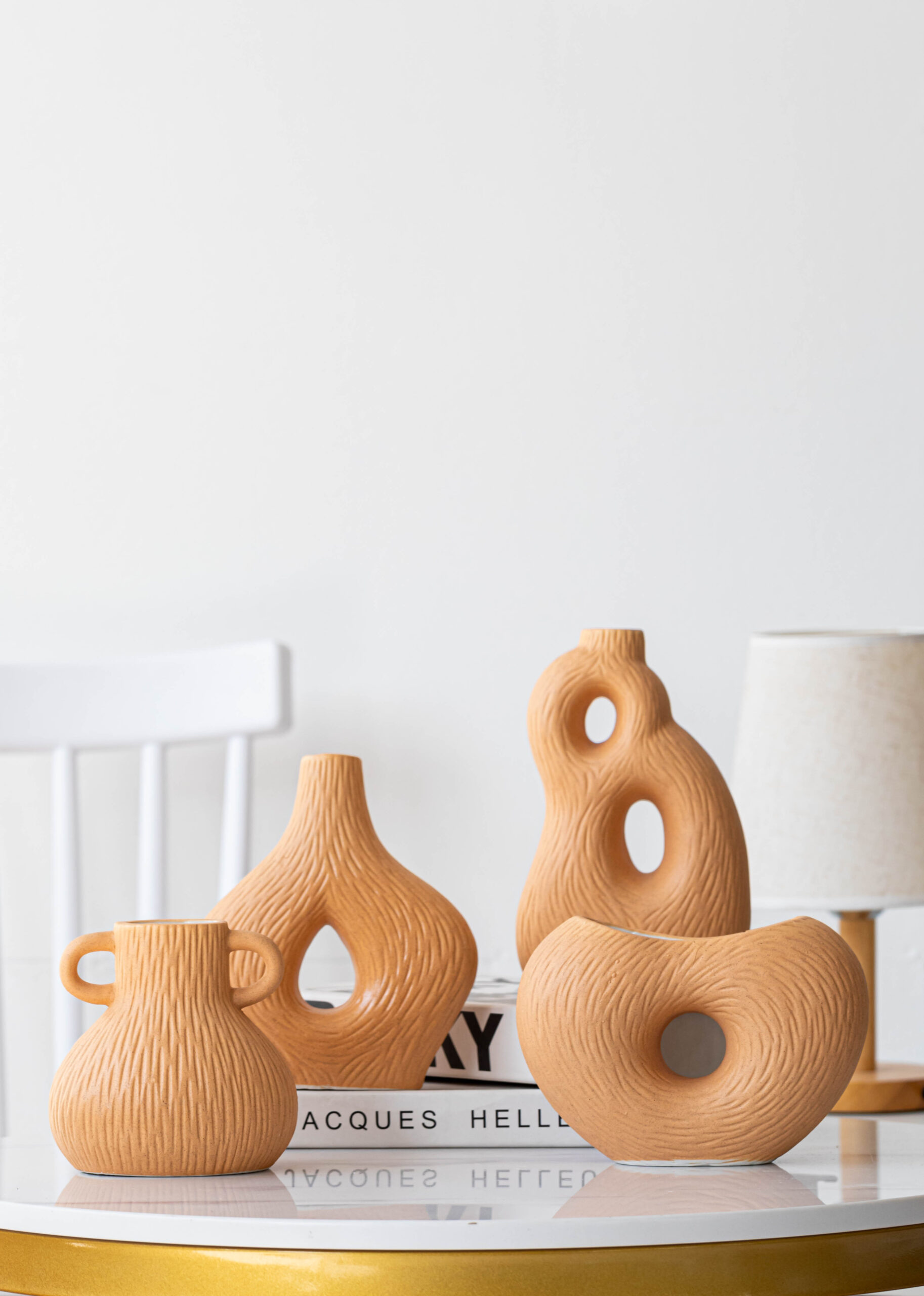
Why Buyers Notice When a Supplier Improves the Product Without Losing Its Identity
Improvement means very little if the product stops feeling like itself
This is one of the most delicate moments in sample development.
A buyer gives feedback. The supplier revises the piece. The new version arrives looking cleaner more refined more stable and perhaps easier to produce. On paper that sounds like progress.
But then something feels off.
The object may be technically better and still somehow weaker.
The finish may be more controlled but less convincing.
The shape may be more practical but less distinctive.
The piece may solve the problem and still lose its original reason to exist.
Experienced buyers notice this immediately.
That is because they are not only looking for improvement. They are looking for the right kind of improvement. They want the product to become stronger without becoming generic. They want it to become more usable without losing the quality that made it worth developing in the first place.
This is why buyers pay so much attention when a supplier improves the product without losing its identity.
Product identity is what makes the sample feel worth protecting
Every promising sample has something that gives it direction.
It may be the silhouette.
It may be the proportion.
It may be the mood created by the finish.
It may be the quiet tension between shape and surface.
It may be the way the item feels slightly different from safer products already in the market.
That identity matters because it is often the reason the buyer cared in the first place.
Without it the product may still be competent, but it becomes easier to forget. In home decor that is a serious problem. A product does not need to be extreme to be memorable, but it does need enough character to hold attention and justify its place inside an assortment.
So when revisions begin buyers are always watching one thing closely.
Is the product getting stronger while staying itself
Weak revisions often solve the issue by flattening the idea
This is one of the most common development mistakes.
A supplier receives feedback and becomes so focused on fixing the visible problem that they remove too much of the product’s character along the way. The sample becomes safer but also duller. It becomes easier but also less meaningful.
That may happen when:
the curve is simplified too far
the surface is made too uniform
the opening is corrected without regard for the original balance
the finish is toned down until it loses presence
the detailing is cleaned up so much that the product starts looking like many others
From a distance the revision may appear more polished. But the buyer can feel that something important has been lost.
This is why strong development requires more than correction. It requires preservation with judgment.
Buyers notice whether the supplier understands what the product is trying to be
This is the deeper layer.
A supplier can only protect identity if they understand identity. That sounds obvious, but in practice it is rare. Many revisions focus on what the product looks like instead of what the product is trying to do.
A buyer is often reading the revised sample with questions like:
Did the supplier understand what made the original version promising
Did they know which feature created the product’s emotional pull
Did they protect the part that gave the piece its point of view
Did they improve the item in a way that supports its commercial role rather than replacing it with something safer and more ordinary
When the answer feels like yes, trust grows quickly.
It tells the buyer that the supplier is not just making objects more correct. They are helping shape them into better versions of themselves.
Good suppliers know that identity is not the same as flaw
This distinction is extremely important.
Some products have unusual features that are part of their character. At the same time those same features may create real development challenges. The supplier has to know which parts are worth protecting and which parts are true problems.
That is where judgment becomes visible.
A weaker team may treat anything irregular as something to smooth out.
A stronger team can tell the difference between a meaningful feature and an unstable mistake.
For example a certain asymmetry may give the piece its personality. A particular surface variation may create warmth. A slightly sharper proportion may be what makes the item feel current. These things should not be erased simply because they are harder to manage.
The real work is to refine them without draining them of life.
Buyers notice when a supplier can do that. It is one of the clearest signs of development maturity.
Improvement with identity creates stronger commercial confidence
This matters for more than design reasons.
A product that improves while keeping its identity often feels more commercially believable too. It suggests that the supplier can support both distinction and discipline at the same time.
That matters because buyers are usually balancing two pressures.
They want products that stand out enough to matter.
They want products that are stable enough to live inside a real business.
When a supplier manages both, the product starts to feel more valuable.
It is no longer just attractive.
It feels buildable.
It feels worth presenting.
It feels easier to place in a collection.
It feels more likely to survive into order and reorder.
This is one reason buyers respond so strongly to thoughtful revision. It shows that the supplier can help protect the commercial future of the idea without sacrificing the original spark.
Buyers also use this balance to judge future collaboration quality
A revised sample is never only about the current piece. It also gives the buyer a preview of how future development work may feel.
If the supplier improves the product but strips away its identity the buyer may worry that future projects will become safer but weaker. Every interesting idea may be gradually reduced into something easier to make but harder to care about.
If the supplier improves the product while preserving its identity the buyer sees something else. They see a team that can work with nuance. A team that can refine without overcorrecting. A team that understands how to make a product more usable without making it forgettable.
That kind of team is much more valuable over time.
It means the buyer is not just working with a factory. They are working with a development partner who can protect product meaning while making the object stronger.
Preserving identity often requires selective restraint
This is another reason buyers respect it so much.
The easiest revision path is often to change more. To make the object neater safer and more standardized. But better development is often more selective than that.
It asks:
what exactly must improve
what exactly should stay
which rough edge is actually part of the appeal
which tension gives the product life
what can be stabilized without draining the object of character
A supplier who can answer those questions well usually creates revisions that feel more intelligent.
The buyer can sense that the product was not pushed toward sameness. It was guided toward maturity.
That is a very different result.
Products lose identity slowly before they lose value openly
This is something good buyers learn over time.
A product rarely becomes generic in one dramatic step. More often it happens through a series of reasonable changes. Each revision makes the piece slightly cleaner slightly safer slightly more acceptable. None of those steps seem disastrous by themselves.
Then at some point the buyer looks up and realizes the object has lost its point.
It is no longer wrong.
It is simply no longer worth the effort.
This is why preserving identity during development matters so much. It protects the reason the sample deserved attention in the first place. Without that protection the product may still move forward, but it does so with less energy less memorability and less long term value.
In home decor identity is often what gives a product shelf life
This is especially true in decorative categories where many objects are technically usable but only a smaller number feel distinctive enough to hold attention.
A product with identity can help a collection feel sharper. It can anchor an assortment more clearly. It can create a stronger mood. It can make safer surrounding pieces look more meaningful. It can give the buyer a reason to keep building around it.
When identity disappears the product often becomes easier to replace. That weakens not only the individual item but the range logic around it.
This is why buyers care so much when a supplier improves the product without losing what made it special. They know they are not just saving a detail. They are protecting the part of the product that gives it presence.
For a supplier like Teruierdecor this is where development strength becomes highly visible. The value is not only in refining a sample to make it cleaner or easier to produce. The deeper value is in making it more usable while protecting the design character that gives it commercial relevance. That is how sample work moves beyond correction and becomes real product shaping.
Final thought
Buyers notice when a supplier improves the product without losing its identity because that balance is difficult and valuable.
It shows that the supplier understands what made the item worth developing.
It shows that revisions are being guided by judgment rather than fear.
It shows that the team can strengthen the product without flattening it.
It shows that commercial usability and product character do not need to cancel each other out.
It shows that future development may become clearer instead of more generic.
That is why this kind of revision earns trust.
The product gets better.
But it also stays alive.
Leave a Reply