

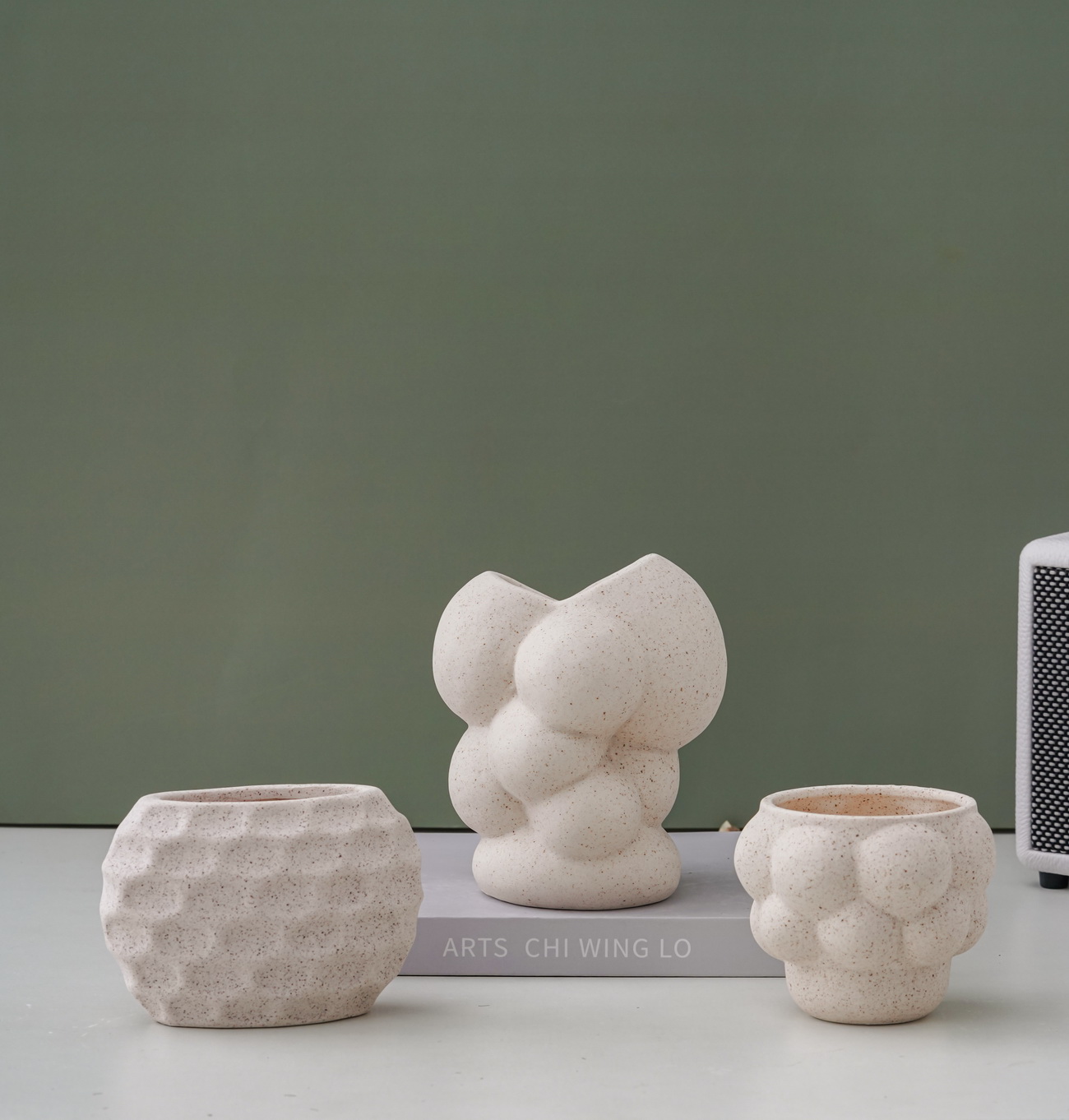
In Britain, we do have a soft spot for good taste with a bit of restraint.
A shapely mirror, a beautifully glazed vase, a decorative object with just enough personality to lift a room without turning it into pantomime — marvellous. But when one is sourcing professionally, style alone simply will not do. The loveliest sample in the world is of limited use if the production run wobbles, the cartons are underthought, or the paperwork arrives in a mild state of confusion.
Which is why I still put real weight on one phrase that sounds rather technical, but is in fact wonderfully reassuring: quality management certified factory.
Not thrilling, perhaps. But terribly useful. And in B2B, useful is often what makes something elegant.
Good design is delightful. Good systems are what make it repeatable.
ISO explains that ISO 9001 is the international standard for quality management systems, intended to help organisations deliver consistent products and services, improve efficiency, and meet customer and regulatory expectations. It is widely used in manufacturing and supplier approval. A 2021 manufacturing study also found a significant positive relationship between ISO 9001 implementation and both operational and business performance.
That is the real appeal of a certified home decor manufacturer.
A certificate, properly understood, is not a decorative flourish. It is evidence that the factory has thought seriously about process, consistency, accountability, and improvement. In other words, it suggests that beauty is not happening by accident.
And that matters rather a lot.
Europe’s latest fairs are favouring warmth, tactility, and a touch more character
The recent European design conversation has moved in a decidedly lovely direction. Messe Frankfurt’s Ambiente 2026 continues to foreground interior concepts and year-round digital showrooms for home and decoration. Home Accents Today reported that Ambiente and Christmasworld 2026 put colour squarely at the centre, from nuanced neutrals to more expressive tones. Design News Now described Maison&Objet and Paris Déco Off 2026 as leaning into romance, nostalgia, craft, jewel-toned warmth, handmade forms, and flora-led motifs. Salone del Mobile frames its 2026 edition around expressive power alongside functional, technological, and material innovation.
That tells us something useful for sourcing.
The market is not asking for sterile minimalism with all the charm of a spreadsheet. It is asking for softness, layers, crafted surfaces, decorative confidence, and products with a point of view. Rather nice for designers. Slightly more demanding for factories.
Because the more nuanced the look, the less room there is for production drift.
A warm white cannot suddenly go pink.
A textured finish cannot become untidy.
A decorative silhouette cannot survive only in the prototype.
Even TikTok has become less clinical and more characterful
The social mood supports the same story. ELLE Decor’s 2026 TikTok interiors report points to skirted furniture, more defined room zoning, and the cheerful rise of cabbagecore. The common mood is less sterile, less algorithmically polished, and far more interested in personality, nostalgia, and visual texture.
Which sounds playful — and it is — but it also means factories have less margin for vagueness.
Decorative detail is unforgiving. It either looks charming or it looks sloppy. There is very little in between.
This is where a B2B supplier ought to behave like a grown-up partner
A sensible B2B home decor supply partnership is not built on moodboards alone. It is built on confidence that the supplier can carry the idea all the way through production and shipment without becoming flaky at precisely the wrong moment.
That is why I value an audited home decor factory.
That is why I look for an export compliance home decor supplier who understands timing, specifications, and destination-market expectations.
That is why third-party inspection support matters.
That is why clean compliance documents for importers matter.
And that is why an in-house design team home decor operation can be genuinely useful — not merely for styling, but for refining proportions, finishes, and commercial viability before the problems become expensive.
The strongest suppliers do not merely make products. They help reduce uncertainty.
The stylish bit is the object. The reassuring bit is everything around it.
This is the part many factories still underestimate.
Buyers are not only purchasing a mirror, a vase, or a decorative accent. They are purchasing consistency. They are purchasing communication. They are purchasing the likelihood that a reorder will be easier, not harder. They are purchasing fewer awkward surprises.
And that, more often than not, is what a quality management certified factory gives you.
Not glamour for its own sake.
Structure that protects the glamour.
Why Teruierdecor’s certificate story works
Teruierdecor is strongest when it presents its certificates as part of a larger capability story.
For the buyer, that means calmer approval.
For the designer, that means greater confidence in specification.
For the importer, that means better document readiness.
For the project, that means style backed by method.
That is what one hopes for from a modern quality management certified factory.
A bit of flair, certainly.
But also proper standards, decent process, and the quiet competence to make a beautiful thing arrive exactly as it ought to.
Which, frankly, never goes out of style.
Leave a Reply