

From a British design point of view, there is something particularly maddening about spotting a beautiful new direction early, only to lose momentum whilst waiting for a sample that arrives after the mood has already moved on. That is why fast sampling home decor supplier has become such an important phrase. It is not merely about speed for speed’s sake. It is about keeping pace with taste, retail calendars, and the increasingly public nature of product judgement.
That pressure feels sharper in 2026. High Point Market’s Spring theme centres on “Preserve”, whilst ASID’s 2026 outlook points towards expressive interiors, elevated craftsmanship, and design grounded in both purpose and performance. Las Vegas Market’s recent themes also lean into restorative softness, sculptural form, and emotionally resonant objects. These are subtle, layered trends, and subtle trends rarely survive clumsy development.
Fast sampling is no longer a factory convenience. It is a buying advantage.
MIT research on product development notes that rapid prototyping allows ideas to be tested earlier and refined through tighter feedback loops, reducing uncertainty before production scales. In home decor, that matters enormously. A sample is doing far more than showing shape. It is testing proportion, finish, material feel, colour balance, cost logic, and whether the object still holds its charm once it has entered the real world of manufacturing.
That is where Teruierdecor’s factory advantage becomes more interesting than raw speed. A capable ODM home decor supplier should not simply produce the sample quickly. It should produce the right sample quickly. That requires an in-house design team home decor buyers can rely on to interpret a trend properly, not just replicate a reference image with blind enthusiasm.
Trend-to-SKU execution is where ideas stop being moodboards and start becoming products.
This is the quiet intelligence behind trend-to-SKU execution. A trend may be appealing in editorial photography, on social, or at market, but that does not automatically make it a good SKU. It still has to sit within a range, photograph cleanly, survive handling, make sense at the target price, and feel coherent enough to reorder. That is why the best factories behave more like development partners than anonymous production points.
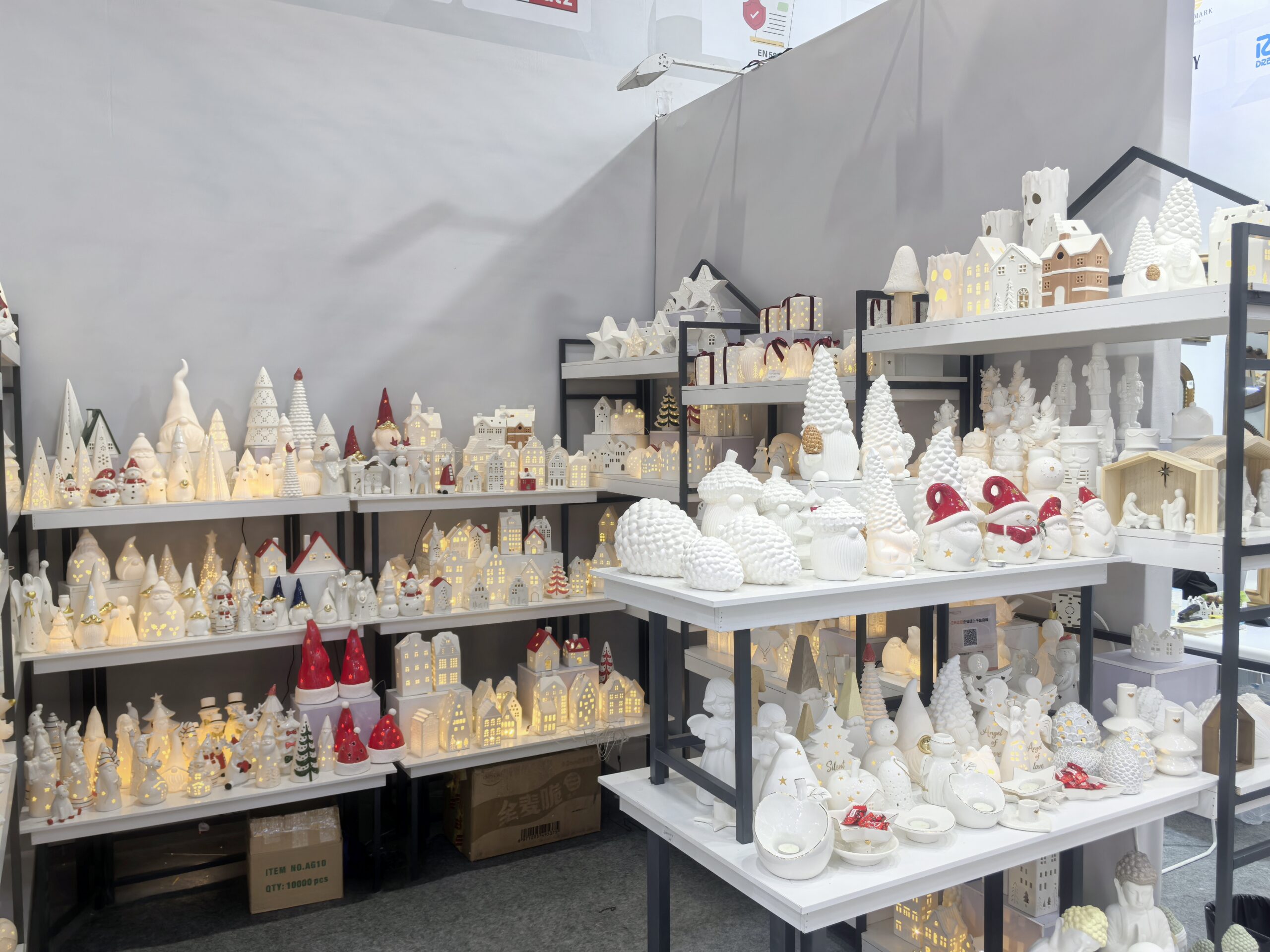
It is especially true for categories such as ceramic figurines wholesale, where the emotional appeal often lives in the little details: the tilt of the silhouette, the delicacy of the glaze, the softness of the expression, the balance of whimsy and polish. Those details are delightful when done well, but they can become oddly awkward when development lacks sensitivity. Fast sampling helps because it lets buyers and designers adjust before a charming idea becomes a slightly expensive mistake.
Social media has made the sample far more public than it used to be.
TikTok has played a rather large role here. ELLE Decor reports that TikTok continues to shape interior design in 2026, with trends such as skirted furniture and cabbagecore moving visibly into the mainstream. TikTok’s own North America trend report also shows audiences shifting away from generic hype and towards real-world testing, stronger comment engagement, and recommendation signals built in public. Meanwhile, UK interiors coverage has already picked up adjacent 2026 mood shifts towards bold stripes, sculptural silhouettes, whimsy, and playful maximalism. In short, the product is now judged not only in the showroom, but in video, in homes, and in the comments.
That makes speed more consequential. If the market is moving visibly and socially, a delayed sample does not simply lose time. It loses relevance.
The best fast-sampling supplier also knows where the risks are hiding.
Of course, there is no glamour in a fast sample if the quality is unreliable. That is why strict QC checkpoints home decor should sit alongside development, not somewhere far away at the end. A good quality control team manufacturer does not only inspect what has been made. It helps shape how the product is made, checked, corrected, packed, and approved. Recent research on predictive quality assurance points out that traditional quality systems often lack the traceability and adaptability needed in dynamic supply chains. Buyers may not phrase it that way, but the practical meaning is simple enough: vague quality systems create nasty surprises.
Packaging belongs in that same conversation. Academic research increasingly frames packaging as a foundational design decision because protection, logistics, and sustainability all meet there. So when a supplier develops quickly but ignores how the item will travel, the work is unfinished. The sample may be lovely, but the system around it is not yet trustworthy.
Private label works best when the supplier understands timing as well as taste.
For private label home decor, this matters even more. A private label programme is not only asking for a product. It is asking for a product with timing, consistency, and brand discipline. The faster the supplier can move from concept to accurate sample, the easier it becomes for the buyer to make clear decisions on assortment, finish, packaging, and line architecture without losing the mood that made the product appealing in the first place.
That, ultimately, is why a fast sampling home decor supplier is such a useful factory advantage for Teruierdecor to own. In a craft-rich manufacturing ecosystem, speed can be supported by design fluency, quicker interpretation, earlier correction, and better communication between development and QC. The result is not hurried. It is simply more ready.
And in home decor, readiness is rather elegant. Because the trend may be fleeting, but the supplier who can catch it properly—quickly, accurately, and with a bit of grace—tends to stay relevant rather longer.
Leave a Reply