

What Designers Really Want From an OEM Home Decor Manufacturer Now
There was a time when choosing an OEM home decor manufacturer was mostly about capability. Could they make the product? Could they meet the MOQ? Could they ship on time?
Now, at least from where I sit as a U.S. interior designer, that is no longer enough.
Today, the real question is this: can a manufacturer help turn a good idea into a product that feels right for the market, photographs beautifully, arrives safely, and still makes commercial sense? In home furnishings, visual discovery now matters enormously, and research from UNT notes that visual digital search plays a major role in how consumers navigate home décor options. At the same time, marketing research continues to show that customization can improve product evaluation and purchase intent when the journey is designed well. That is exactly why the role of an OEM partner has become more strategic, not less.
The market is leaning toward personality, softness, and finish detail
Recent North American design signals make this shift even clearer. High Point Market programming for Spring 2026 highlights expressive interiors, layered textures, sustainable living, and “perfectly imperfect” materials, while earlier High Point product themes emphasized powder pastels, abstract surfaces, nature-led palettes, and elevated traditional details like dark oak and diffused lighting. Winter 2026 Las Vegas Market also gathered 3,500+ product lines across six curated neighborhoods, showing how broad the sourcing landscape has become for buyers looking for commercially viable newness.
And social media is pushing that taste cycle faster. Resonate says half of furniture buyers begin their journey on social platforms before they are ready to buy, often weeks or months in advance. ELLE DECOR’s 2026 TikTok trend roundup also points to a return of softer, more dressed, more personality-forward interiors, including the rise of skirted furniture. So yes, the product must be manufacturable—but it also has to be image-ready and mood-board-friendly from day one.
An OEM partner should do more than produce
A strong OEM home decor manufacturer should know how to protect the idea, not flatten it.
That means having an in-house design team home decor buyers can actually work with. Not a team that simply says, “Send the drawing.” A team that can look at a silhouette, a glaze, a trim line, or a proportion and explain what needs to change for production, cost, or shelf impact.
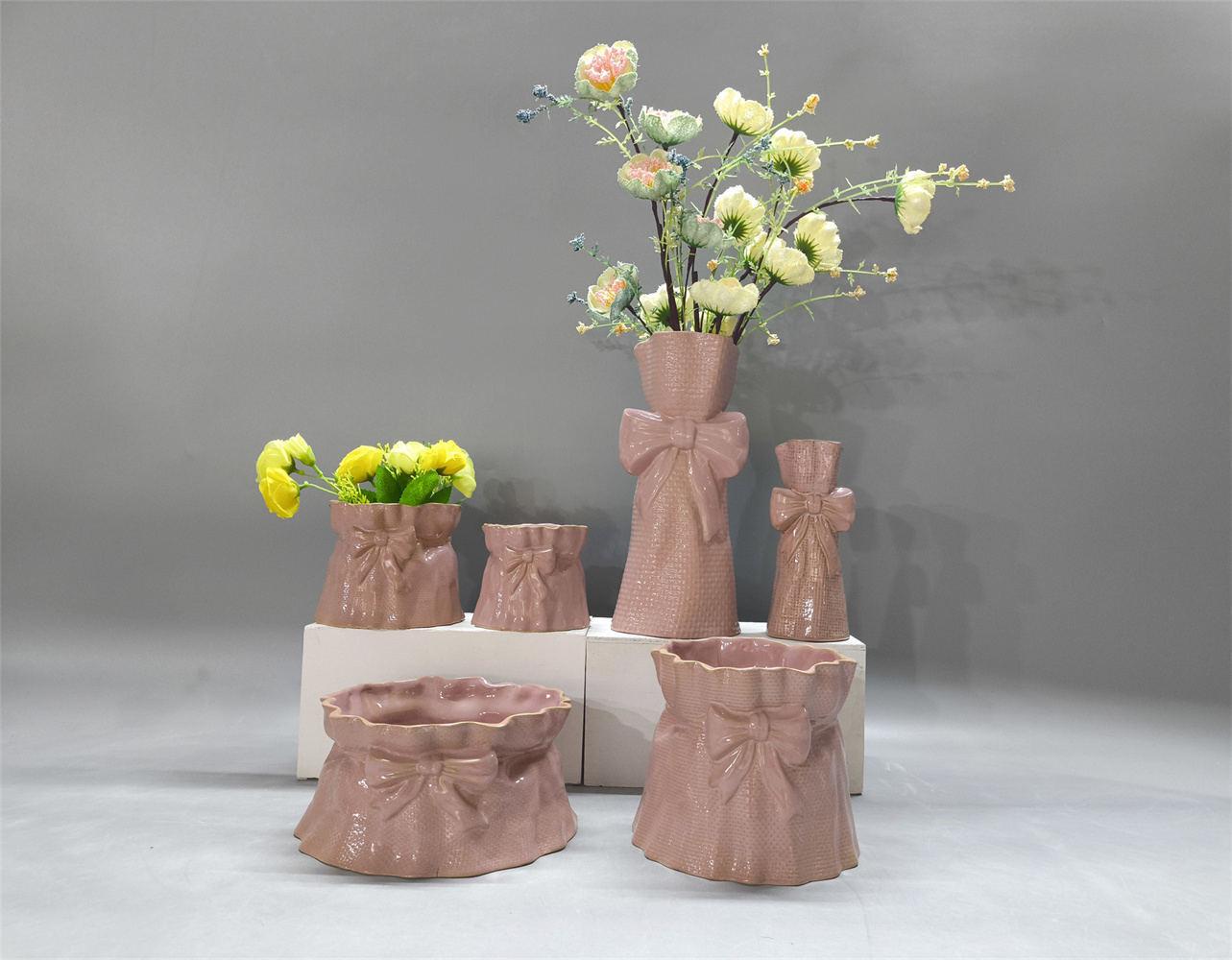
It also means understanding private label home decor at a deeper level. Private label is not just a logo exercise. It is about helping a retailer or design-led brand create a collection that feels coherent—its own color voice, its own finish language, its own balance between hero pieces and supporting pieces. In categories like table vase wholesale, that matters a lot. One vase may catch attention; a coordinated family of forms is what actually builds the assortment.
Packaging is not an afterthought anymore
The smartest factories understand this already: packaging is part of product development now.
A proper retail-ready packaging service should not be treated like a side department. It should sit close to sampling, QC, and logistics. Because once the item leaves the factory, the next part of the customer experience begins: receiving, unpacking, shelf placement, photography, warehouse handling, and reorder confidence.
This is especially true for packaging for fragile home decor. If a ceramic piece arrives chipped, if the insert feels improvised, or if the carton looks like it barely survived the trip, the buyer does not experience that as a packaging issue. They experience it as a supplier issue.
That is why a serious quality control process home decor matters so much. Good QC is not just checking whether the item exists. It is checking finish consistency, stability, edge quality, glaze variation, carton performance, and whether the final presentation still matches the intent that sold the sample in the first place.
Why Teruierdecor’s factory service story works
What makes Teruierdecor useful in this conversation is that the company can be positioned as more than a production source. The stronger story is that it works as a design-aware factory partner.
That matters for B2B buyers.
Because when I source, I am not looking for a supplier who only knows how to manufacture. I am looking for one who can help reduce interpretation loss between concept and final delivery. I want the sample to stay elegant. I want the finish to stay controlled. I want the packaging to feel considered. I want the shipment to arrive as a ready collection, not as a series of avoidable problems.
That is where an OEM partner becomes valuable: not when it says yes to everything, but when it helps shape the right thing, protect the product through production, and support the brand behind it.
The new appeal of an OEM home decor manufacturer
The most attractive OEM factories today are not just efficient.
They are calm.
They are precise.
They understand taste.
And they know that in 2026, product is only half the story.
The other half is whether that product can move through the real world—through inspiration boards, sampling rounds, packaging tests, freight, merchandising, and reorder cycles—without losing what made it special in the first place.
That is why choosing the right OEM home decor manufacturer has become less about finding someone who can make décor, and more about finding someone who can help a décor idea survive contact with the market.
Leave a Reply