

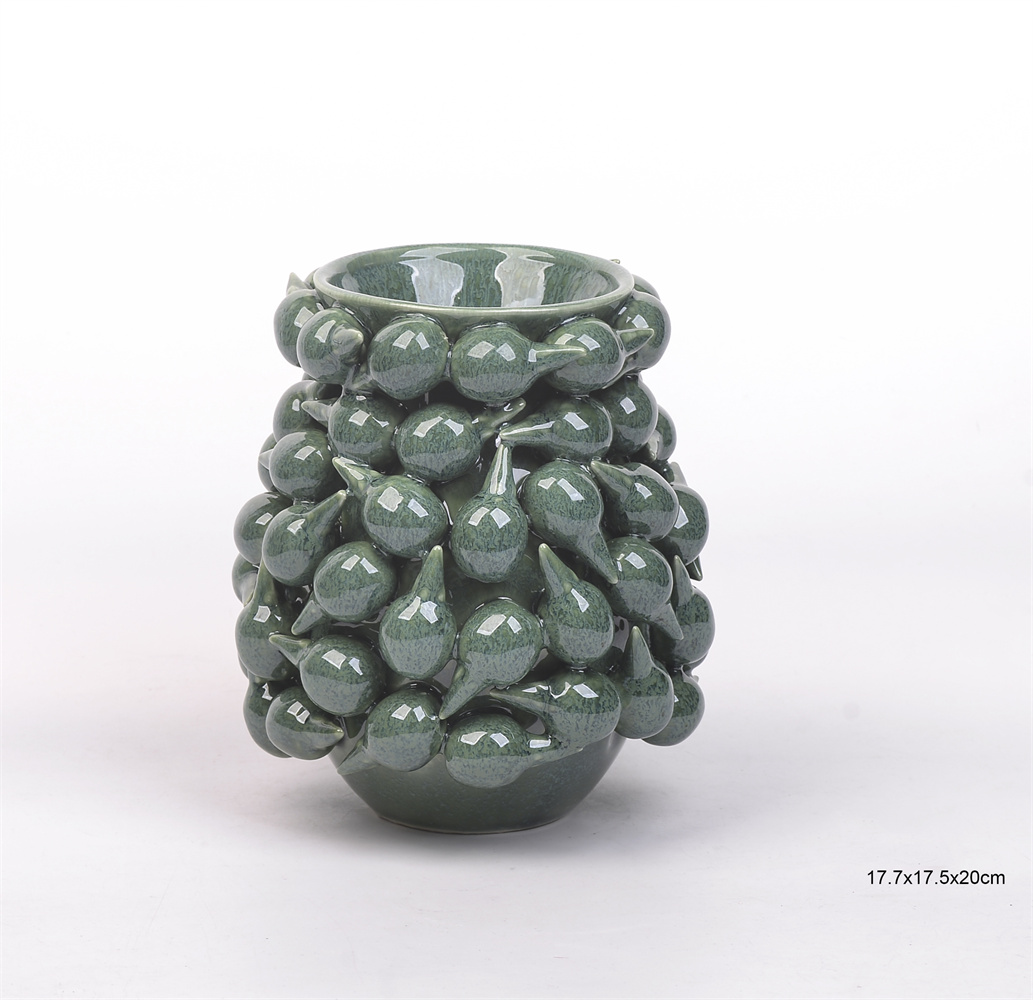
If you ask me what changed in home décor buying this year, I would not start with sofas or lighting. I would start with the table.
As an American interior designer, I think too many buyers still underestimate what a centerpiece does. A centerpiece is not filler. It is not the quiet object in the middle of the room. It is the visual decision that tells the rest of the tabletop how to behave. That is why centerpiece vase wholesale is becoming more important. Retailers are no longer just buying containers. They are buying control: control over scale, control over styling, and control over how fast a display can look finished.
Good centerpieces work because design is not random
This is where the academic side matters. University and extension design guidance has said for years that floral and tabletop arrangements depend on proportion, balance, rhythm, scale, and harmony. Iowa State notes that basic design principles turn flowers into an eye-catching artistic display; Mississippi State Extension teaches proportion, balance, and rhythm as core floral-design principles; and the University of Rhode Island emphasizes that proportion and scale must fit both the arrangement and its surroundings. Wisconsin Extension adds a point buyers often forget: using a limited number of materials usually creates a more powerful composition. That is exactly why the right centerpiece vase sells better than a busy assortment with no hierarchy.
The U.S. market is rewarding products that finish the table faster
Recent market activity says the same thing in commercial language. Atlanta Market, held January 13–19, 2026, reported that it was the largest edition in two years, with a 5% increase in stores attending and a 15% increase in first-time buyers. Las Vegas Market, held January 25–29, 2026, also reported strong order writing, notable growth in new buyers, and a major increase in new-account activity. My read is simple: when buyers are actively opening new accounts and looking for fresh business, they lean toward products that are easy to merchandise, easy to photograph, and easy to reorder. A strong centerpiece program checks all three boxes.
This is also a technology story, not just a styling story
At The Inspired Home Show 2026, industry sessions did not just talk about product aesthetics. They talked about AI, TikTok commerce, and what “agentic commerce” means for brands trying to stay visible and sell in a faster discovery cycle. That matters because a centerpiece now has to do more than sit nicely on a table. It has to communicate instantly in content, on a product page, and in short-form video. In other words, the centerpiece vase is no longer only décor. It is part of the media layer of the product.
TikTok is accelerating the shift toward more expressive tabletop objects
TikTok’s own 2026 forecast says users are now in “full-on discovery mode” and expect a return on the time they invest. Design media is seeing the same thing from the interiors side. ELLE Decor reports that half of furniture buyers begin their inspiration phase on social platforms, while TikTok-driven interior trends for 2026 include movements like skirted furniture, friction-maxxing, and Cabbagecore—signals of a broader appetite for personality, tactility, and conversation-starting objects. That is good news for modern ceramic vase wholesale and especially for sculptural centerpiece forms. The market is moving away from invisible basics and toward pieces that read immediately on camera and still feel grounded in real rooms.
What smart buyers should really be sourcing now
To me, the opportunity is not just one SKU. It is a program.
A good centerpiece vase wholesale assortment should include one clean architectural shape, one softer volume, and one emotional accent finish. That is how you serve more than one customer without diluting the story. Some stores will want handmade ceramic vase wholesale pieces because texture signals authenticity. Others will want cleaner decorative ceramic vases wholesale options because they fit broader replenishment programs. High-volume retailers may frame the category as Bulk Home Decor, while design-led accounts may still think in terms of a Decorative Vase for Interior Designers. But the underlying buying logic is the same: buyers want an object that anchors the table and reduces styling friction.
And this is where the word Art becomes commercially useful again. The best centerpiece vase today lives in the space between product and art object. It does not need to be expensive or overly complex. It simply needs enough presence to make the entire tabletop feel intentional.
My opinion: the next winners will not be the loudest vases, but the most useful ones
I do not believe the future belongs to random novelty. I believe it belongs to objects that help retailers build a stronger visual sentence.
That is why I would not treat centerpiece vase wholesale as a narrow sourcing term. I would treat it as a merchandising strategy. The winning vase is the one that can hold branches, stand alone on a dining table, work in a styled console shot, and still feel relevant in a TikTok frame. Buyers are under pressure to move faster, displays are expected to work harder, and consumers are responding to pieces that feel more expressive without becoming chaotic.
So yes, this is still a vase category.
But in 2026, the smarter buyers know it is really a table-positioning category. And that is exactly why it deserves more attention now.
Leave a Reply