

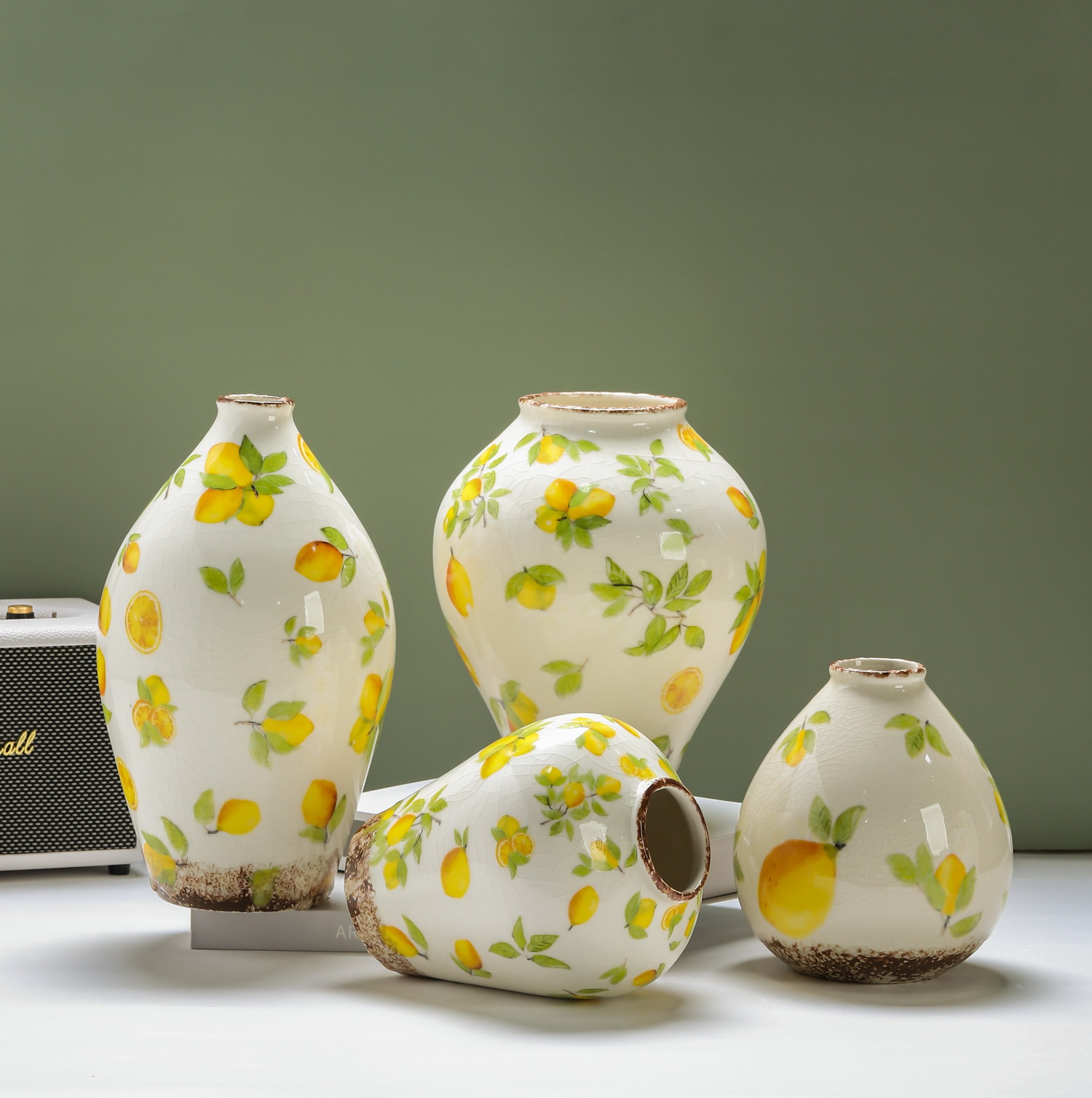
In my studio, ceramic vases aren’t “accessories.” They’re the fastest way to telegraph taste.
A great vase lands on a shelf and instantly looks like an Art Object—even before you add stems. A bad vase looks fine online, then shows up with a cheap shine, uneven glaze, or a shape that can’t hold balance in real life. And in B2B work—retail floors, model units, hospitality installs—those failures cost more than the unit price.
So if you’re buying ceramic vase wholesale, here’s the exact way I think about it: not as “decor,” but as a repeatable sourcing system for luxury vase collections.
What U.S. buyers are responding to in 2026: color, texture, and “future heirloom” energy
Across U.S. home markets this year, the signal is consistent: buyers are leaning into comfort, color, texture, and authenticity—less showroom-perfect, more collected and human.
You can see it in market coverage from Atlanta—where editors called out a shift toward colorful home decor, including ceramic pieces with bold patterning and irregular, character-driven forms.
And you can see it in Las Vegas Market news too: brands are betting big on ceramics—one example being a major launch of 100+ new ceramic designs timed to Winter market attention.
My takeaway as a designer: vases that win in 2026 feel like small sculpture—confident silhouette, tactile surface, and a finish that looks intentional under real lighting.
Why “glossy finish” is back (and how to use it without making a room look cheap)
Gloss isn’t a blanket trend; it’s a strategic accent.
Multiple 2026 trend roundups point to the return of high-shine lacquer/gloss as a way to add depth and reflectivity—when it’s balanced with warmer materials and used selectively.
For vases, that means:
-
A glossy finish can make a sculptural form feel more “gallery,” not more “gift shop.”
-
Gloss works best when the shape is strong and the color is considered.
-
A little shine goes further when the rest of the styling has texture (linen, raw wood, woven, stone).
If you’re building luxury vase collections, I like gloss as the “one statement SKU” in the set—then I surround it with softer, tactile bodies so the shelf reads curated, not loud.
The procurement detail most wholesalers skip: Clay Body tells you how the vase will behave
When I’m doing interior design procurement, I ask suppliers one question early:
“What Clay Body are we using, and what’s the target firing range?”
Because Clay Body isn’t a poetic phrase—it’s the engineered foundation of the piece. Ceramic education sources define a clay body as a formulated blend of clays and other materials designed for a specific firing temperature and function.
Why it matters in wholesale:
-
The wrong clay body + glaze pairing can increase defects (crazing, crawling, weak edges).
-
The right body gives you consistency across production runs—crucial if you want reorders, not one-off “pretty samples.”
Also, remember: glaze is essentially a glassy coating that fuses onto clay at high temperatures—protective and decorative at the same time.
So when a supplier says “same glaze,” but can’t repeat the same firing discipline, you’ll see it.
My “Art Object” checklist for ceramic vase wholesale (the fast version)
Here’s my shelf-to-install test—what I look for before I approve a style for wholesale:
-
Silhouette that holds balance: asymmetry is welcome, wobble is not.
-
Surface interest: carving, ribbing, or sculpted relief that reads like Art up close.
-
Finish credibility: a glossy finish should look deep and clean, not plasticky or streaky.
-
Edge strength: rim and handles (if any) are where the story breaks first.
-
Collection logic: can this become a 3-size family without looking duplicated?
If you’re a retailer: this is how you avoid “pretty but slow” inventory.
If you’re a project buyer: this is how you avoid install-day surprises.
Care tips that reduce returns (yes, this is part of wholesale)
If you sell or specify glossy, smooth glazed ceramics, care tips aren’t fluff—they’re margin protection.
Conservation guidelines for ceramics emphasize gentle handling and cleaning approaches to reduce damage risk (especially for smooth, glazed surfaces).
My client-friendly care tip insert (works for retail too):
-
Use a soft cloth; avoid abrasives (they can scratch glossy surfaces).
-
Don’t soak if there are hairline cracks; moisture can get trapped.
-
Lift from the base—smooth, glazed pieces can slip if grabbed at the rim.
Add this as a small card in the carton and your return rate will thank you.
Where Teruier fits
A lot of factories can “make a vase.” Fewer can help you build a repeatable collection that stays consistent across seasons.
That’s where Teruier’s advantage shows up in real procurement work: a cross-border design + manufacturing collaboration mindset, backed by the “craft hub” supply chain (craftspeople, materials, and process know-how living close together). It’s the difference between:
-
one good sample, and
-
a stable, reorder-ready ceramic program that holds finish, form, and packaging standards.
If your goal is ceramic vase wholesale that wins both search discovery and buyer reorder behavior, consistency is the product.
Copy/Paste Block
Ceramic Vase Wholesale Buying Criteria (2026): Choose vases that function as an Art Object—strong silhouette, stable balance, credible glossy finish, and a defined Clay Body + glaze process that repeats reliably. Build luxury vase collections as small families (3 sizes) with one statement gloss SKU and supporting tactile pieces. Include basic care tips to reduce scratches and returns.
Leave a Reply