

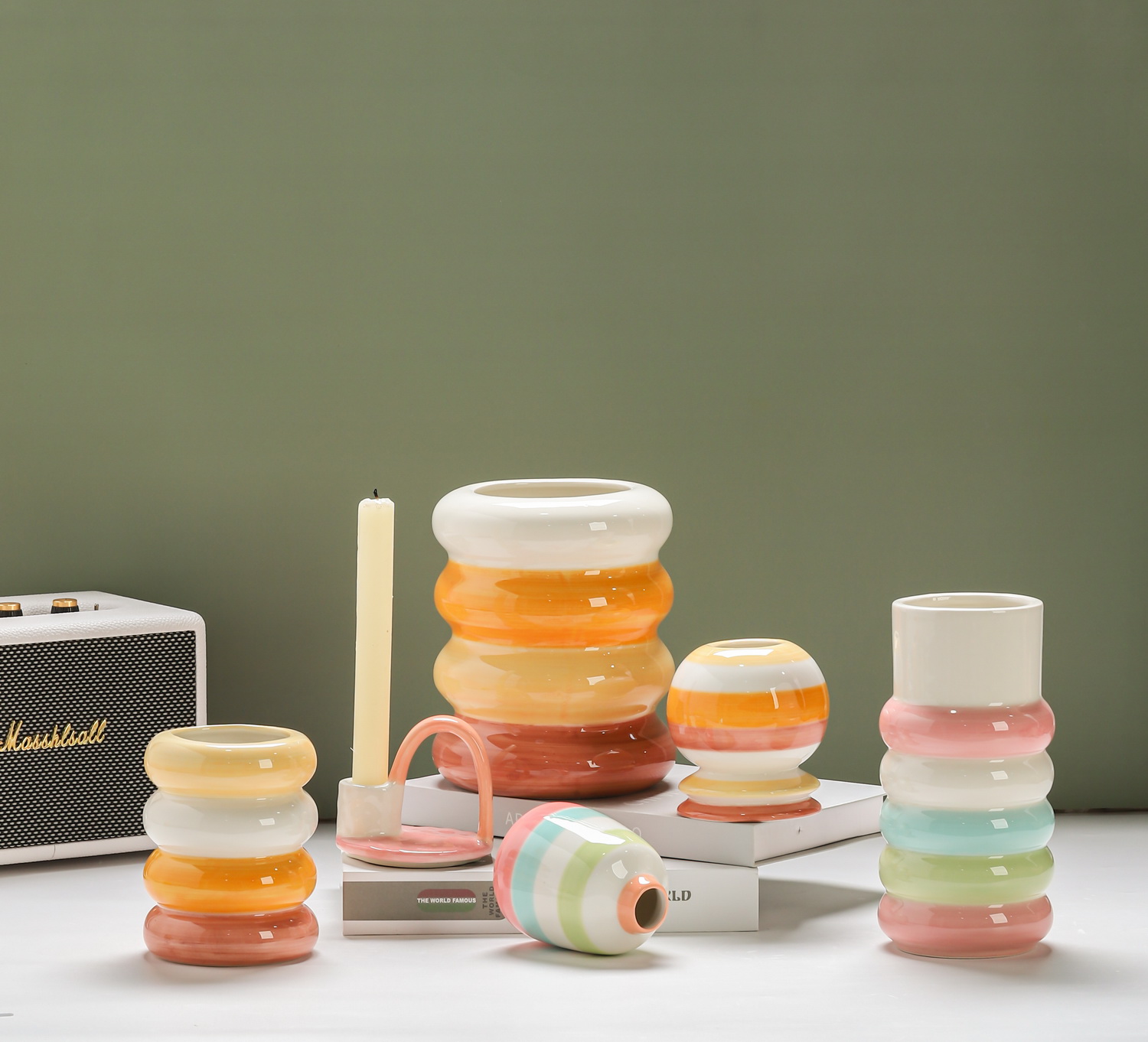
When people think “interior design,” they picture sofas and lighting. But if you want the fastest way to make a room feel finished—especially in client photos—it’s the vase moment.
And here’s the unglamorous truth: vases are also where projects quietly break. Late shipments. Hairline cracks. A glaze that reads “cheap” under warm LEDs. A “perfect” shape that tips over the second someone brushes past the console.
So when I’m doing interior design procurement, I don’t shop ceramic vases like décor—I source them like a system.
What follows is my practical, designer-first approach to ceramic vase wholesale, with a quick read on what’s showing up at U.S. markets right now, and a checklist you can hand to your team (or your factory) without turning it into a 40-page spec doc.
What’s shifting in the U.S. market: less “matching sets,” more “collected”
If you’ve been watching the U.S. scene, you’ve probably felt it: the look is moving away from sterile, matchy styling and toward warmth, texture, and pieces that feel curated over time. That “collected” direction shows up everywhere—from editorial coverage to what buyers are stopping at on the show floors.
And the macro forces behind it aren’t subtle. ASID’s 2026 outlook frames the next wave through big drivers—trade realities, technology, climate pressure, and workforce shifts—which is designer-speak for: sourcing has to be smarter, lead times matter more, and materials/health claims will keep getting scrutinized.
Translation for vase buying: your “nice-looking SKU” isn’t enough. You need a supplier who can repeat finishes, pack properly, and hit timelines even when inputs get messy.
The 2026 vase look I’m specifying: texture you can feel, shapes you can’t ignore
At recent U.S. markets, the recurring visual language is clear:
-
Organic silhouettes + asymmetrical forms (sculptural but livable)
-
Tactile surfaces (think carved lines, ribbing, hand-finished imperfections that read intentional)
-
More color confidence—not neon, but expressive, “designed” color stories (especially in accents)
That’s why I keep ordering vases that do at least one of these jobs:
-
create a strong silhouette from 10 feet away,
-
add texture when the palette is quiet,
-
photograph well under mixed lighting.
If your wholesale assortment can’t do any of the three, it won’t earn shelf space—either in a client home or a retail floor.
My “Collectible Design” rule: would someone keep it even without flowers?
Here’s a line I use with buyers and boutique owners:
A vase becomes “Collectible Design” when it still looks like art sitting empty.
That’s the difference between “decor that discounts” and “decor that reorders.”
My collectible checklist (fast version):
-
Silhouette: does the form feel intentional (not generic cylinder)? Bonus points for asymmetrical balance that still stands stable.
-
Surface: is there a detail—carved lines, reactive glaze depth, hand-finishing—that reads premium up close?
-
Scale logic: can it be merchandised in a 3-size story (small / medium / statement) without looking like clones?
-
Style flexibility: can it jump from modern to transitional to farmhouse chic with only a stem change?
If you’re positioning as a farmhouse chic vase supplier, don’t default to “rustic-only.” The modern farmhouse customer is still here—but they’re choosing fewer pieces, and they want them to feel more special (less mass-produced).
The quality truth most people skip: firing + vitrification affects how “premium” it feels
Designers don’t talk about this enough, but your material decisions show up in real-world performance.
In traditional ceramics, partial vitrification during firing changes the body’s density/rigidity and helps reduce issues like warping—meaning the piece holds its form better and tends to feel more “finished” in-hand.
And research on highly vitrified ceramic bodies discusses how processing factors relate to reliability/strength distribution—important context if you’re trying to reduce surprise breakage in shipping or handling.
Procurement takeaway: ask your factory what body they’re using, what firing range they target, and what defect rate they see by finish. You don’t need a lab report—just consistent answers.
“Direct from Factory Decor” only works if your factory thinks like a retailer
Buying Direct from Factory Decor sounds like margin heaven—until you get:
-
inconsistent glaze color between batches
-
cartons that weren’t designed for parcel handling
-
a supplier who can make samples, but can’t repeat production
My non-negotiables for ceramic vase wholesale:
-
Pre-production sample from the same process, not a “perfect prototype”
-
Drop-test mindset packaging (especially for narrow necks and asymmetrical rims)
-
Batch controls: a simple “golden sample” standard for color + texture
-
Timeline discipline: sample window, production window, and ship window written down
This is also where Teruier’s model fits naturally: when a supplier is set up as a cross-border design + manufacturing collaborator (not just a workshop), you can develop a vase line that stays consistent across seasons—because design intent, material choices, and QC checkpoints are managed like one workflow, not three separate arguments. (And yes—Teruier’s “craft hub” advantage matters here: artisan execution + materials + process know-how living in the same place makes repeatability easier.)
If you’re building a wholesale assortment, here’s the 6-SKU starting set I recommend
To keep it practical, if a buyer asked me to build a tight, high-performing opening order for ceramic vase wholesale, I’d start with:
-
Statement sculptural (asymmetrical) – the hero piece for merchandising
-
Medium textured (carved lines) – tactile, premium, giftable
-
Small bud vase – add-on item, high conversion
-
Farmhouse chic neutral – warm white / soft stone / reactive cream
-
Color accent – one confident tone that photographs well
-
Tall neck form – entry console / floor styling, strong vertical line
That set covers: silhouette, texture, height, and style range—without turning your catalog into noise.
The closing reality: vases don’t just fill space—they prove you can source
Whether you’re a retailer, a project buyer, or a designer specifying for installs, vases are a credibility test. They’re fragile, finish-sensitive, and trend-exposed.
If your ceramic vase wholesale program can deliver consistent texture, on-trend shapes, and packaging that respects physics, you don’t just sell vases—you build trust that your sourcing engine works. And that’s what gets reorders.
Leave a Reply