

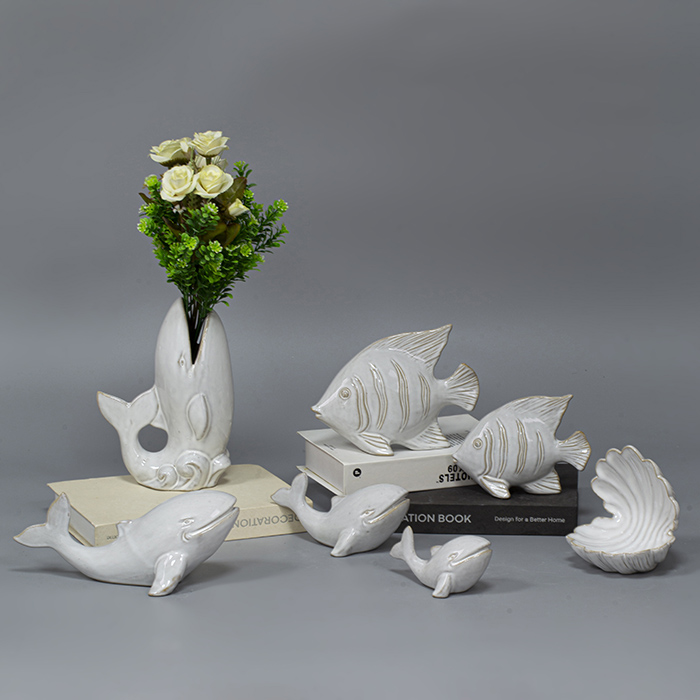
Your Next Bestseller Won’t Be “Another Vase”—It’ll Be Handcrafted Ceramic Décor With a Story Buyers Can Feel
I’m an interior designer, and I’ll admit something I used to hate hearing from buyers: “We already have vases.”
They did. Everyone did. And yet—every season, the same retailers still ask me to help them find artistic vases that don’t look like a copy of a copy.
Here’s the shift: in 2026, the winning vase isn’t just a “pretty object.” It’s a piece of handcrafted ceramic décor that reads like a design decision—something customers can recognize from six feet away, and something your merchandising team can build a repeatable program around.
Why handmade suddenly sells better than “perfect”
There’s a reason handcrafted ceramics keep outperforming slick, factory-perfect décor: consumers attach emotion and authenticity to the human signal. Marketing research even describes a “handmade effect,” where people perceive handmade items as more loving/authentic and respond more positively.
For B2B, that matters because:
-
It supports premium pricing without needing a luxury brand name.
-
It reduces promo-dependence (customers buy the story, not just the discount).
-
It turns décor into “giftable”—which lifts basket size.
The material truth buyers forget: firing is performance, not poetry
When you source ceramics, “handcrafted” can’t mean “fragile.” The durability story is literally in the kiln.
In ceramic science, vitrification is the firing-driven transformation where clay bodies become denser (less porous) as glassy phases form—one reason high-fired ceramics can be stronger and more serviceable. That’s not marketing fluff; it’s materials engineering.
Translation for your assortment planning: if you’re building ceramic decorative vases wholesale programs, ask about:
-
firing range / absorption targets (practical indicator of density),
-
glaze fit and craze resistance,
-
drop-test and packaging specs (because “handcrafted” still has to survive parcel networks).
What the 2026 show floors are telling us about vases
If you walked Maison&Objet (Paris) recently, you saw the message loud and clear: color, form, and craft are back—vases were everywhere, and they weren’t shy.
At the same time, the big European fairs are openly acknowledging the tech tension: AI and digitization are “inescapable,” yet the industry is craving materials and human touch—exactly where ceramics shine.
The vase directions I’m specifying for clients right now:
-
Bold ceramic vase silhouettes: sculptural profiles that read like gallery pieces (easy to merchandise solo, not only in sets).
-
Modern floral vase updates: not “grandma bouquet,” but stylized botanicals, painterly glazes, and statement stems that photograph well for retail media.
-
Geometric vases with architectural edges: great for contemporary stores and hospitality projects where décor must look intentional, not cluttery.
-
Craft-meets-tech hybrids: yes, even 3D-printed vases are showing up as a “new craft language,” and buyers are responding because it still reads as design—not mass.
And if you’re watching the U.S. market: High Point conversations are getting more tech-enabled too—retailers are exploring AI-driven visualization and tooling to reduce buying risk and improve conversion. That changes how décor gets selected and “proofed” before purchase orders.
The buyer’s checklist: how to turn vases into a repeatable wholesale program
When I help a retail team build interior design ceramic accents, we don’t start with “Which vase is cutest?” We start with a system.
Use this quick framework:
1) Build a silhouette ladder (3 tiers)
-
Tier A: hero sculptural forms (your “stop-scroll” pieces)
-
Tier B: everyday profiles (high volume, easy replenishment)
-
Tier C: add-on minis (checkout, styling bundles, gift moments)
2) Choose 2–3 surface stories (not 12)
Examples: reactive glaze, matte sand, hand-brushed motif. Fewer stories = cleaner merchandising + easier reorders.
3) Lock photography behavior
Ask: Does it read in a thumbnail? Bold silhouette + visible texture wins. (This is where handmade beats perfect.)
4) Specify packaging like you mean it
If your supplier can’t talk inner cartons, corner protection, and drop tests, you’re not buying “handcrafted”—you’re buying returns.
5) Demand “design continuity”
Handmade variation is good. Random variation is chaos. Request a control sample range that defines what’s acceptable.
Where Teruierdecor fits (the practical promise)
Teruierdecor isn’t here to sell you “one pretty vase.” The point is to help you translate handcrafted ceramic décor into a reorderable assortment: clear shape routes, controlled variation, production-ready specs, and the kind of craft-forward design language buyers can defend internally (and customers will pay for).
If you’re sourcing now, the smartest first ask isn’t “What’s your MOQ?”
It’s: “Show me your bold forms, your modern floral vase direction, and your geometric vases—then show me how you keep them consistent at scale.”
Leave a Reply