

Why the Best Designers Don’t Wait 12 Weeks for a “Maybe”
North America’s home direction is not getting colder or more generic. It is getting warmer, more tactile, more crafted, and more emotionally legible. Apartment Therapy’s 2026 forecast points to browns, curves, and comfort; Interior Design’s KBIS 2026 coverage highlighted recycled-content surfaces, colorful finishes, and performance-minded innovation; and High Point Market’s Spring 2026 programming keeps circling back to craft, texture, and updated handwork. In other words: buyers still want beauty, but now they want beauty that feels human, current, and ready to move.
If you work in interiors, you already know the quiet truth: taste moves faster than most factories do. And that is exactly why a fast sampling home decor supplier is no longer a convenience. It is a commercial advantage.
Fast Samples Are Not About Speed for Speed’s Sake
As an American interior designer, I do not ask for faster samples because I am impatient. I ask for them because slow samples are expensive in all the wrong ways. They slow approvals. They muddy seasonal planning. They make trend timing feel like guesswork. And worst of all, they turn good ideas into stale arrivals.
Design research backs this up. MIT describes product development as a cross-functional process built around specifications, concept evaluation, and coordinated execution. Cambridge Design Science research on prototyping makes the point even sharper: prototypes are not just objects, they are tools for generating knowledge and reducing uncertainty with as little wasted time and cost as possible.
That is the real business case for sampling speed.
A good sample does not just show you what a vase looks like. It tells you whether scale feels right, glaze reads correctly in daylight, weight works on retail shelving, packaging survives freight, and whether the idea deserves a wider line. Fast sampling shortens the distance between “interesting” and “approved.”
The New Home Mood Favors Factories That Can Translate Trends Quickly
Right now, the North American market is rewarding pieces with warmth, texture, and a little wit. We are seeing a stronger appetite for artisanal surfaces, layered neutrals, richer browns, reactive finishes, and pieces that feel less machine-perfect and more collected. High Point’s Spring 2026 programming explicitly highlights bold geometrics, layered textures, beadwork, and craft-forward execution, while trend coverage heading into 2026 keeps pointing toward comfort, curved forms, and warm, saturated neutrals.
That matters for ceramics in particular.
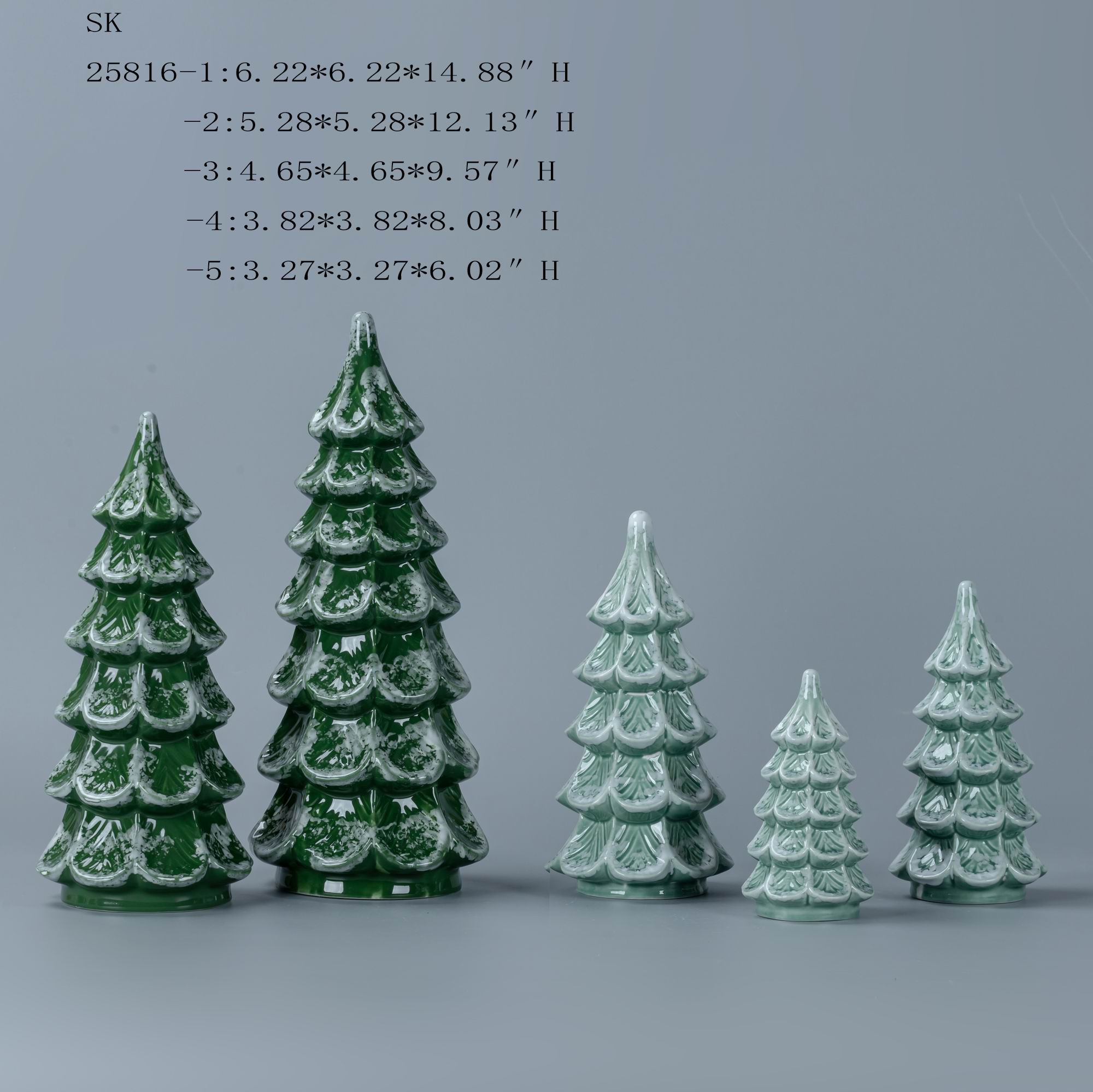
Ceramic decor is one of those categories where a millimeter too thick, a glaze too gray, or a silhouette that feels one season late can make an item drift from charming to forgettable. So when I look for a supplier, I am not just asking, “Can you make this?” I am asking, “Can you make this now, refine it quickly, and keep the soul intact?”
That is where Teruierdecor’s factory advantage starts to make sense. It is not only about being in China. Plenty of factories are in China. It is about being rooted in a craft-making region and operating like a global sourcing partner China buyers can actually build around: faster sampling, better finish interpretation, stronger communication, and less drama between mood board and shipment.
What Serious Buyers Really Want From a Fast Sampling Home Decor Supplier
The stylish answer is “great taste.” The honest answer is “great systems.”
I want factory direct pricing home decor, yes. But low pricing without sampling discipline usually becomes expensive later. I want a reorder stability manufacturer, because a beautiful first order means very little if the second order arrives in a slightly different glaze, weight, or tone. I want an audited home decor factory with a real process, not a charming PDF. I want third-party inspection support because it protects both sides of the table. I want a quality management certified factory because consistency is what lets design scale. And I want an export compliance home decor supplier because customs surprises are not a personality trait. They are a margin leak.
This is not fussy. It is professional.
ASQ defines supplier quality management as a proactive, collaborative system for ensuring the supplier can meet customer needs consistently. NIST also notes that implementing a quality management system improves process awareness and can open doors to international customers. That is exactly why certificates and inspection routines matter more than marketing adjectives do.
In plain English: if a supplier samples fast but manages quality casually, you did not buy speed. You bought suspense.
Why Teruierdecor’s Factory Advantage Feels Commercial, Not Cosmetic
Teruierdecor sits in a heritage craft manufacturing base, and that matters because craft regions tend to compress the distance between idea, material, finish, and correction. For a design-led buyer, that means fewer awkward handoffs and faster refinement loops.
The practical upside is simple:
A sample can be developed, discussed, adjusted, and re-sent with more rhythm. A collection can hold onto its texture story without becoming overengineered. A ceramic shape can be tuned for shelf impact and freight logic at the same time. And when a bestseller needs a follow-up, a factory with stronger systems is more likely to behave like a reorder stability manufacturer, not a one-hit wonder.
That is also where a distributor program home decor becomes more meaningful. Distribution partnerships only work when the upstream factory can support continuity, documentation, packaging standards, and repeatable product character. Style may open the door. Stability keeps the account.
TikTok May Be Chaotic, But It Still Tells Us Something Useful
Even the social layer is worth watching. Retail Dive reported that more than half of consumers turn to TikTok for gift inspiration, and home-adjacent microtrends continue to flare up around mood, ritual, and personality-led styling. Apartment Therapy recently covered TikTok-fueled moments like “dark showering” and viral porch-goose decor. Not every TikTok moment deserves a production run, of course. But it does remind us that decorative objects now live inside a faster cycle of discovery, desire, and visual sharing.
Which takes us back to the beginning: if demand signals move quickly, your sampling loop cannot move like it is still 2014.
The Real Luxury Is Not Slow Craft. It Is Responsive Craft.
There is a lovely old myth in home decor that craftsmanship must always be slow, solemn, and slightly inaccessible. I no longer buy that.
The best factories today do something smarter. They protect the handmade feel, but they build modern response times around it. They treat samples as decisions in motion. They understand that speed and quality are not enemies when the system is sound. They know that B2B buyers do not need more promises. They need fewer unknowns.
That is why the phrase fast sampling home decor supplier matters more than it sounds.
Because in the end, the sample is not the product. It is the proof that the factory understands how the market actually works.
FAQ: What B2B Buyers Should Ask a Ceramic Factory Before Approving a Supplier
1. Why does fast sampling matter so much in ceramic home decor?
Because ceramics are highly sensitive to proportion, glaze behavior, color reading, and finish texture. A fast sample helps buyers test not just aesthetics, but feasibility, packaging fit, and retail readiness before committing to production. Research on product development and prototyping consistently shows that earlier, faster learning reduces uncertainty and waste.
2. What should a proper ceramic sample package include?
At minimum: the physical sample, final dimensions, weight, finish notes, glaze or color reference, packaging details, carton specs, and photos or video under normal lighting. For export projects, buyers should also ask how the supplier tracks revisions between sample approval and mass production.
3. What is the difference between a pretty sample and a production-ready sample?
A pretty sample proves taste. A production-ready sample proves control. The second one should reflect realistic materials, achievable finish consistency, packaging logic, and manufacturable tolerances. That is why working with an audited home decor factory and a quality management certified factory matters.
4. Why is third-party inspection support important?
Because inspection adds an independent checkpoint before shipment. It helps confirm that approved standards for dimensions, finish, labeling, packaging, and carton condition were actually met. For importers, third-party inspection support is a risk-control tool, not an optional extra.
5. What documents should an export-ready ceramic supplier be able to support?
That depends on the market and product type, but serious buyers typically expect commercial invoices, packing lists, carton data, material information, and other shipment-related documentation needed for customs, retailer compliance, or importer review. In other words, choose an export compliance home decor supplier, not just a workshop that makes beautiful things.
6. How can I judge reorder stability before placing a larger order?
Ask how the factory manages glaze standards, material sourcing, approved sample retention, QC checkpoints, and production records across repeat runs. Reorder stability is usually a systems question, not a sales question. NIST and ASQ both emphasize that stronger supplier quality systems improve consistency and decision-making across the supply chain.
7. Does factory direct pricing always mean better value?
Not on its own. Factory direct pricing home decor is useful only when it comes with stable quality, clear communication, and dependable repeat production. Cheap first orders that trigger rework, claims, or inconsistent reorders are not actually cheap.
Leave a Reply