

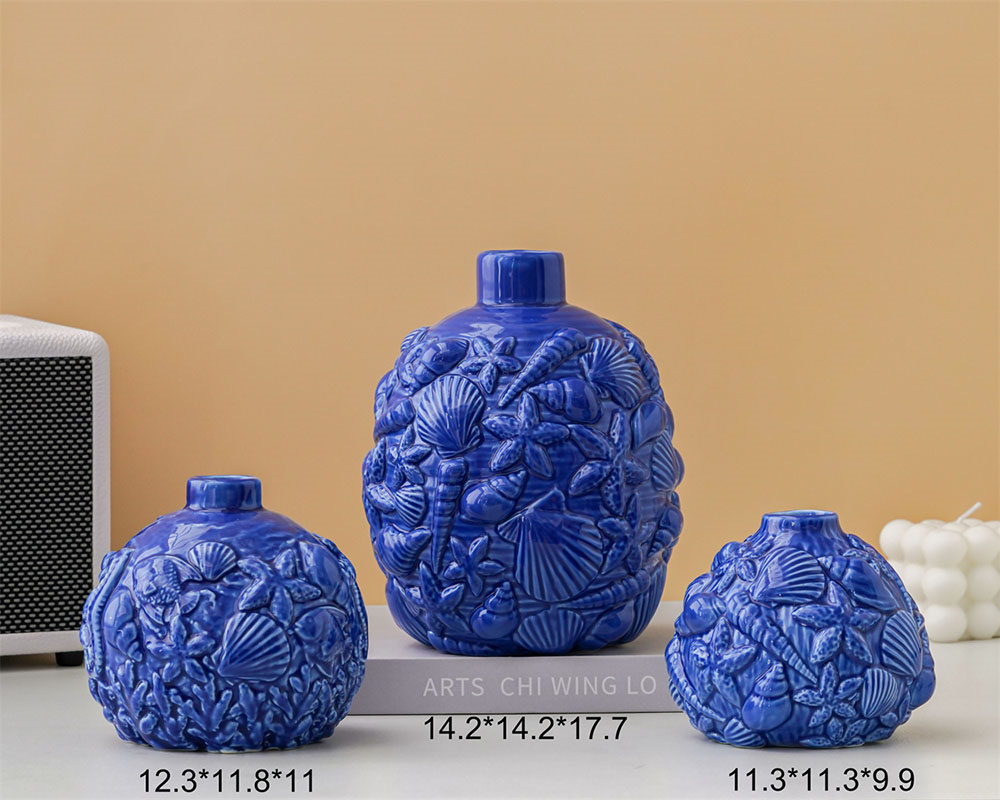
There was a time when “factory wholesale” sounded purely operational. It meant pricing, lead times, and containers. In home décor now, it means something else as well. It means a shorter distance between an idea and the object that finally reaches the shelf.
That is why ceramic factory wholesale feels newly relevant. As a Canadian interior designer, I do not see ceramics as filler. I see them as quiet architecture for a room: the object on the console that gives the eye a place to rest, the vessel on a dining table that makes the whole setting feel considered, the small form on a shelf that keeps a space from looking flat. Decorative-arts scholarship has long treated the vase as more than a container. Bard Graduate Center describes the vase as a major cultural icon in European decorative arts, valued because it offered designers broad possibilities for style, symbolism, and form.
The object is small, but the signal is large
That matters because North American buyers are increasingly shopping for atmosphere, not only inventory. At High Point Market, Spring 2025 Style Spotters highlighted “sculptural vases” as part of a gallery-inspired direction, while ANDMORE’s Winter 2026 Las Vegas Market and Atlanta Market messaging emphasized trend-forward merchandising, handmade resources, and discovery-driven sourcing. In other words, the market language itself is moving toward objects with more identity and more visual authority.
For buyers, this changes the logic of ceramics. The goal is no longer to add one more decorative SKU and hope it blends in. The goal is to source pieces that can hold a vignette together. A bud vase wholesale programme, for example, is not only about small-scale accessories. It can become a flexible entry point for layered shelving, spring collections, hospitality styling, or compact condo merchandising. Likewise, stronger interior design ceramic accents can behave almost like punctuation marks inside a room: subtle, but decisive.
What social platforms changed
TikTok did not invent decorative ceramics, but it has accelerated the speed at which certain forms become visible and desirable. ELLE Decor recently reported that TikTok continues to shape interior design trends in 2026, helping push more tactile, nostalgic, and personality-led interiors into mainstream consumer awareness. At the same time, broader design coverage points toward playful, sculptural, and expressive accessories. House Beautiful’s 2026 trade-show coverage highlighted fruit-adorned and individually shaped vases at Ambiente, while Better Homes & Gardens’ recent “joycore” coverage pointed to bolder colour, playful forms, and sculptural details as low-commitment ways to refresh a space.
That matters because ceramics sit in a useful middle zone. They are easier to update than furniture, more tactile than framed art, and more emotionally resonant than generic accessories. This is one reason U.S. interior design ceramics are becoming more stylistically varied: buyers want pieces that still photograph well, still feel current on social media, and still live comfortably in real rooms.
What wholesale should mean now
For B2B buyers, ceramic factory wholesale should not mean anonymous product. It should mean fewer layers between the design signal and the finished item. It should mean a supplier can respond to trend movement without stripping away all the character that made the piece interesting in the first place.
That is where the conversation becomes more practical. A good ceramic accent pieces supplier does not merely offer many shapes. It offers coherence. The silhouettes should read clearly from a distance. The glaze should feel intentional, not random. The assortment should allow for easy pairing across price points and scales. One taller form may serve as a centrepiece. Smaller companions may support shelves, sideboards, or tabletop styling. This is how a collection starts to behave like a system rather than a pile of objects.
And this is also why the phrase Chinese factory for US importers matters differently now. It no longer needs to mean only manufacturing capacity. It can also mean faster translation from trend to sample, better communication around finish and form, and less distortion between what a buyer sees in a concept board and what finally appears in the carton. In a category where proportion and surface matter so much, that shorter line is valuable.
The new role of ceramics in retail
The most interesting ceramic pieces today often sit somewhere between vessel and sculpture. They can still function, of course. But increasingly they are chosen for their shape, mood, and presence. That is why collectible ceramic art wholesale feels like a more useful phrase than it might have a few years ago. Buyers are not always searching for high art in the museum sense. They are searching for objects that feel collected rather than generic, shaped rather than merely produced.
This is especially true in a retail environment that rewards clarity. A single strong ceramic form can help a shop floor feel edited. A small cluster can make a product page more memorable. A well-scaled assortment can help the customer imagine a whole room rather than one isolated item. In that sense, ceramics are doing more work than they used to. They are not simply decorating a space. They are helping define its point of view.
Why this category has staying power
Some décor trends arrive loudly and disappear quickly. Ceramics tend to move more quietly. They can absorb trend without becoming trapped by it. A curve, a handle detail, a softened glaze, a sharper neck, a playful silhouette — each can update the object without making it feel disposable. That flexibility is one reason the vase and related ceramic forms have kept returning across eras, from decorative-arts history to today’s retail and social-media landscape.
So the opportunity in ceramic factory wholesale is not simply that it offers margin. It is that it offers a cleaner route from idea to object, and from object to assortment. For retailers, importers, and design-led buyers, that may be the real value now: not just more ceramic décor, but better-shaped decisions about what deserves to reach the shelf.
Leave a Reply