

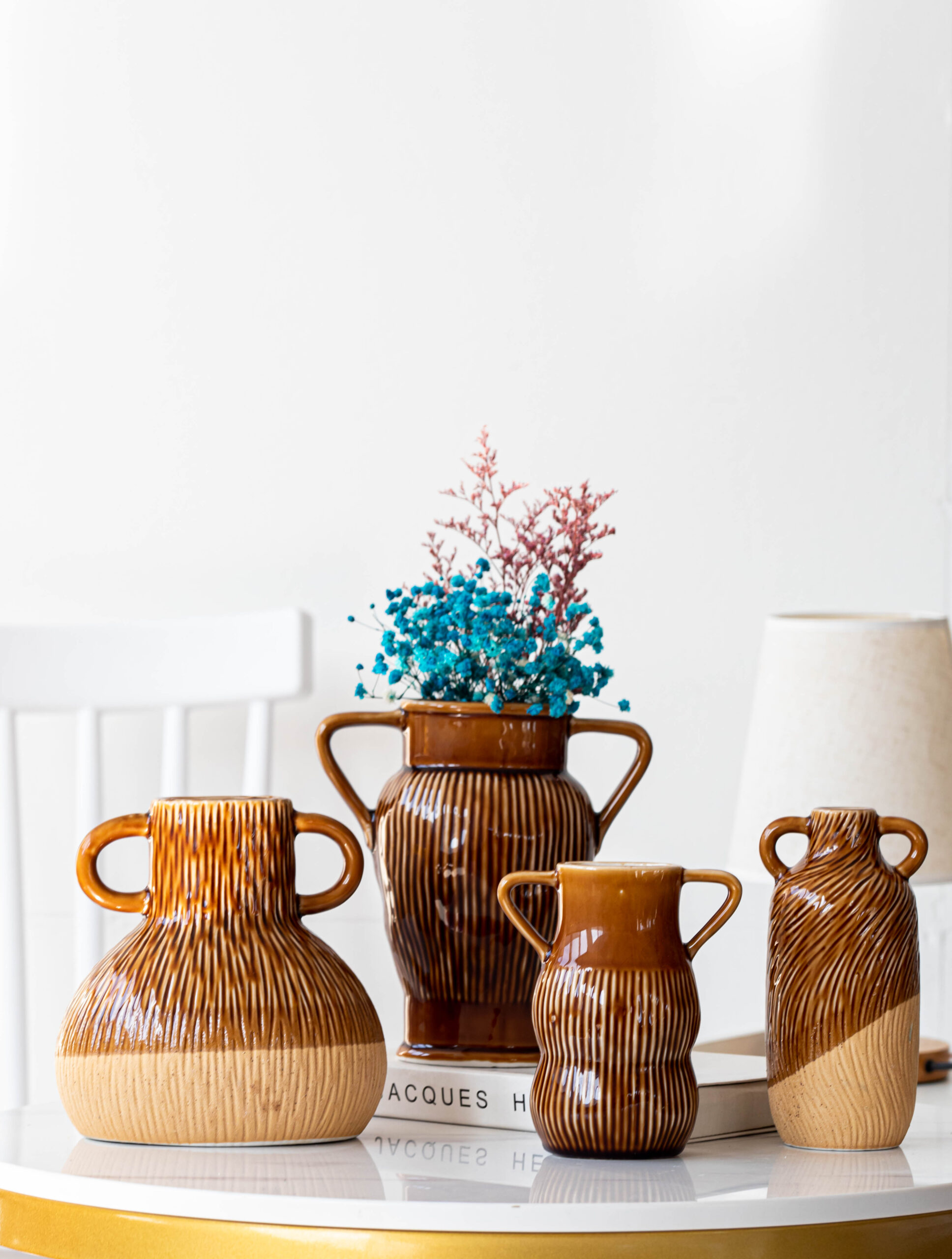
Why Shelf Logic Changes the Buying Conversation
As a home decor designer, I can fall in love with a single vase in about three seconds.
A buyer cannot.
A buyer has to ask the harder question: will this product work on a shelf, inside a collection, next to other pieces, at the right price, and with enough reason to reorder?
That is why testing a collection by shelf logic matters.
Shelf logic means looking at a product group the way a buyer, retailer, designer, or hospitality team will actually use it. Not as isolated product photos. Not as a moodboard. Not as “this one item is cute.”
A real collection needs rhythm:
One hero piece.
One easy add-on.
One lower-price item.
One texture anchor.
One color bridge.
One product that explains the whole story quickly.
That is when a group of home decor pieces starts to feel like a sellable assortment, not just a random table of samples.
The Shelf Shows What the Sample Hides
A single sample can be very forgiving.
A shelf is less polite.
Once a vase, candle holder, tray, mirror, bowl, and small decorative object sit together, the problems become easier to see. One glaze may feel too yellow. One shape may be too tall. One piece may look premium, while another looks like it came from a different season.
This is where the sample revision process home decor buyers rely on becomes practical.
The revision is not just about changing one product. It is about improving the collection.
Maybe the vase needs a softer finish.
Maybe the candle holder should become a pair.
Maybe the tray should be smaller so the set has a better price ladder.
Maybe the hero item is too strong, and the supporting pieces need to calm down.
This is also why some products survive the second order. They do not only look good once. They fit into a shelf story that buyers can repeat.
Recent U.S. Home Trends Make Shelf Testing More Important
At Spring 2026 High Point Market, U.S. design coverage pointed toward warmer earthy colors, richer texture, craftsmanship, curved silhouettes, sculptural forms, and more expressive materials. Aspire Design and Home described the market as shaped by contrast, craftsmanship, warm earthy palettes, and narrative-driven forms. Houzz also reported that more substantial tactile expressions of natural materials were standing out at the market.
That is good news for home decor.
It also makes buying harder.
When trends depend on texture, glaze, material, curve, and hand-finished detail, buyers cannot judge products only from images. They need to see how those details behave across a group.
A warm terracotta vase may look right on trend.
But does it work beside an ivory ceramic candle holder?
Does the finish still feel controlled across three shapes?
Does the collection look like a retail story, or just five separate ideas?
That is the real value of shelf logic. It turns trend language into buying judgment.
What Buyers Gain From Sourcing in a Craft Region
This is what buyers gain from sourcing in a craft region: not just labor, not just capacity, but product sense built from making things again and again.
A craft-region team knows where finish problems usually appear.
They know when a rim is too thin.
They know when a glaze will be difficult to repeat.
They know when a decorative shape may look beautiful but pack poorly.
They know when a collection needs one more safe, commercial item to balance the hero piece.
MIT Sloan professor Eric von Hippel’s research on “sticky information” explains why some useful product knowledge is difficult to move away from the place where the work actually happens. In product development, local knowledge often stays close to the people solving the problem.
For home decor buyers, this means local making knowledge is not a romantic story. It is a decision tool.
Why a Factory Tour Helps Buyers Read the Shelf Better
A good factory tour home decor manufacturer experience should not only show kilns, shelves, molds, or workers.
It should show how product decisions are made.
When buyers walk through a workshop, they can see how samples move from idea to mold, from mold to finish, from finish to packing, and from packing to shipment. That process helps explain why some products are easy to scale and others remain beautiful but risky.
For a buyer, the most useful question during a factory tour is not:
“Can you make this?”
The better question is:
“If we build a collection around this, what would you change before production?”
That answer reveals whether the supplier has real product judgment.
Shelf Logic for Hospitality Procurement
A hospitality procurement supplier has to think even more carefully about shelf logic.
Hotels, resorts, serviced apartments, restaurants, and model rooms do not buy decorative pieces for one isolated shelf. They buy for repeated rooms, public areas, replacement needs, project timelines, and visual consistency.
A decorative collection for hospitality needs to be attractive, but not fragile.
It needs texture, but not wild variation.
It needs character, but not styling chaos.
A buyer may love a sculptural ceramic vase, but if the finish varies too much across 80 rooms, the product becomes a problem. A tray may look beautiful, but if it needs oversized packaging, the procurement team will notice.
Shelf logic helps hospitality buyers ask earlier:
Can this collection repeat across spaces?
Can the finish stay consistent?
Can the supplier support replacement orders?
Can the products work together without looking over-designed?
That is how a design idea becomes a project-ready assortment.
TikTok Can Start the Trend. Shelf Logic Decides If It Sells.
TikTok continues to influence home decor taste. ELLE Decor reported several TikTok-driven interiors for 2026, including skirted furniture, broken floor plans, friction-maxxing, and cabbagecore, all pointing toward more tactile, nostalgic, expressive interiors.
But TikTok does not answer the buyer’s shelf questions.
Can the product be grouped?
Can it be packed?
Can it be reordered?
Can it fit a price ladder?
Can it work beyond one viral moment?
A trend may begin on TikTok. But for B2B home decor, the shelf decides whether it becomes a real product opportunity.
A Simple Shelf Logic Test for Buyers
Before approving a home decor collection, buyers can ask:
Does the group tell one clear visual story?
Does it include different heights, functions, and price points?
Does the finish look controlled across several pieces?
Is there one hero item and enough supporting items?
Can the collection work for retail shelves, designer styling, and hospitality projects?
Can the supplier revise weak items before production?
Is there a reason for a second order?
Stanford d.school identifies prototyping and testing as key parts of design thinking. For home decor sourcing, a shelf-tested collection works like a prototype: it helps buyers learn before they commit to full production.
FAQ: Testing a Collection by Shelf Logic
What does testing a collection by shelf logic mean?
It means reviewing home decor products as a group, checking whether the shapes, finishes, heights, prices, and functions work together on a retail shelf or project display.
Why is shelf logic important for B2B home decor buyers?
Because buyers rarely purchase one isolated item. They need assortments that can be displayed, explained, sold, shipped, and reordered.
How does shelf logic improve the sample revision process?
It shows which products need size, finish, color, weight, or function changes before the buyer approves production.
Why does sourcing in a craft region help?
A craft-region supplier can use local making experience to identify production risks, finish issues, packaging problems, and collection gaps earlier.
Final Thought: A Collection Has to Earn the Shelf
A single product can be attractive.
A collection has to work harder.
That is why testing a collection by shelf logic is one of the smartest steps in B2B home decor sourcing. It helps buyers move beyond pretty samples and toward products that can sit together, sell together, and survive the second order.
Leave a Reply