

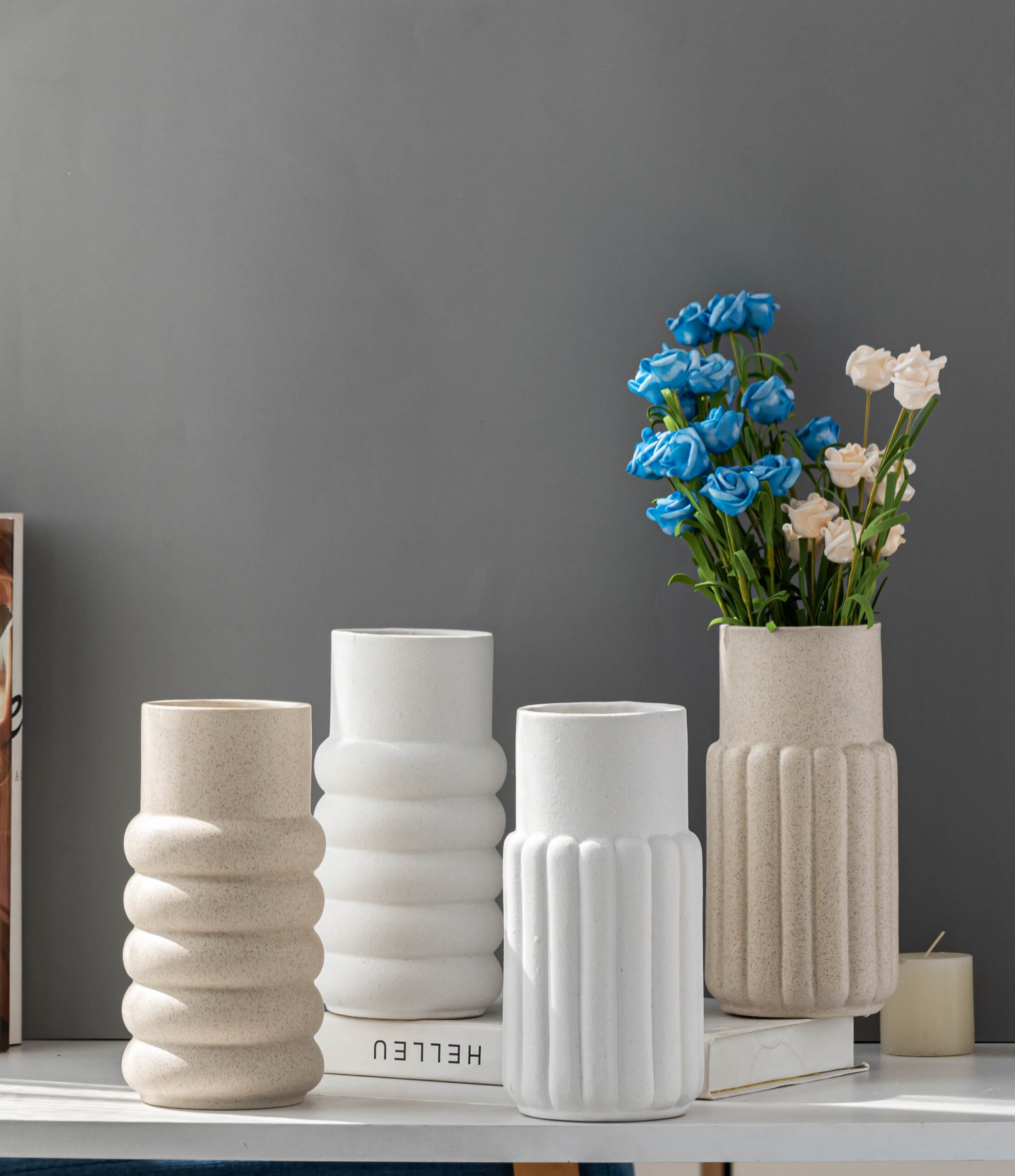
Testing a Collection by Shelf Logic Is Where Buyers Get Serious
As an American home decor designer, I can love a single vase in three seconds.
A buyer cannot afford to be that romantic.
A buyer has to ask a harder question: can this group of products sit together on a shelf, tell one clear story, fit the right price ladder, pack safely, and give the store a reason to reorder?
That is why testing a collection by shelf logic matters.
A collection is not just five pretty products placed near each other. It needs rhythm. It needs a hero item, supporting items, smaller add-ons, a color bridge, a texture anchor, and a believable reason for the customer to pick up more than one piece.
In retail, the shelf is not decoration. It is the first business test.
The Shelf Shows What a Sample Table Hides
A single sample can look great under good lighting.
A shelf is less forgiving.
Once a vase, candle holder, tray, bowl, mirror, and decorative object sit together, the weak points appear quickly. One item may be too tall. One glaze may be too yellow. One piece may feel too expensive for the group. One small item may not connect to the rest of the story.
This is where the sample revision process home decor buyers rely on becomes more than a color correction.
The question is no longer only, “Should we revise this item?”
The better question is, “Will this revision make the whole collection easier to sell?”
Stanford’s design thinking guidance treats prototyping and testing as ways to learn before committing too heavily. For home decor buyers, a shelf-tested sample group works the same way: it helps reveal problems before production, shipping, and display make them expensive.
How Buyers Read Collection Price Structure
Buyers do not only read style.
They read price structure.
That is how buyers read collection price structure. They look for a clear home decor price ladder inside the assortment.
A strong collection often needs:
A hero product that catches the eye.
A mid-price piece that carries the style.
A small add-on that feels easy to buy.
A functional item, such as a tray or candle holder.
A texture or finish piece that makes the whole group feel designed.
If every item is a hero, the shelf becomes noisy and expensive. If every item is safe, the shelf feels flat. If the low-price item looks unrelated, the collection loses trust.
Shelf logic helps buyers see whether the collection has commercial rhythm, not just visual appeal.
Why Packaging Enters the Conversation Early
There is one moment when you can tell whether a supplier really understands B2B home decor: they bring up packaging before the buyer has to.
This is why packaging enters the conversation early.
Packaging affects breakage risk, carton size, freight cost, warehouse handling, shelf readiness, and margin. A sculptural vase may look beautiful, but if the rim needs too much protection, the cost changes. A ceramic tray may look simple, but if the surface scratches easily, the packing method matters. A candle holder set may be attractive, but if it cannot nest or pack efficiently, the landed cost may become a problem.
A collection that looks good but ships badly is not shelf-ready.
Recent U.S. Home Trends Make Shelf Logic More Important
Recent U.S. home design coverage keeps pointing toward richer texture, curved shapes, warmer materials, and more personality in interiors. Better Homes & Gardens recently described “midimalism” as a balance between minimalism and maximalism, with bold colors, rich textures, organic materials, and sculptural elements entering the home decor conversation.
That sounds exciting for product development.
It also raises the risk.
When trends depend on texture, finish, curve, glaze, and material feel, buyers cannot judge a collection from photos alone. They need to see how the pieces sit together, how the finishes relate, and whether the story still feels controlled on a shelf.
TikTok is also speeding up the inspiration cycle. ELLE Decor’s 2026 TikTok interior trend coverage points to skirted furniture, broken floor plans, friction-maxxing, and cabbagecore as examples of nostalgic, tactile, personality-driven interiors becoming part of wider design conversation.
But TikTok does not answer the buyer’s real questions.
Can it become a product family?
Can it fit a price ladder?
Can it ship safely?
Can it survive beyond one viral moment?
That is where shelf logic does the filtering.
What Craft Regions Know That Catalogs Never Show
A catalog can show size, color, and shape.
A craft region can show what usually goes wrong.
That is what craft regions know that catalogs never show: when a glaze is hard to repeat, when a rim is too thin, when a base may wobble, when a carved detail slows production, and when one small adjustment can make the product safer for bulk orders.
MIT professor Eric von Hippel’s research on “sticky information” explains why some useful product knowledge is hard to move away from the place where the problem is being solved. In product development, local making knowledge often stays close to the people doing the work.
For Teruierdecor, this matters because home decor sample development is not only about making what is requested. It is about helping buyers see which sample should become the hero, which one needs revision, which one should be simplified, and which one should not move forward.
A Simple Shelf Logic Test for Buyers
Before approving a home decor collection, buyers can ask:
Does the collection tell one clear visual story?
Is there a clear home decor price ladder?
Does the hero item have enough supporting pieces?
Do the heights, shapes, and functions create rhythm?
Do the finishes look controlled together?
Does the packaging plan make sense?
Can weak samples be revised before production?
Is there a believable reason for a second order?
This last question matters most.
The first order proves interest. The second order proves the collection made sense.
FAQ: Testing a Collection by Shelf Logic
What does testing a collection by shelf logic mean?
It means reviewing home decor products as a working shelf assortment, not as isolated samples. Buyers check shape, height, finish, function, price structure, packaging, and collection rhythm.
Why is shelf logic important for B2B home decor buyers?
Because buyers need products that can be displayed, explained, shipped, sold, and reordered. A single pretty sample is not enough.
How does shelf logic improve the sample revision process?
It shows whether a sample revision should improve only one product or the whole collection. A better revision supports the shelf story, price ladder, and packaging plan.
Why does packaging matter so early?
Packaging affects freight cost, breakage risk, carton size, warehouse handling, and final margin. In B2B sourcing, packaging is part of the product decision.
Final Thought: The Shelf Decides
A moodboard can make almost anything look possible.
A shelf is stricter.
It shows whether the collection has rhythm, whether the price structure works, whether packaging risks are visible, and whether the buyer has a reason to come back for a second order.
That is why testing a collection by shelf logic should happen before production, not after.
A product photo creates interest.
A sample starts the conversation.
The shelf decides whether the collection is ready.
Leave a Reply